Law
The Law course at Cambridge offers students the chance to obtain a qualifying law degree, while delving in depth into a range of legal topics.
At a glance
A Level requirements: A*AA
IB requirements: 42 points overall with 7, 7, 6 at Higher Level
Subject requirements: None
Average students per year: 4-6
Admissions assessment: National Admissions Test for Law (LNAT)
Written work: None
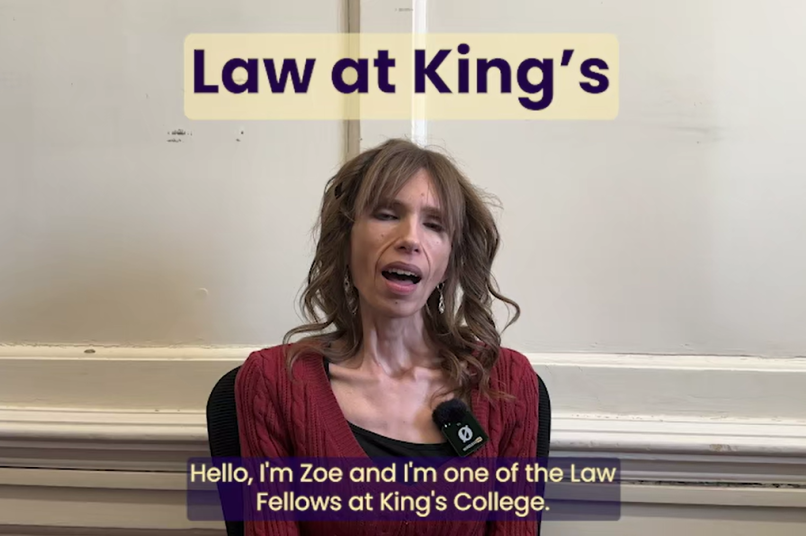
< Watch an interview with Dr Zoe Adams, one of the Law Directors of Studies.

Admissions
Course overview
Compulsory papers on the Law course include Roman Law, Tort Law, Criminal Law, Contract Law, Land Law, and EU Law and Equity. These will be spread throughout the student’s three years of study. Each of these subjects will give the student a strong grounding in those subjects essential to legal practice while also stimulating their intellectual development. Optional papers which can be taken in the second and third years range from exciting subjects such as Criminal Procedure, International Law, Family Law, Labour Law, Intellectual Property Law, Company Law, and Human Rights Law. In their third year, students also have an opportunity to write a dissertation.
For more information about the course and its modules, visit the University website.
Admissions assessment
Candidates for Law must take the LNAT, which is a pre-registration required test. For more information about the test, please see the University website.
At King’s, we are particularly keen to see the quality of a student’s essay in the LNAT, and, in particular, how well they construct an argument, how well they structure their writing, and the extent to which they are able to engage in analytical reasoning.
Interviews
King’s typically holds two interviews for Law. For one interview, you will be asked to read a short factual scenario and a set of legal provisions before the interviews. During the interview, you will then be asked a series of questions that will challenge you to provide the legal provisions to the facts. For the other interview, there will be no pre-reading, and you will be asked a series of questions that are designed to test your capacity for conceptual and abstract reading. We might ask you a few questions about your personal statement, before offering you a series of hypothetical scenarios to see how you reason through the issues that they raise. During the interview, we encourage you to think aloud, explain your reasoning process, and be alert to any inconsistencies in your arguments. We do not expect you to have done any preparation in advance for either interview.
What we look for in an applicant
The best law students are intellectually curious, have analytical minds, and are extremely precise in their use of language. They have good attention to detail and are adept at abstracting principles from fact patterns so as to engage at a conceptual level. They are self-motivated, self-disciplined, and eager to challenge themselves. They will also often have a strong background in essay-based subjects and a flair for constructing persuasive arguments.
A top tip for applicants
Start reading as widely as possible now, and thinking critically about the different legal issues/dimensions to different texts. You don’t need to confine yourself to non-fiction or the newspaper. Even books like Harry Potter raise legal issues/have legal implications. The sooner you can start thinking like a lawyer, the better!
Find out more
You can find our more about Law by visiting the University website and the Faculty of Law website.
King’s also runs Open Days where you can visit the College and get a taste of the subject.
Life as a King's Law student
Law students at King’s will usually have two to three hours of lectures each day in the Law Faculty, and will spend the rest of their day either reading and/or writing essays and problem questions, or attending a supervision. Students have one supervision every two weeks in each paper they are taking, which usually means two to three supervisions per week. They are expected to spend the rest of their time engaging in independent study, whether in their rooms, their libraries, or in a coffee shop of their choice!
During supervisions, students will have an opportunity to ask questions, and to engage in intellectual debate about the issues raised by the lectures and/or reading. In most cases, students will be asked to produce two pieces of written work per term for every subject they are studying (so usually around eight to ten pieces per term). A typical supervision is one hour long. It will usually begin with a brief discussion of the topic of the supervision, and an outline of what the student needs to know, before students are given an opportunity to ask questions. After that, the supervisor will usually take the student through tricky issues/cases, and/or encourage them to think beyond the boundaries of the reading and engage in broader debate. In some cases, supervisors might take a student through a problem question or essay, and/or discuss their own written work with them and explore how they might improve.
Studying Law at King's has been a real challenge in the best way possible. Supervisions are small enough that you can argue a point properly and have it pushed back on, and the Law fellows genuinely care about how you think rather than just what you can remember. Beyond the subject, the College has a relaxed, open feel that makes it easy to settle in, and the mix of students across different subjects means Law doesn't end up feeling like a bubble.
- Daheem, 2nd year
With a smaller cohort compared to some other colleges, there are opportunities for close working relationships with others on our course where we often collaborate and help each other, whether it be through helping each other work on questions we don’t understand or just meeting up for a meal. A small group also allows closer relationships to form with supervisors and our Director of Studies and provides more personalised academic support.
- Ella, 1st year
Careers and graduate opportunities
While many students who study Law either become a solicitor or a barrister, a Law degree is an entry point into a range of professions. Legal-regulatory knowledge is highly transferable and the analytical skills cultivated by a Law degree can be of use in many contexts. Past graduates who have not become solicitors have gone into teaching, publishing, banking, consulting, and academia (to name just a few).
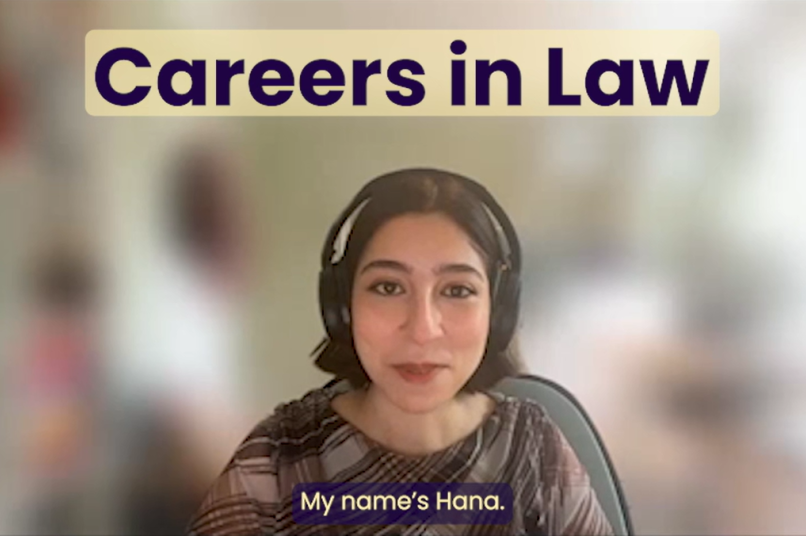
< Hear from Hana, a King's Law graduate who is now a barrister specialising in employment law and discrimination law.