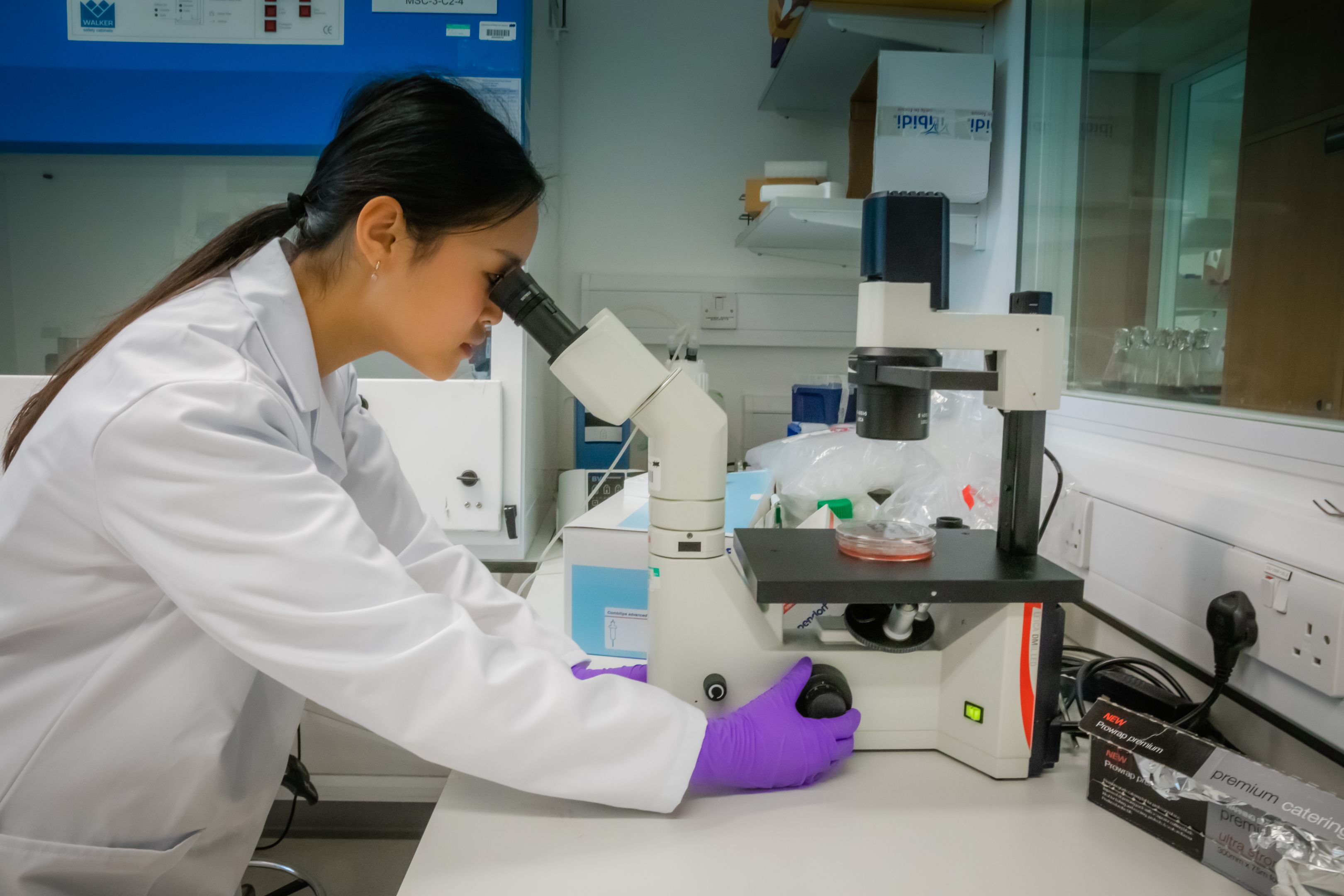
Researcher in Pathology lab
Kings logo

Research

Advancing knowledge is at the heart of King's intellectual life. Our research transcends discplines and our Fellows foster a close-knit community of scholars.

News from our research community

View all news
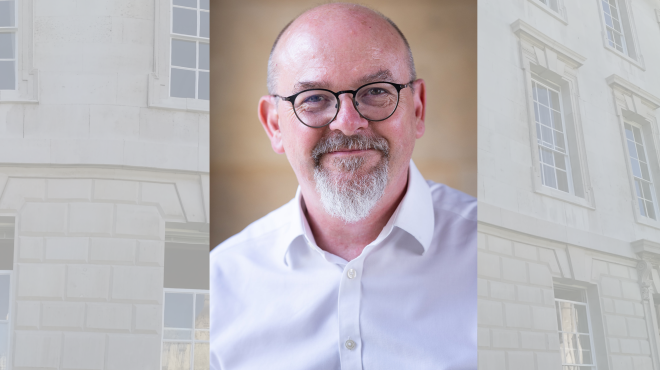
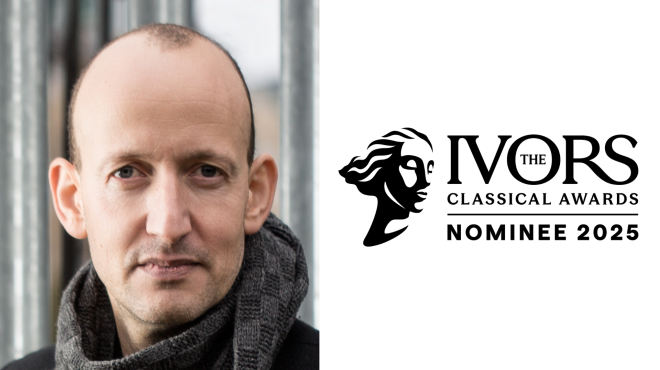
a headshot of a white man next to a decorative image of the Ivor Classical Awards 2025 logo

King's composer Professor Richard Causton shortlisted for an IVOR Classical award

Body

Richard Causton, University Professor of Composition and Fellow in Music, has been nominated for a 2025 IVORS Classical Award.

His composition If I Could Tell You (commissioned and premiered earlier this year by the Fidelio Trio) has been shortlisted for an IVORS Classical Award in the Best Small Chamber Composition category.

Judged by composers for composers, the IVORS Classical Awards recognise excellence in craft and creativity. They are the UK's flagship awards for classical composition. Presented by The Ivors Academy, they celebrate creative excellence in British and Irish composing. Previous winners include Sir Harrison Birtwistle, Errollyn Wallen CBE, Dame Judith Weir, Jonny Greenwood and Mark-Antony Turnage.

The final announcement is made at the Awards Ceremony on the South Bank on 11th Nov and also on BBC Radio 3. 

Find out about all the nominees for this year's IVORS Classical Awards.

Read more
King's composer Professor Richard Causton shortlisted for an IVOR Classical award
Day 2 hematoids

New lab-grown human embryo model produces blood cells

Body
Cambridge researchers have found a new way to produce human blood cells in the lab that mimics the process in natural embryos – a discovery that holds potential to simulate blood disorders like leukaemia, and to produce long-lasting blood stem cells for transplants. 


University of Cambridge scientists have used human stem cells to create three-dimensional embryo-like structures that replicate certain aspects of very early human development - including the production of blood stem cells.

These structures, which the scientists have named ‘hematoids’, are self-organising and start producing blood after around two weeks of development in the lab - mimicking the development process in human embryos. They differ from real human embryos in many ways, and cannot develop into them because they lack several embryonic tissues, as well as the supporting yolk sac and placenta needed for further development.

Hematoids hold exciting potential for a better understanding of blood formation during early human development, simulating blood disorders like leukaemia, and for producing long-lasting blood stem cells for transplants.

The human stem cells used to derive hematoids can be created from any cell in the body. This means the approach also holds great potential for personalised medicine in the future, by allowing the production of blood that is fully compatible with a patient’s own body. The new method mimics the natural developmental process, based on a self-organising human embryo-like model, where the cells’ intrinsic support environment drives the formation of blood cells and beating heart cells within the same system.

The findings are published today in the journal Cell Reports.

Professor Azim Surani, Emeritus Fellow of King’s, Director of Research at Cambridge’s Gurdon Institute and senior author of the paper, said: 

This model offers a powerful new way to study blood development in the early human embryo. Although it is still in the early stages, the ability to produce human blood cells in the lab marks a significant step towards future regenerative therapies - which use a patient’s own cells to repair and regenerate damaged tissues.

Professor Surani is the winner of the 2025 Kyoto Prize in the Life Sciences and Medicine. Read more about his work and this prestigious award here.


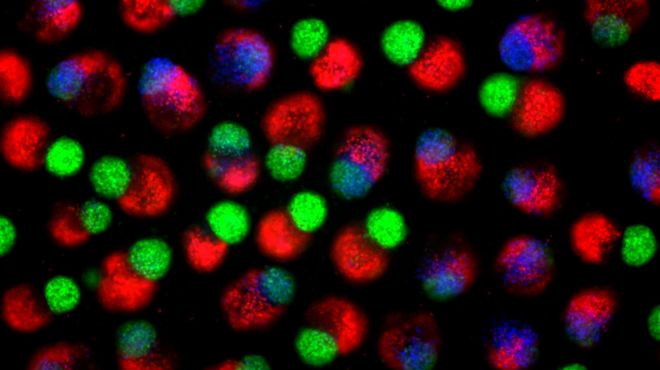
Image above shows day 2 hematoids: human stem cells start to self-organize into three-dimensional clumps establishing primary germ layers, including endoderm (red), ectoderm (green) and mesoderm (blue) derivatives. Primary germ layers give rise to all the tissues and organs of the body.

Read more
New lab-grown human embryo model produces blood cells
Universidad Adolfo Ibáñez, Campus Peñalolén Sede Pregrado

Architecture exhibition opens in the College Chapel

Body

The exhibition ‘Andean Contours – University Buildings’ by José Cruz Ovalle will run until 28 September, exploring Chilean architecture and reflecting on the connections between architectural design and higher education.

José Cruz Ovalle is a renowned Chilean architect who has worked internationally, with projects in Spain, Argentina, Colombia, and, of course, his home country of Chile. This exhibition highlights two university campuses he designed and built in Santiago and Valparaíso.

For this installation, the easels that previously supported the ’50 Portraits’ exhibition have been transformed into a new structure. This time, they carry a bespoke design made of pliable wood, forming a meandering surface. The images are carved—not printed—onto specially coated wooden panels, and every element has been carefully designed and 3D-printed to honour the unique architecture of the Chapel.

Exhibition Opening

Monday 1 September 2025

King’s College Audit Room (from 5pm)

King’s College Chapel (from 6pm)

*

On Tuesday 2 September José Cruz Ovalle, Peter Clegg (designer of Stephen Taylor Court), and Michelle McNamara (Pritzker Prize Laureate) will present their work, focusing on university buildings.

These events are organised by Dr Felipe Hernández and supported by King’s College Cambridge and the Universidad Adolfo Ibáñez.


Read more
Architecture exhibition opens in the College Chapel
Basim Musallam by Rory O'Bryen

Basim Musallam (1943 - 2025)

Body

It is with great sadness that we share the news of Life Fellow Dr Basim Musallam's death on 21 August 2025.

Born in Lebanon, Basim was a highly distinguished historian of the Middle East who burst onto the academic scene in 1983 with his book Sex and Society in Islam: Birth Control before the Nineteenth Century. In addition to his many books, he wrote and starred in multiple episodes of a documentary series The Arabs - A Living History 1979 - 1983 which aired on Channel 4 (UK) and PBS (US).

Educated at the American University of Beirut and Harvard University, he joined the University of Cambridge as a lecturer in Islamic Studies in 1985 and later served as Director of the Centre of Middle Eastern Studies. 

He had been a Fellow of the College since 1990 and served the College in many capacities, most notably as Director of Studies in Oriental Studies/Asian and Middle Eastern Studies, as Vice Provost and also briefly as First Bursar. He was an extraordinary mentor to many younger Fellows, to whom he was willing to give endless time. 

*

A memorial event, open to all in the King's community, to celebrate Basim's life and work will take place in Hall on 31 January at 3pm. 

Read more
Basim Musallam (1943 - 2025)
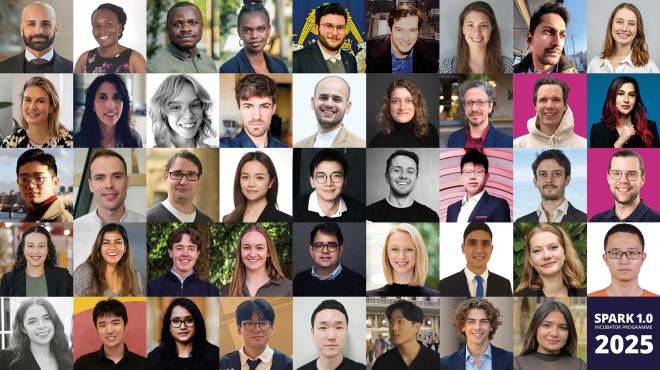
Headshots of all participants in the SPARK programme

King’s E-Lab SPARK incubator reveals first cohort

Body

Created by the King's E-Lab, in partnership with Founders at the University of Cambridge, SPARK will act as an entrepreneurial launchpad. This programme will offer hands-on support, world-class mentorship and practical training to enable world-changing ventures covering challenges such as disease prevention and treatment, fertility support, and climate resilience. The combined networks of successful entrepreneurs and investor alumni and venture-building expertise brought by King’s E-Lab and Founders will address a critical gap to drive innovation. 

More than 180 applications were received for SPARK 1.0, reflecting strong demand for early incubation support. Of the 24 selected companies, focused on AI, machine learning, biotechnology and impact, 42% are at idea stage, 40% have and early-stage product and 17% have early users. Around half of the selected companies are led by women. Four of the startups are founded by King’s students.  

The intensive incubator will run for four weeks from the end of August. Each participant will receive specialised support from Founders at the University of Cambridge and King’s E-Lab mentors and entrepreneurs-in-residence to turn their concepts into companies that can attract both investment and ultimately grow into startups capable of driving economic growth. 

The programme is free for students graduating in summer 2025, postgraduates, post-docs, researchers, and alumni who have graduated within the last two years. This is made possible through University funding as well as a generous personal donation from Malcolm McKenzie (KC 1977), Chair of the E-Lab’s Senior Advisory Board.  

Kamiar Mohaddes, Co-Founder and Director of King's E-Lab, says: 

Cambridge has been responsible for many world-changing discoveries, but entrepreneurship isn't the first thought of most people studying here. Driving economic growth requires inspiring the next generation to think boldly about how their ideas can shape industries and society. We want SPARK to be a catalyst, showing students the reality of founding a company. We look forward to seeing this cohort turn their ambitions into ventures that contribute meaningfully to the economy.

Read more
King’s E-Lab SPARK incubator reveals first cohort
Library arches seen from Webb's Court

Jane Austen Open Day at King’s College Library

Body

King’s is taking part once more in Open Cambridge, the initiative that offers special access to the extraordinary spaces and places in Cambridge that are normally closed to the general public or charge admission. 

On Wednesday 17 September the College Library and Archives will host an exhibition to mark two hundred and fifty years since the birth of Jane Austen. The free exhibition will showcase first and early editions of the author’s well-known novels, the autograph manuscript of her unfinished novel Sanditon, and various documents that highlight the Austen family’s connection with King’s.

Wednesday 17 September, 10.30am-4pm 
King’s College Library

PLEASE NOTE: Access for this event is via the gate on King’s Lane (between Queen’s Lane and King’s Parade)

*

Earlier this year, the autograph manuscript of Jane Austen’s final novel, Sanditon, went on loan to Harewood House in Yorkshire as part of their exhibition Austen and Turner: A Country House Encounter.

The Sanditon manuscript was given to King’s College in 1930 by Jane’s great-great niece Mary Isabella Lefroy, in memory of her sister Florence and Florence’s husband, the late Provost Augustus Austen Leigh (1840-1905), who was one of Jane's great-nephews.

Read more
Jane Austen Open Day at King’s College Library
A smiling young man with dark hair wearing a blue top

E-Lab Research Associate awarded ARIA research grant for innovative project to address climate instability

Body
Chris Micklem has been awarded a £500,000 research grant from the Advanced Research + Invention Agency (ARIA), the largest award size possible for the grant.

A huge congratulations to Chris Micklem who has been awarded a £500,000 research grant from the Advanced Research + Invention Agency (ARIA), the largest award size possible for the grant.

It comes as a part of ARIA’s Programmable Plants opportunity space, led by Programme Director Angie Burnett, and it aims to support explorations into how we can programme plants to remove more CO₂, fight drought, and deliver medicines to those in need.

Chris, a King’s E-Lab Research Associate and a postdoctoral researcher at the Sainsbury Laboratory, is seeking to pioneer a new direction in synthetic biology through the design of gene circuits that use noise, instead of suppressing it. By embracing stochasticity, not fighting it, the aim of Chris’s project is to program plants more robustly and more effectively.

In this era of increasing climate instability, such unexplored approaches may hold the key to enabling a more sustainable coexistence of humanity with the planet and, for Chris, it is hoped that his project will help accelerate progress towards such a future.

Chris’s work has also been showcased for his use of AI as a part of a deep neural network-based approach to facilitate more effective use of photosynthetic bacteria for climate positive purposes.

Alongside James Beattie and Charles Emogor, Chris joined Coco Newton, Nadia Mohd-Radzman and Ismail Sami as E-Lab Research Associate this year. Read more about their work here.

On receiving the award, Chris said:

It is a huge privilege to be selected for ARIA’s Programmable Plants Opportunity Seed. What is so exciting about ARIA’s approach is the direct mandate to turn ambitious science into real-world solutions to humanity’s greatest challenges. This focus, coupled with the King’s E-Lab’s invaluable support, provides the perfect environment to pursue both groundbreaking research and its commercial potential, to drive transformative change.

About ARIA:

ARIA is an R&D funding agency created to unlock technological breakthroughs that benefit everyone. Created by an Act of Parliament and sponsored by the Department for Science, Innovation and Technology, we fund teams of scientists and engineers to pursue research at the edge of what is scientifically and technologically possible.


Read more
E-Lab Research Associate awarded ARIA research grant for innovative project to address climate instability
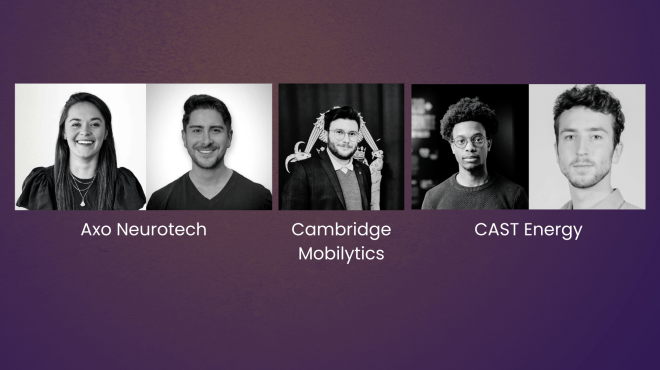
Five black and white profile photos of the entrepreneurs behind Axo Neurotech, Mobilytics and CAST Energy against a purple background

Winners of 2025 Entrepreneurship Prize announced

Body
Axo Neurotech, Cambridge Mobilytics and CAST Energy have been awarded prizes by the judging panel.

We are delighted to announce the 11th year of awards under the College’s annual entrepreneurship competition, intended to encourage King’s members (past and present) to develop their entrepreneurial ideas and convert their creativity and knowhow for sustainable commercial and social benefit.

This year’s top prize, with a value of £20,000, has been awarded to Axo Neurotech, a £10,000 second prize goes to Cambridge Mobilytics, and CAST Energy receives the third prize of £5,000.

Founded by Dr Amy Rochford (KC 2018, Engineering) and Nathan Jackrazi (KC 2018, Engineering), AxoNeurotech is on a mission to build a seamless natural interface. Axo's next-generation neural interface uses cutting-edge material science and a biology-first approach to solve the problem of integrating electronics with the body, with the clear aim of improving patients' lives. 

Listen to Amy here sharing her journey from academia to industry, focusing on neurotechnology's potential to transform treatments for brain and nervous system injuries.

Eliott Fournet (MBA student) founded Cambridge Mobilytics to aggregate underutilised charging data from electric vehicle infrastructure operators across Europe to create valuable predictive models and market intelligence. The company acts as a trusted intermediary, purchasing and standardizing charging data to offer (among other things) clean datasets for car manufacturers and financial institutions.  

CAST Energy is the early-stage startup led by Chris Tagnon (MPhil student in Industrial Systems, Manufacture, and Management) and Joseph de Solages. It offers a solar power generation system, designed for easy implementation in remote areas thanks to its containerized format. This innovative system is fully modular and transportable in a standard 20- or 40-foot container that can generate up to 240 kW and offer an impressive storage capacity of 960 kWh, surpassing most of the solutions on the market. The system is perfectly suited to transform access to clean energy in places previously difficult to equip.

**

The Entrepreneurship Prize competition was established in 2014 with a gift from Stuart Lyons CBE (KC 1962) and culminates each year in the ‘Lyons Den’, where finalists present their full business plans to an expert panel.

If you would like to find out more about the King's Entrepreneurship Prize and how to enter the competition, please email enterprise@kings.cam.ac.uk

Read more
Winners of 2025 Entrepreneurship Prize announced
Multiple reflective glass windows viewed from below framed by a tree and a sunny, cloudy sky

The compelling economic case for climate investment

Body

First published 12 March 2025

A report by the climaTRACES Lab with Boston Consulting Group and the Cambridge Judge Business School highlights the importance of investing in climate mitigation and adaptation and the significant economic consequences of failing to do so.

Allowing global warming to reach 3°C by 2100 could reduce cumulative economic output by 15% to 34%. Alternatively, investing 1% to 2% in mitigation and adaptation would limit warming to 2°C, reducing economic damages to 2% to 4%. This net cost of inaction is equivalent to 11% to 27% of cumulative GDP—equivalent to three times global health care spending.

These are among the findings of the Boston Consulting Group (BCG) Climate Change and Sustainability consulting experts, Cambridge Judge Business School, and the University of Cambridge’s climaTRACES Lab report, Too Hot to Think Straight, Too Cold to Panic: Landing the Economic Case for Climate Action With Decision Makers, published today.

“Research on climate change impacts across all regions and sectors is expanding rapidly,” said Kamiar Mohaddes, King’s Fellow in Economics, Co-Founder and Director of the King’s E-Lab, and Director of the University of Cambridge climaTRACES Lab. “What stands out is that productivity loss—not merely capital destruction—is the primary driver of economic damage. It is also clear that climate change will reduce income in all countries and across all sectors, affecting industries ranging from transport to manufacturing and retail, not only agriculture and other sectors commonly associated with nature.”

“The economic case for climate action is clear, yet not broadly known and understood” said Annika Zawadzki, BCG managing director and partner, and a co-author of the report. “Investment in both mitigation and adaptation could bring a return of around tenfold by 2100.”

Another challenge is that the costs and benefits of the transition are not evenly distributed among countries. Even so, the net cost of inaction is high enough that it will likely justify unilateral action from the world’s biggest emitters. The report looks at five priority levers that can be pulled to address these challenges:

  • Reframe the debate on the costs of climate change
  • Create transparency on net cost of inaction across
  • Strengthen national climate policies to accelerate mitigation and adaptation
  • Reinvigorate international cooperation on climate change
  • Advance our understanding of the net cost of inaction

**

climaTRACES Lab is an interdisciplinary initiative at the University of Cambridge focusing on climate, nature, and sustainability research. Their data-driven research and policy engagement covers the following four themes: Communication & Communities, Macroeconomics & Sustainability, Green & Sustainable Finance, and Nature & Biodiversity. Collaborating with a network of climate and nature experts globally, we conduct cutting edge research for wider societal benefit, and create and test innovative policy communications formats that translate the evidence and multidisciplinary research generated by the lab for policy and industry audiences.   

Read more
The compelling economic case for climate investment
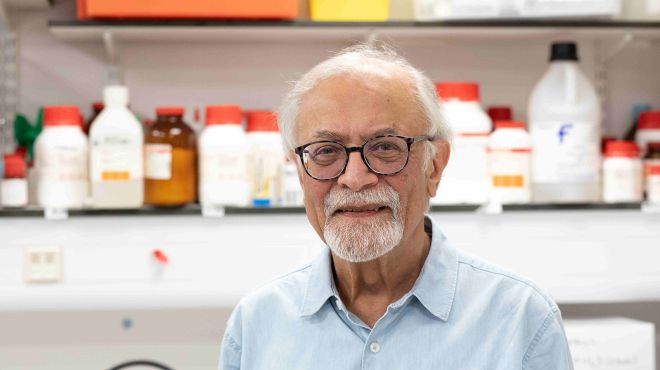
A smiling man with short white hair, a beard and glasses, wearing a pale blue shirt in a lab with bottles on a shelf behind him.

Azim Surani awarded 2025 Kyoto Prize

Body
Professor Surani is to be honoured with a Kyoto Prize by the Inamori Foundation for his significant contribution to the scientific betterment of humankind. The prize presentation will take place in Kyoto on 10 November.

Professor Azim Surani, Emeritus Fellow of King’s and Director of Research at the Gurdon Institute, is the winner of the 2025 Kyoto Prize in the Life Sciences and Medicine for his discovery of genomic imprinting in mammals and elucidation of its molecular mechanisms.

His research demonstrated that both paternal and maternal genomes are indispensable for normal mammalian development and subsequently discovered genomic imprinting that confers specific modifications and complementary functions to each genome. Furthermore, he has played a pioneering role in elucidating its underlying mechanisms, thereby making contributions to foundational scientific insights across a broad spectrum of life science fields.

On being awarded the Kyoto Prize, Professor Surani said:

I am deeply honoured to have been awarded the Kyoto Prize in Basic Sciences for my discovery of genomic imprinting in mammals nearly four decades ago – a discovery that was unexpected, opening up exciting new avenues of research, including epigenetics and human development that we have since pursued.

It has been a tremendous privilege to work with many exceptional young scientists in my laboratory, and I am immensely grateful to them for their invaluable contributions.

You can read more about Professor Surani’s research and the 40th anniversary of his discovery here, and hear him talk about his Journey of Discovery.

The activities of the Inamori Foundation reflect the lifelong beliefs of its founder that “people have no higher calling than to strive for the greater good of humankind and society” and that “the future of humanity can be assured only through a balance between scientific progress and spiritual depth.” The Foundation seeks to promote international mutual understanding and actively contributes to peace and prosperity among all people on earth. It does this through activities of public recognition, research grants, and social contributions towards creative activities to foster science, culture, and the enrichment of the human spirit.

Read more
Azim Surani awarded 2025 Kyoto Prize
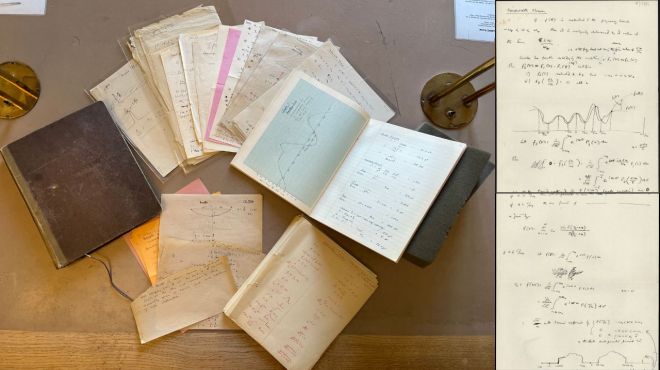
A selection of mid-century notebooks and papers with handwritten mathematic graphs, equation and writing.

Alan Turing's 'Delilah' papers saved for the nation

Body
A rare and significant archive of Alan Turing's unpublished Second World War papers has found a permanent home at King's.

Following his ground-breaking work on the Enigma machines at Bletchley Park, in 1943 Turing (KC 1931) turned to building a portable voice encoder for short-distance transmission to be used in military operations. The project was code-named 'Delilah'. With the help of electrical engineer Donald Bayley they built a single prototype to encipher a speech for transmission via a telephone line or VHF radio link with accurate and complete reproduction at the other end.

During the development work at Hanslope Park, now the home of HMGCC (His Majesty’s Government Communications Centre), Turing and Bayley kept a logbook of their experimental results. Bayley also kept handwritten notes of lectures Turing gave to interested Hanslope Park engineers about the mathematics behind the project, along with loose pages of diagrams, calculations, explanations, and other electronic and mathematical theorems and problems.

Unpublished evidence of Alan Turing's work has rarely survived, and the papers were at risk of leaving the country unless a UK institution or individual tried to purchase the items and retain them in the UK for the public to enjoy. The notebooks were saved thanks to a major donation from trading firm XTX Markets, Friends of the Nations' Libraries, and further support from the National Heritage Memorial Fund and King's College.

"It’s brilliant news that the Friends of the Nations’ Libraries charity has successfully campaigned to save Alan Turing’s vital notebooks. Turing was not only a pioneering figure in science and mathematics, but also a national hero” said Secretary of State for Culture Media and Sport Lisa Nandy.

“This is a powerful example of what can be achieved when private and charitable sectors come together. After a government export ban was placed on the notebooks, this collaboration has ensured that these treasures will be preserved for years to come.”

The papers consist of more than 40 pages of unpublished ‘Delilah’ project notes written by Alan Turing and Donald Bayley and are the most important archive of Turing material to come to auction. They will join the largest collection of Turing-related documents at King’s College, Cambridge. Once digitised they will become part of the Turing Papers online archive, freely available to scholars and students around the world.

Alex Gerko, Founder and co-CEO, XTX Markets said, “The 'Delilah’ papers are a unique collection of notes from one of the nation’s greatest mathematicians. It’s important that this archive remains in the UK and is made publicly accessible, so we are thrilled to be part of that effort.”

Alan Turing arrived at King’s as an undergraduate in 1931 and was made a Fellow in 1935, maintaining a lifelong connection with the College. The Turing Archive was founded in 1960 following a donation of his papers by his mother, Sara Turing.

“Alan Turing’s work laid the foundations of computer science, artificial intelligence and much of our modern world. We are honoured to house the ‘Delilah’ papers at King’s and are deeply grateful to our partners in this endeavour, particularly XTX Markets, Alex Gerko, and the Friends of the Nations’ Libraries,” commented King’s College Provost Gillian Tett.

Geordie Greig, Chair of Friends of the Nations' Libraries said: “This extraordinary private donation means that crucial papers written by one of Britain’s geniuses have been saved and can be studied at Cambridge. It is a wonderful act of generosity by XTX Markets and Alex Gerko and we are delighted to have played a part in bringing together this brilliant collaboration between XTX Markets and King’s College, a centre of academic excellence to save our heritage."

Read more
Alan Turing's 'Delilah' papers saved for the nation
Several brown bison stand in the middle distance with white snow covered grass in the foreground and frosty winter trees in the background.

Study by King’s PhD student shows conservation efforts are bringing species back from the brink

Body
Ash Simkins’ review of over 67,000 animal species has found that while the natural world continues to face a biodiversity crisis, targeted conservation efforts can be successful.

The study draws on data from the IUCN Red List, the world’s largest database of species conservation status. The researchers say their results, reported in the journal PLOS Biology, highlight both the successes and the need for urgent action.

The researchers, led by the University of Cambridge with the IUCN, BirdLife International, and Oxford and Durham Universities, used Red List data to assess whether conservation measures had been put in place, and whether those actions had a positive impact on a given species’ conservation status.

“We found that almost all the species that have moved from a more threatened category to a less threatened category have benefitted from some sort of conservation measures,” said lead author Ash Simkins, a PhD candidate in Cambridge’s Department of Zoology. “It’s a strong signal that conservation works.”

While there is no ‘one size fits all’ solution, the researchers observed some connections between conservation success stories. Many of these species live in isolated areas, such as islands, where intensive conservation efforts – such as habitat protection, captive breeding and reintroductions – can be fully implemented.

“While biodiversity loss is a genuine crisis, it’s vital that we celebrate the success stories wherever and whenever we can,” says Ash. “It’s so hard for a species to improve its conservation status, but with the right effort, we can turn things around.”

The Iberian lynx, once the world’s most endangered cat, has rebounded from just a few hundred individuals to a few thousand. And the European bison, which was hunted to extinction in the wild in the early 20th century, now roams parts of Eastern Europe thanks to sustained conservation efforts over decades.

Ash states that like human healthcare, preventative measures in conservation are preferable and more cost-effective to emergency interventions:

“Humans have gotten pretty good at what could be considered ‘A&E’ conservation – focusing on species at very high risk of extinction. What we’re less good at is preventing species from becoming threatened in the first place. We need to move beyond treating the symptoms of biodiversity loss and start addressing the root causes.”
Ash also emphasises the need for collaborative, locally driven conservation. “It’s vital that we as conservationists are working with stakeholders, rather than dictating to them, whether that’s an Indigenous community in Papua New Guinea or a farmer in Somerset. Conservation doesn’t have to be a zero-sum game – there are compromises that can benefit both the natural world and human society.”

Read more
Study by King’s PhD student shows conservation efforts are bringing species back from the brink
Elizabeth Zachariah in the lab

The E-Lab launches the 2025 Entrepreneurial Essay Competition

Body
UK-based students studying at sixth form (or equivalent) level, regardless of subjects studied, are welcome to enter.

 The King’s Entrepreneurship Lab (E-Lab) is delighted to introduce the third edition of the Entrepreneurial Essay Competition. The purpose of the competition is to encourage UK-based students to pursue entrepreneurial aspirations and understand better how to launch an enterprise. The E-Lab is particularly keen to foster this entrepreneurial spirit among students who might not traditionally consider entering the world of business and hope this competition encourages more young people to apply to Oxbridge and Higher Education.

 E-Lab associate Rhys Williams says “after the success of last year’s competition, where we received hundreds of fantastic essays exploring the entrepreneurial spirit, we are very excited to be launching the competition again! We look forward to reading the amazing essays and to welcoming the prize winners to the College in autumn”.

 Students should choose between one of the three possible essay questions exploring the importance of entrepreneurialism and the challenges that business people face. UK-based students currently in years 11, 12 and 13 in England and Wales; S4, S5 and S6 in Scotland; or years 12, 13 or 14 in Northern Ireland - regardless of subjects studied - are welcome to enter the competition. A winner, and two runners-up, will be invited to King’s College for a prize-giving ceremony in autumn, and the winner will receive a cash prize of £1,500, with each runner-up receiving £750.

The deadline for entries is 25 July 2025. The choice of questions and full details on eligibility and the rules can be found on the E-Lab website here. You can find the essays written by last year’s fantastic winners here.

 Read more about the E-Lab and sign up to their newsletter here.

Read more
The E-Lab launches the 2025 Entrepreneurial Essay Competition
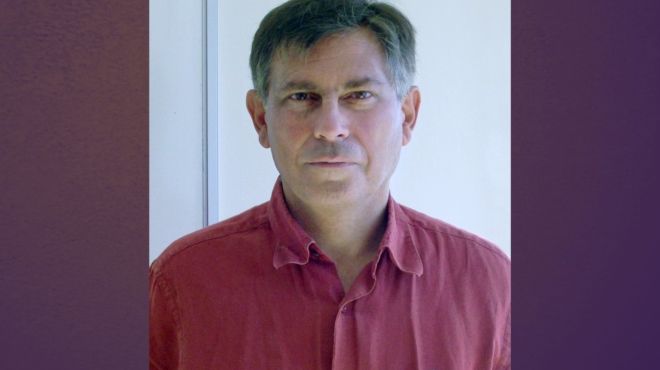
A smiling man with dark grey hair and a red shirt

King’s Fellow awarded the Albert Einstein Medal 2024

Body

Professor George Efstathiou, King’s Fellow in Astrophysics, former director of the Institute of Astronomy and founding director of the Kavli Institute for Cosmology, has been awarded this year’s Albert Einstein Medal.

Since 1979 the Albert Einstein Medal has been awarded to deserving individuals for outstanding scientific findings, works, or publications related to Albert Einstein.

The public award ceremony will take place on 9 October in Bern during the Physics Colloquium at the University of Bern, where Professor Efstathiou will give a lecture entitled ‘Do we have a standard model of cosmology?’.

Read more
King’s Fellow awarded the Albert Einstein Medal 2024
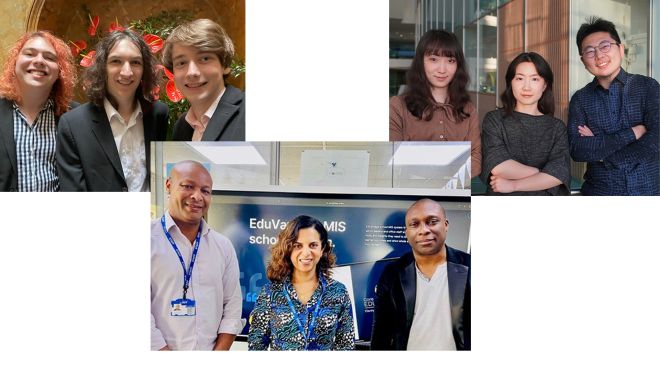
Three photos of the three winning teams, each with three smiling winners.

Winners of 2024 Entrepreneurship Prize announced

Body

We are delighted to announce the tenth year of awards under the College’s annual entrepreneurship competition, intended to encourage King’s members (past and present) to develop their entrepreneurial ideas and convert their creativity and knowhow for sustainable commercial and social benefit.

This year’s top prize, with a value of £20,000, has been awarded to Flare, a £10,000 second prize goes to EduVantage, and CellaNexa receives the third prize of £5,000.

Founded by recent graduates Gabriel Brown (KC 2020, Theology), Morgan Saville (KC 2020, Computer Science) and Geno Racklin Asher (KC 2020, Mathematics), Flare builds custom safety apps that help universities, colleges and schools safeguard students and promote a positive brand image. By selecting from their menu of pre-built feature modules, clients can order a safety app that is tailored to their unique needs. While all the maintenance and technical details are handled by Flare, institutions can enjoy full ownership and control over their app. The service is scalable and cost-effective.

Flare’s initial market is the secondary and higher education sector in the UK, but there are also significant growth opportunities in construction and the public sector, as well as in many businesses that employ lone workers.

Presented by Sonia Ramanah (KC 1995, Social and Political Sciences), EduVantage is a School Information Management System (SIMS) suite designed to streamline, unify and simplify administrative and educational processes, with features and functionalities that meet the diverse needs of students, teachers, administrators and parents. As an off-the-shelf, accessible, cost-effective, agile and user-friendly SIMS, EduVantage is uniquely positioned for UK small schools who require flexibility in timetabling and student admissions and progressions as well as Less Developed Countries with limited digital resources, connectivity and skills. The software was originally developed by a London school as an innovative solution to meet its requirements to track, assess, manage and monitor the diverse needs of the vulnerable students on its roll, after a scan of the existing SIMS marketplace identified a gap in the market. 

CellaNexa is a business idea led by Wennan Sun (KC 2022, Economics) which hopes to revolutionize drug delivery. Its AI-powered protein engineering platform is designed to harness the unique properties of self-assembling proteins from long terminal repeats (LTR) retrotransposons. The platform expertly identifies these proteins and refines them through advanced machine learning-driven design techniques. It develops protein nanoparticles that excel in targeting ability, payload capacity, immune evasion, and manufacturability, specifically focusing on targeted delivery to brain and cancer tissues.

*

The Entrepreneurship Prize competition was established in 2014 with a gift from Stuart Lyons CBE (KC 1962) and culminates each year in the ‘Lyons Den’, where finalists present their full business plans to an expert panel.

If you would like to find out more about the King's Entrepreneurship Prize and how to enter the competition, please email: enterprise@kings.cam.ac.uk

Read about past winners of the Entrepreneurship Prize here.

Read more
Winners of 2024 Entrepreneurship Prize announced
Student working in a laboratory

Undergraduate Summer Research Programme

The King’s Summer Research Programmes offer undergraduate students at King's in the early and middle years of their degree the chance to gain hands-on research experience on projects covering areas across the sciences and the arts and humanities.