Human, Social, and Political Sciences
Human, Social, and Political Sciences (HSPS) is a versatile and highly-regarded three-year Cambridge degree offering broad and specialised study of social and political life in the widest international and comparative perspective. HSPS at King’s has a long and distinguished tradition, training students to think across the social sciences with agility and care, engaging with contemporary questions with critical and enquiring minds.
At a glance
A Level requirements: A*AA
IB requirements: 41-42 points overall with 7, 7, 6 at Higher Level
Subject requirements: None required
Average students per year: 10
Admissions assessment: Yes
Written work: 2 pieces
Admissions
Course overview
Human, Social, and Political Sciences (HSPS) is a degree unique to Cambridge and much valued within King’s. It provides a foundational training in social sciences and teaches our students to explore how people in different societies live, shape and contest their world, from the interpersonal to the international. In HSPS, you will develop broad foundations in how to think about society, culture and politics at all scales, starting with strong disciplinary foundations across three core subjects (Politics, Social Anthropology & Sociology) in the first year (known as Part I) and then specialising and tailoring your pathway in second and third years (Part II), with multiple combinations across our three subject areas (with potential for limited borrowing of subjects from other degrees). At King’s, we are uniquely strong and well represented across all the three core subjects, ensuring that King’s students in HSPS are being taught by leading academics within their University Departments:
- Politics and International Studies, where you explore politics within and between countries, covering issues from the climate crisis and democratic decline to global financial politics and international conflict
- Social Anthropology, where you investigate cultural and social diversity, from the intimate to the global scale – asking nuanced questions about identities, values, families, faiths, political and economic structures and struggles around the world.
- Sociology, where you analyse multiple forms of power and inequality, and how they impact on the social, cultural, political and economic dimensions of people’s lives
King’s is a unique and special place for HSPS, with a rich history of Fellows who have done pioneering research in sociology, social anthropology and politics and, notably, a passionate and talented student cohort, who have a strong identity within the College, running many of the student societies and who are often at the heart of the King’s student community. The College is a vibrant and diverse place for studying HSPS, and students in HSPS enrich life at King’s.
For more information about the course and its modules, visit the University website.
Admissions assessment
A College admissions assessment is required of all candidates invited to interview. This consists of an essay question that students will be required to complete. Students choose one essay question from a total of 5-10. The exam is conducted online and lasts 60 minutes.
Written work
Sample written work can be from any subject, though sometimes it is particularly helpful to have essays or exams from subjects that are close to the HSPS disciplines. This work is assessed for analytical and reasoning skills.
Interviews
Interviews are with two King’s Fellows (or equivalent) and are structured conversations aimed at allowing candidates to demonstrate how they think through questions and debates.
What we look for in an applicant
HSPS students are intellectually curious and reflective about the world and themselves. They are self-motivated and self-disciplined, and eager to challenge themselves. They will also often have a strong background in essay-based subjects.
A top tip for applicants
Explore your academic interests outside of your school or college curriculum. Keep up-to-date with current events and consider their impact for social and political life.
Find out more
You can find out more about HSPS by visiting the University website and the Faculty of Human, Social, and Political Sciences website.
King’s also runs Open Days where you can visit the College and get a taste of the subject.
Life as a King's HSPS student
HSPS students at King’s usually have eight hours of lectures each week in Michaelmas (October-December) and Lent Terms (January-March); and some in the first four weeks of Easter Term (April-June). Students often spend the rest of their days either reading and/or writing essays, or attending supervisions. Each student has a Director of Studies from amongst the Fellows in their subject, and they guide the student’s progress through their degree, advising on all academic matters and helping them to achieve their potential. HSPS students and Fellows meet regularly for formal meetings (such as Directors of Studies meetings at the start and end of each term) and also informally throughout the year at subject talks, films and end of year celebrations, providing regular opportunities for discussion and subject-based learning and connection.
HSPS students have around 6-8 supervisions in each paper they are taking over the course of the year, mostly in Michaelmas and Lent, or about two supervisions per week. Each supervision, which is led by an academic in the subject, usually requires students to submit an essay in advance. The supervisions go for an hour with between one and three students. The time is devoted to discussing the essay, and answering questions and debating matters from the reading and lectures. King’s Fellows are actively engaged in teaching and Directing Studies for their students at all stages of their course; and King’s students in HSPS are amongst the top performing students within the College and within the Tripos.
One of the things I’ve loved most about studying HSPS at King’s is the freedom to explore so many different academic and creative interests. Through the course, I’ve discovered new areas I’m really passionate about. Beyond academics, there are so many opportunities to get involved in societies, creative projects, and College life, which makes the experience feel incredibly varied and exciting. I’ve also really appreciated the support and encouragement from my Director of Studies, which has made trying new things feel much less daunting and far more rewarding.
- Daniella, 1st year
There really is no better place to do HSPS than King’s! We have one of the largest number of fellows and students, giving King’s a vibrant community of people who love the HSPS subjects. We are also some HSPS socials together in college and so your course mates become your friends as well as your colleges. There are also lots of opportunities to talk to HSPS in the years above you, giving you the chance to gain some of their invaluable wisdom.
- Troy, 1st year
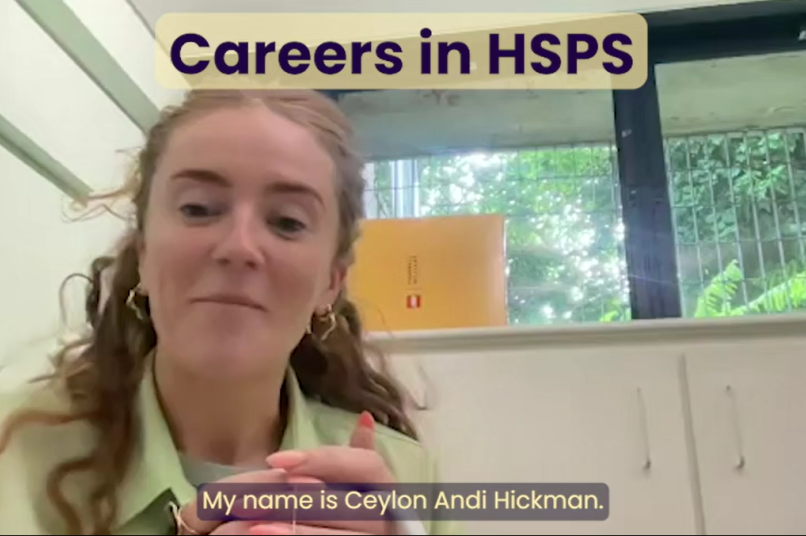
Careers and graduate opportunities
HSPS graduates are equipped with transferable skills that are highly valued in multiple sectors and disciplines. Graduates of HSPS at King’s regularly go on to research Master's and PhDs within Cambridge and at other Universities in the UK and abroad. Recent graduates have also proceeded to build successful careers in research (both academic and policy), the Civil Service (including local government and the Foreign Office), journalism, independent film, national and international non-governmental organisations and development agencies, law, teaching, drama, publishing, management consultancy, health management, and public relations.
< Watch an interview with Ceylon Andi Hickman, a King's HSPS graduate who is now a Deputy Chief Executive at Football Beyond Borders, an education and social inclusion charity.