History

The Cambridge History degree gives you the opportunity to explore the past from many different angles – including political, economic, social, and cultural history.
Kings logo

Course overview

The papers on the History degree takes students from broad overviews to more in-depth treatment of subjects, culminating in the third-year ‘Special Subject’. In each of the three years, students will also engage with a focus on primary sources leading to a third-year dissertation topic and will take a paper on ‘Historical Thinking’ that explores how historians set about researching and writing history.

There is a choice of papers in each year, subject to availability of spaces, and because of the large number of historians in Cambridge, there are many from which to choose, from ancient and medieval topics to modern and world history. The ‘Historical Thinking’ papers in each year are the only compulsory element, and are taught mainly in College.

For more information about the course and its modules, visit the University website.


What is it like to study History at King’s?

History students typically have five or six hours of lectures per week in the Faculty of History, and two weekly supervisions (an hour of one-, two- or three-to-one teaching) in College. The King’s History students also have some group teaching within College related to the ‘Historical Thinking’ papers on the degree, usually two sessions a term in first year and a bit more in second and third year. History students at King’s are encouraged to pursue a language as a non-assessed, extracurricular element, and would usually have another supervision a week for that as well. A lot of time is spent on independent study – reading, reflecting, writing – most likely in either the College library or the University Library.

We usually take eight to ten students each year for the single-subject History degree, one or two for the joint History & Modern Languages degree, and two or three on the History & Politics degree.

In a typical supervision, a student will be asked to explore their understanding of that week’s subject and be challenged on how they think about it. If it’s a week where they have submitted an essay, the supervisor would give some one-to-one feedback on that, in terms of writing and essay structure as well as subject comprehension.


What do we look for in an applicant to History?

We look for students who are academically curious, have explored history outside of their school or college curriculum, and are ready to be challenged.


Requirements

A Level:  A*AA with A* in History

IB: 41-42 points overall with 7, 7, 6 at Higher Level

Subject requirements: History

Admissions assessment: None

Written work: 2 pieces
 

Written work

Further details about written work will be provided in due course.


Careers and graduate opportunities

As a History graduate, you’ll have the ability to work independently, evaluate evidence, and present arguments clearly and persuasively. Past graduates have worked across many different sectors, including journalism, broadcasting, teaching, research, finance, consultancy, law, and public administration.


What is the best thing about studying History at King’s?

History is a strong subject at King’s, with a large cohort and several History Fellows, and the chance to discuss, debate, and analyse history with your peers is one of the best things about it.


A top tip for applicants to History at King’s

Show us why you are interested in History – what intellectual excitement it has for you.

People

Anna Alexandrova, a smiling woman with short brown wavy hair wearing a black top and a grey blazer. She is standing in front of a brick wall.

Anna Alexandrova

Bio

Professor Anna Alexandrova explores the philosophy of science, especially of economics and psychology. She is particularly interested in the role and status of formal models in special sciences and in measurement of happiness and well-being.

Read more
Anna Alexandrova
John Arnold, a smiling bald man with a short beard wearing glasses and a blue jumper

John Arnold

Bio

Professor John Arnold's research interests include:

  • Medieval religion and culture.
  • Heresy, inquisition, (un)belief.
  • Gender and sexuality.
  • Historiography.
Read more
John Arnold
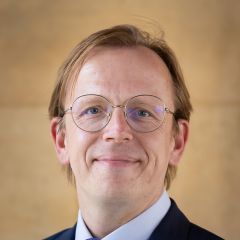
Marcus Boeick, a smiling man with short blonde hair, glasses and a blue shirt

Marcus Boeick

Bio

Dr Marcus Boeick is a historian specializing in Modern German and European History. 

"My research and teaching focus on the intricate relationship between the public and private spheres throughout the 20th century, particularly at the intersection of the state, economy, and society. My initial book delved into the contentious history of mass privatization of state assets in post-socialist Eastern Germany during the early 1990s. Currently, my ongoing book project presents a comprehensive and empirically grounded history of private security in 20th-century Germany and Central Europe. My approach encompasses a wide array of sources, ranging from classical references in state archives to media coverage, oral interviews, and material artefacts. I consistently strive to unearth unheard voices "from below" and offer novel perspectives from overlooked areas. Concurrently, I contextualize Germany within its transnational connections and broader global frameworks. I place significant value on interdisciplinary and transdisciplinary collaboration across a diverse spectrum of fields. Born in East Germany shortly before the fall of the Berlin Wall, I completed my studies at Ruhr-University Bochum, situated in the former West German "rust belt" region. Over recent years, I held a Postdoc Fellowship at the Institute of Advanced Studies at University College London and a Guest Professorship at the Imre-Kertész-Kolleg at Jena University. In the past year, I have been awarded a John F. Kennedy Memorial Fellow at the Minda de Gunzburg Center for European Studies at Harvard."

Read more
Marcus Boeick
Richard Bourke, a man with short dark hair and a grey shirt

Richard Bourke

Bio

Professor Richard Bourke works broadly in the history of political thought, mostly covering the enlightenment and its legacy. His interests include political ideologies, the philosophy of history, and the history of democracy. He has also published on modern Irish history. His most recent books include Empire and Revolution: The Political Life of Edmund Burke (2015) and Hegel’s World Revolutions (2023).

Read more
Richard Bourke
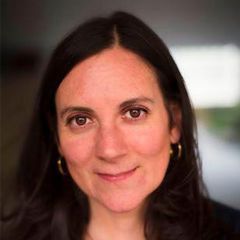
Caroline Goodson, a smiling woman with long dark brown hair and brown eyes

Caroline Goodson

Bio

History and archaeology of Early Medieval Europe, especially Italy and North Africa; Material Culture; Urbanism; Environmental History.

Read more
Caroline Goodson
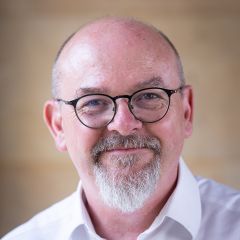
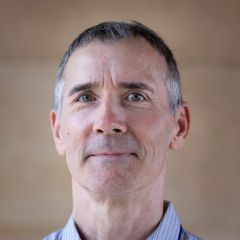
Ross Harrison, a smiling man with grey hair wearing a white shirt.

Ross Harrison

Bio

History, Early Modern Philosophy, Philosophy, History of Ideas and Intellectual History

Read more
Ross Harrison
A man with a dark jacket over a lighter, knitted jumper, standing in the sunshine outside a city building.

Christoph Hess

Bio

Christoph’s research specialises in the economic history of early modern China and East Asia. For his doctoral work, he reconstructed the institutional framework of inheritance in pre-industrial China through thousands of documents gathered from rural household collections in China. He is currently turning the findings from his doctoral dissertation into his first book, which examines how inheritance interacted with other institutions regulating marriage, migration, and the land market, to limit long-term capital accumulation. His main project as the Mervyn King Research Fellow at King’s will be a comprehensive study of living standards and wealth inequality in China between 1650 and 1950. He is especially interested in the effect of changes in wealth on broad measures of human welfare, such as nutrition, housing quality, and education. Christoph’s other interests include the rise of intellectual pragmatism in late imperial China, servantship and slavery, and rural entrepreneurship in post-reform China.

Christoph received his PhD from the University of Cambridge. Prior to that, he read for an MPhil in Cambridge and a BA in Philosophy and Economics at the University of Bayreuth. Other stations included Zhejiang University, Keio University, the Max-Planck-Institute for the History of Science, and the Max-Planck-Institute for Demographic Research.

Read more
Christoph Hess
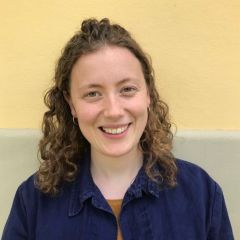
A smiling woman with curly, shoulder length dark blonde hair, wearing a dark blue collared shirt open at the neck, in front of a yellow and beige background.

Rebecca Orr

Bio

Rebecca’s research looks at how postcolonial migration resulted in the emergence of new types of professional work and workplace in post-war Britain and its former colonies. Her doctoral thesis explored the constitutive role played by ‘European’ migrants of decolonisation in three sectors on the ascent—private security companies, universities and charitable organisations—to understand the social and economic consequences of decolonisation in Europe. As a research fellow at King’s, she is developing a project on postcolonial families in twentieth-century Britain, investigating intergenerational memory, race and belonging. At the centre of her research is an attempt to show how the arrival of postcolonial migrants reshaped not only citizenship legislation but also the organisation of work, political life and cultural production across Europe.

Rebecca received a BA in History from the University of Cambridge and an MA in Modern History from the University of Warwick. She worked as a research assistant for the Global History of Capitalism project at the University of Oxford before completing her PhD in History at the European University Institute.

Read more
Rebecca Orr
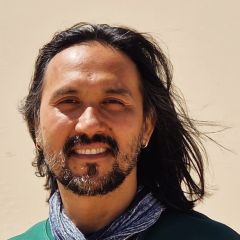
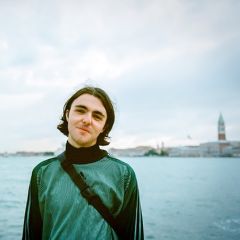
A man in a green top in front of a Venetian lagoon

Angus Russell

Bio

Angus works on the history of Mongol and post-Mongol Eurasia, with a particular focus on the politics and institutions of Rus’ and Moscow in the late medieval period. His doctoral thesis traced the evolution of fiscal models in the regions conquered by the Mongol khans. As part of his research fellowship at King’s, he hopes to explore the role language and translation can play in studying the cross-cultural interactions of pre-modern societies. Angus studied for his PhD in Slavonic Studies at Trinity College, Cambridge, after an undergraduate degree in History and Russian, and a master’s degree in Late Antique and Byzantine Studies at the University of Oxford.

Read more
Angus Russell
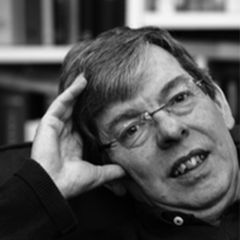
A black and white image of a man with short dark hair and glasses wearing a dark shirt. He is sitting in a relaxed pose

Michael Sonenscher

Bio
Research

French History c.1650-1848. History of Political Thought, particularly in France. Origins of political economy, social science, anthropology.

Read more
Michael Sonenscher
Gareth Steadman Jones, a smiling man the short grey hair wearing a navy blue polo neck and a brown tweed jacket. He is standing in front of a hedge

Gareth Stedman Jones

Bio
Research

Modern European political thought; Political, intellectual and economic history of Europe from the time of the French Revolution; and Victorian London.

Read more
Gareth Stedman Jones
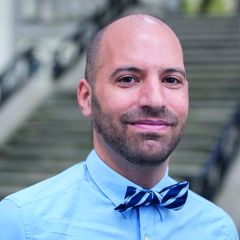
Dror Weil, a smiling bald man wearing a blue shirt and striped bow tie.

Dror Weil

Bio
Research

Dror is a historian of pre-modern Asia, with a particular interest in scientific and intellectual exchanges between the Islamicate world and China. His publications explore the translation and articulation methods of premodern experiences of the natural world, China's participation in the early modern Islamicate book culture, China's reception of Arabo-Persian astronomy and medicine, and the movement of Islamicate knowledge along the Silk Road.

Dror received his BA degree in East Asian Studies and Economics from Tel Aviv University, MA degrees from National Chengchi University in Taipei and Princeton, and his PhD degree in 2016 from Princeton with a dissertation titled: "The Vicissitudes of Late Imperial China's Accommodation of Arabo-Persian Knowledge of the Natural World, 16th–18th Centuries".

Before taking up his position at Cambridge in 2021, Dror held a lectureship in History of Asia pre-1750 at King's College London. Dror was a recipient of the Thomas Arthur Arnold Fund for Excellence in Historical Research fellowship and held postdoctoral fellowships at the Max Planck Institute for the History of Science and the Berlin Center for the History of Knowledge. He also served as a Visiting Professor at EHESS in Paris and Marseille.

Read more
Dror Weil

The Directors of Studies for 2025-2026 are Dr Dror Weil (Part IA), Dr Angus Russell (Part IB), and Dr Marcus Böick (Part II).