Hero video
Kings logo

King's College, where 
tradition meets innovation

Opportunity for everyone

Rich in heritage, rich in diversity.

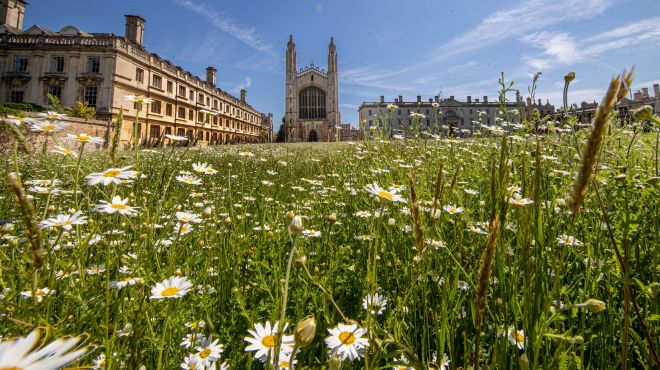
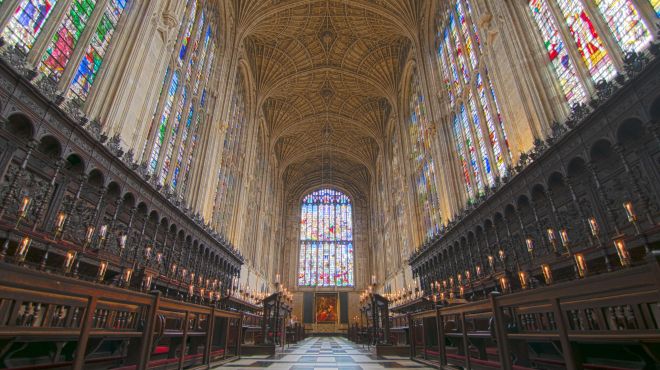
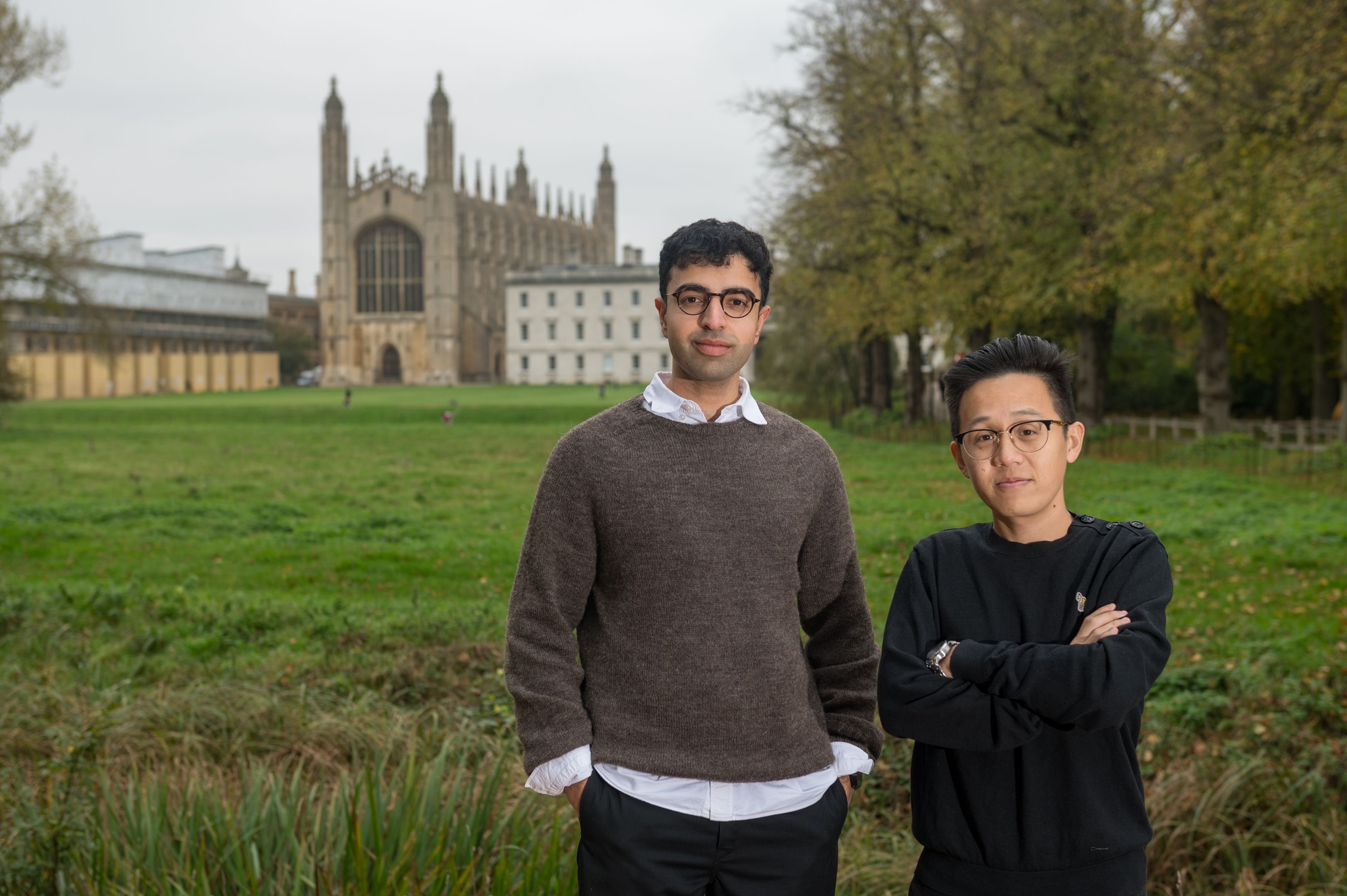
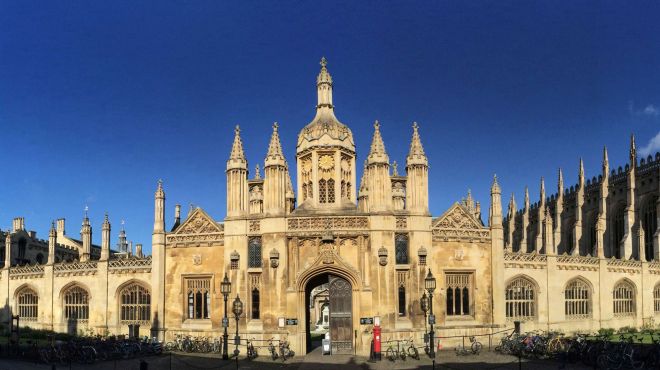
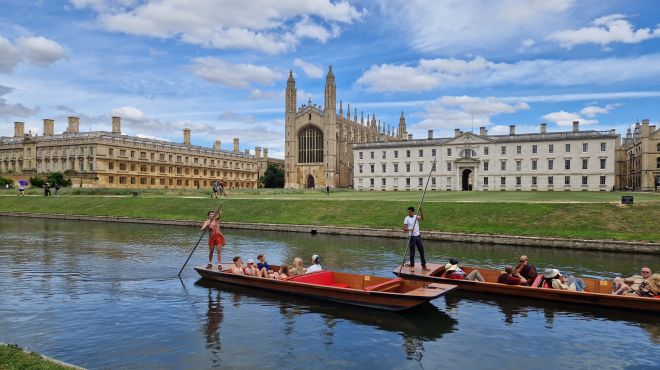
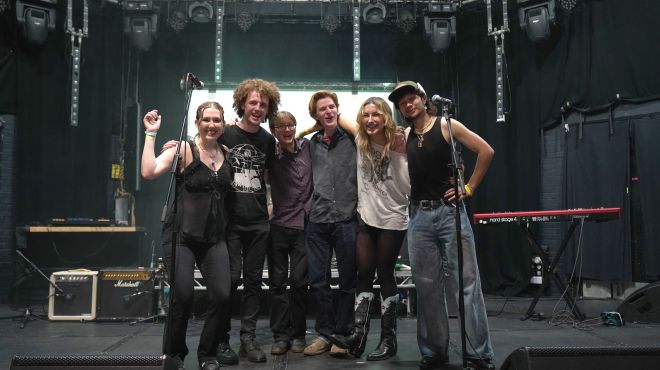
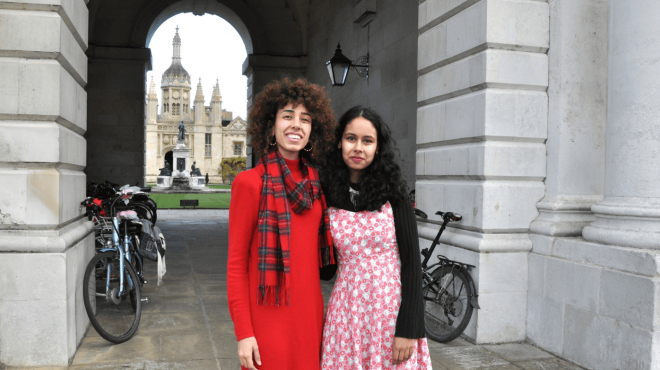
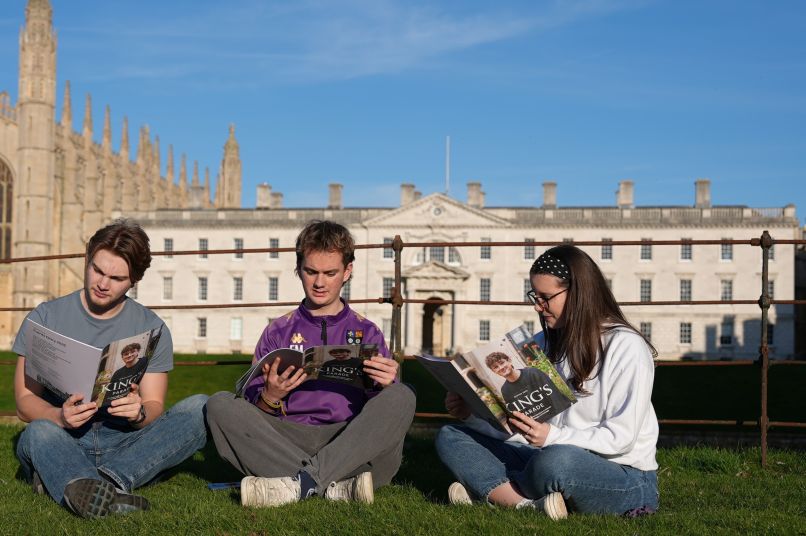
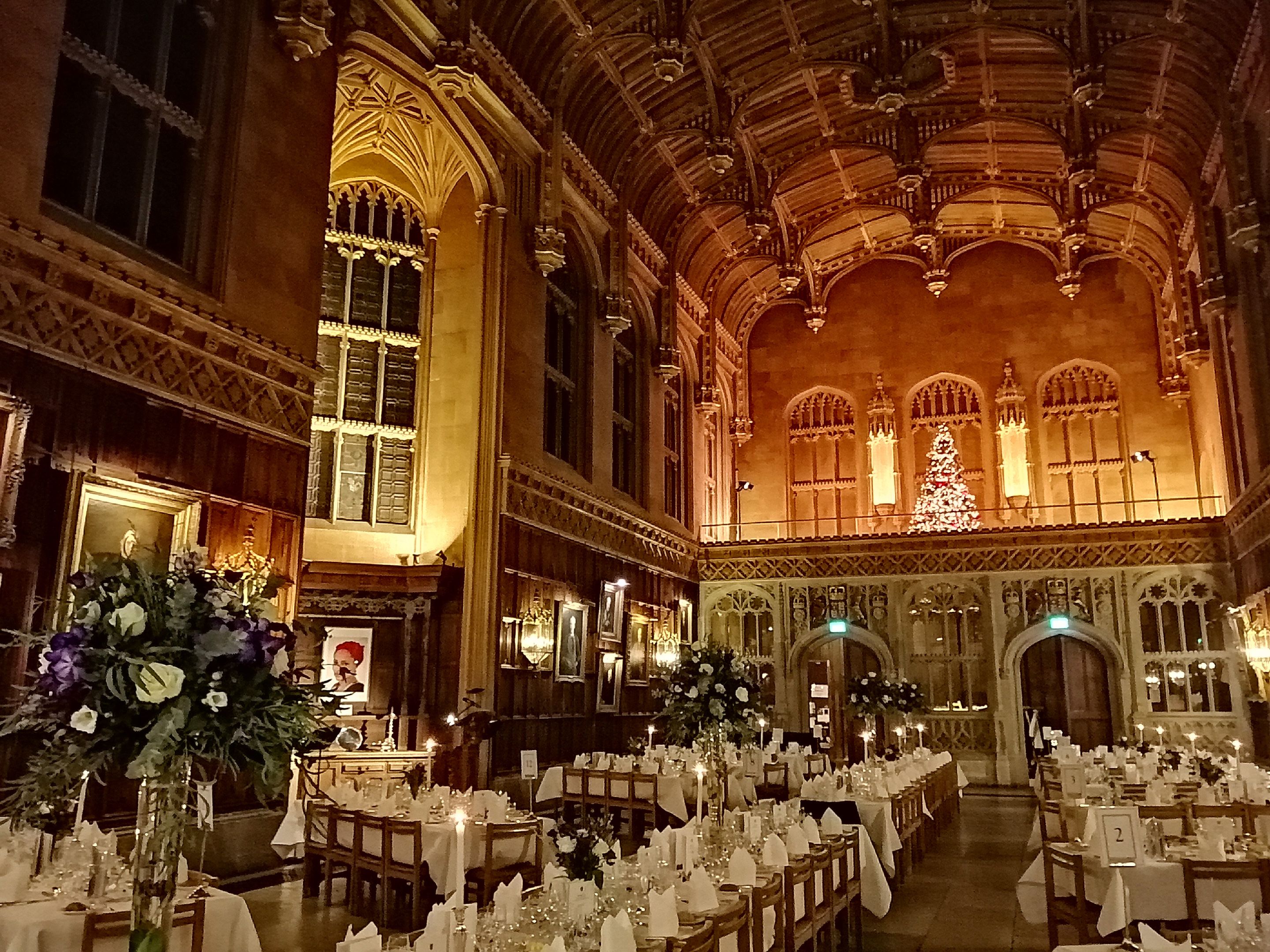
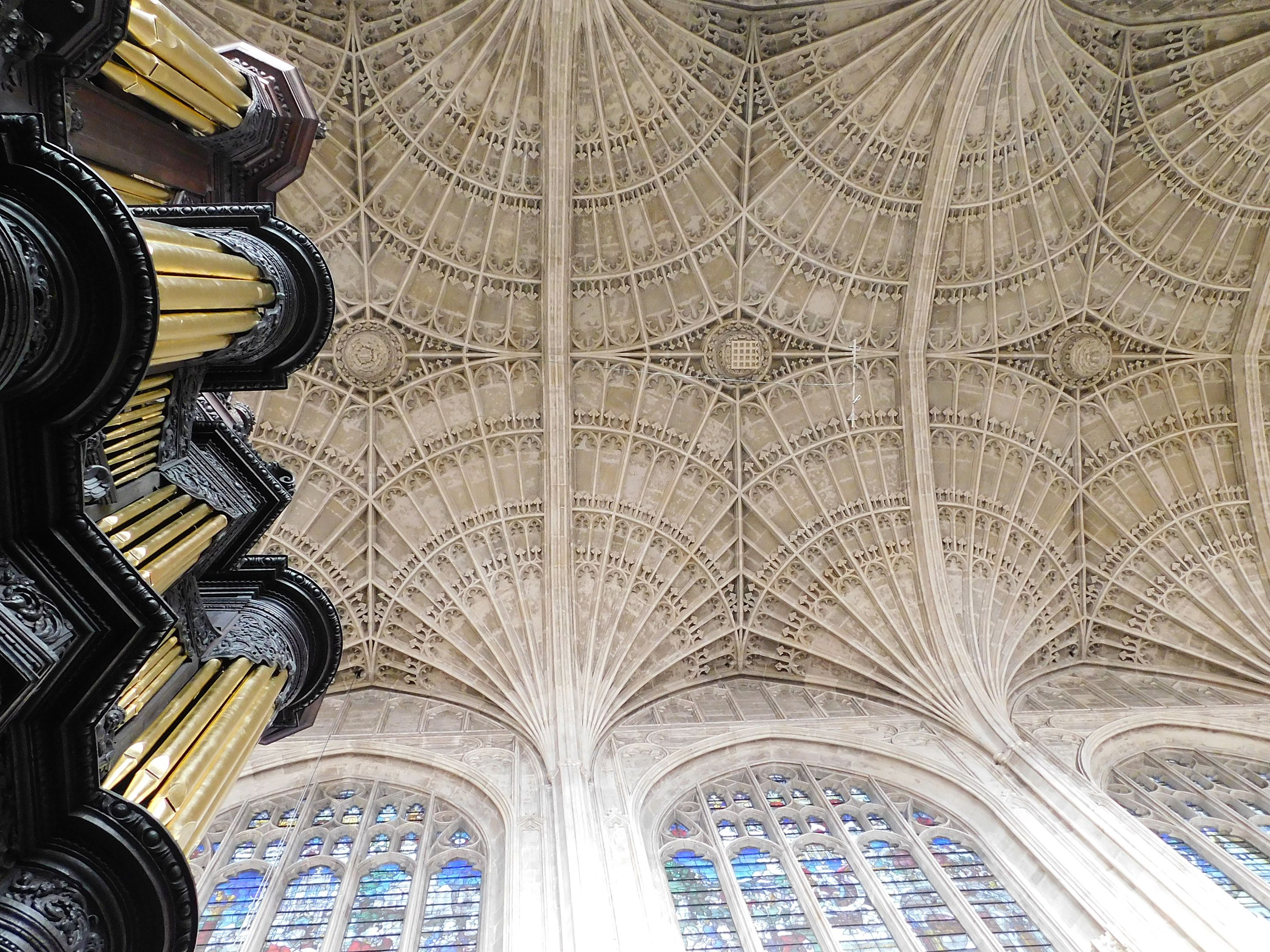
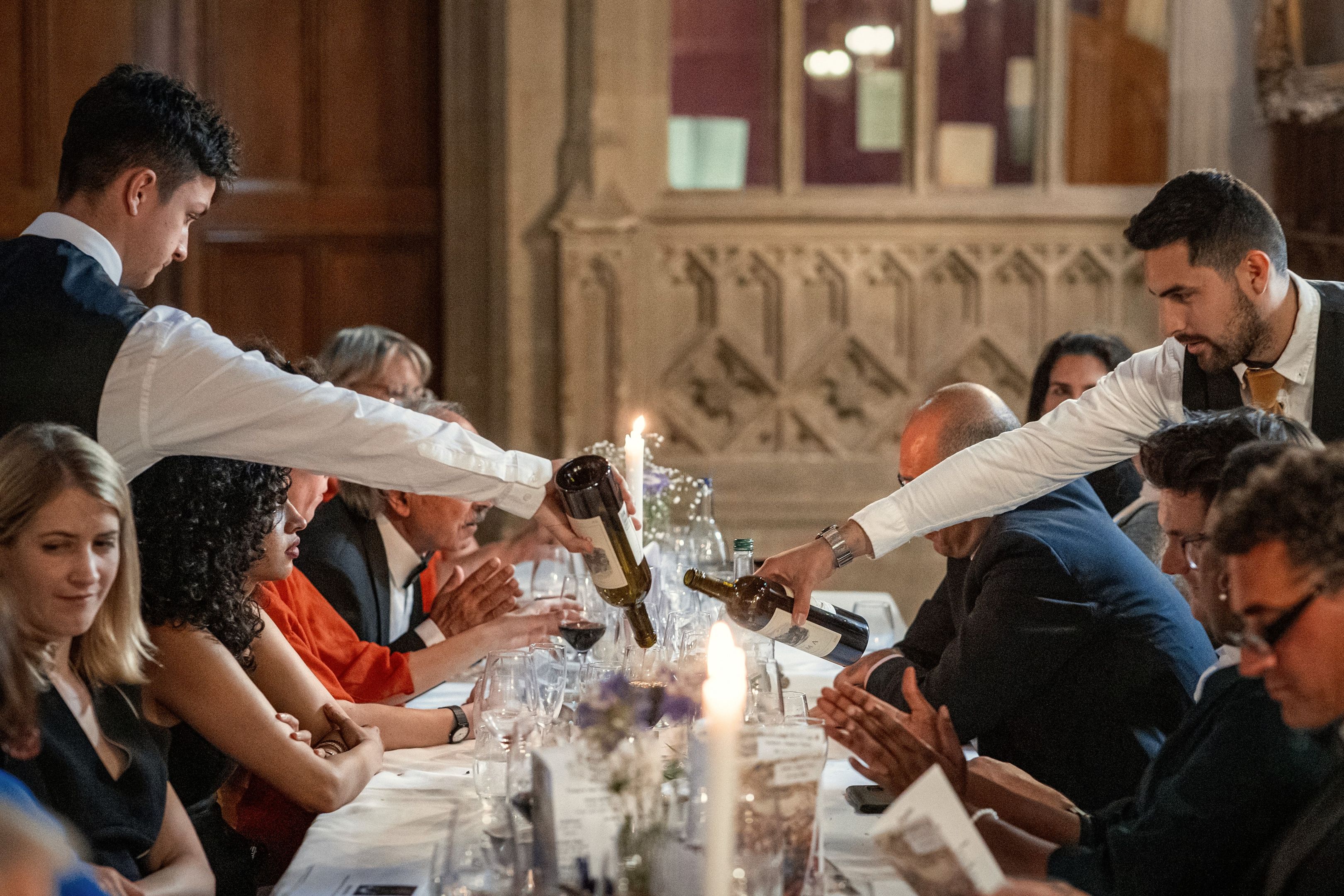
King’s is a dynamic and diverse College in the heart of Cambridge. Founded in 1441 by King Henry VI and recognised for its iconic Chapel, King's has a proud history of independent thought and offers a friendly and forward-thinking community to applicants from all backgrounds.


584 years
of education, religion, learning and research
850 students
More than 450 undergraduate and 400 graduate students
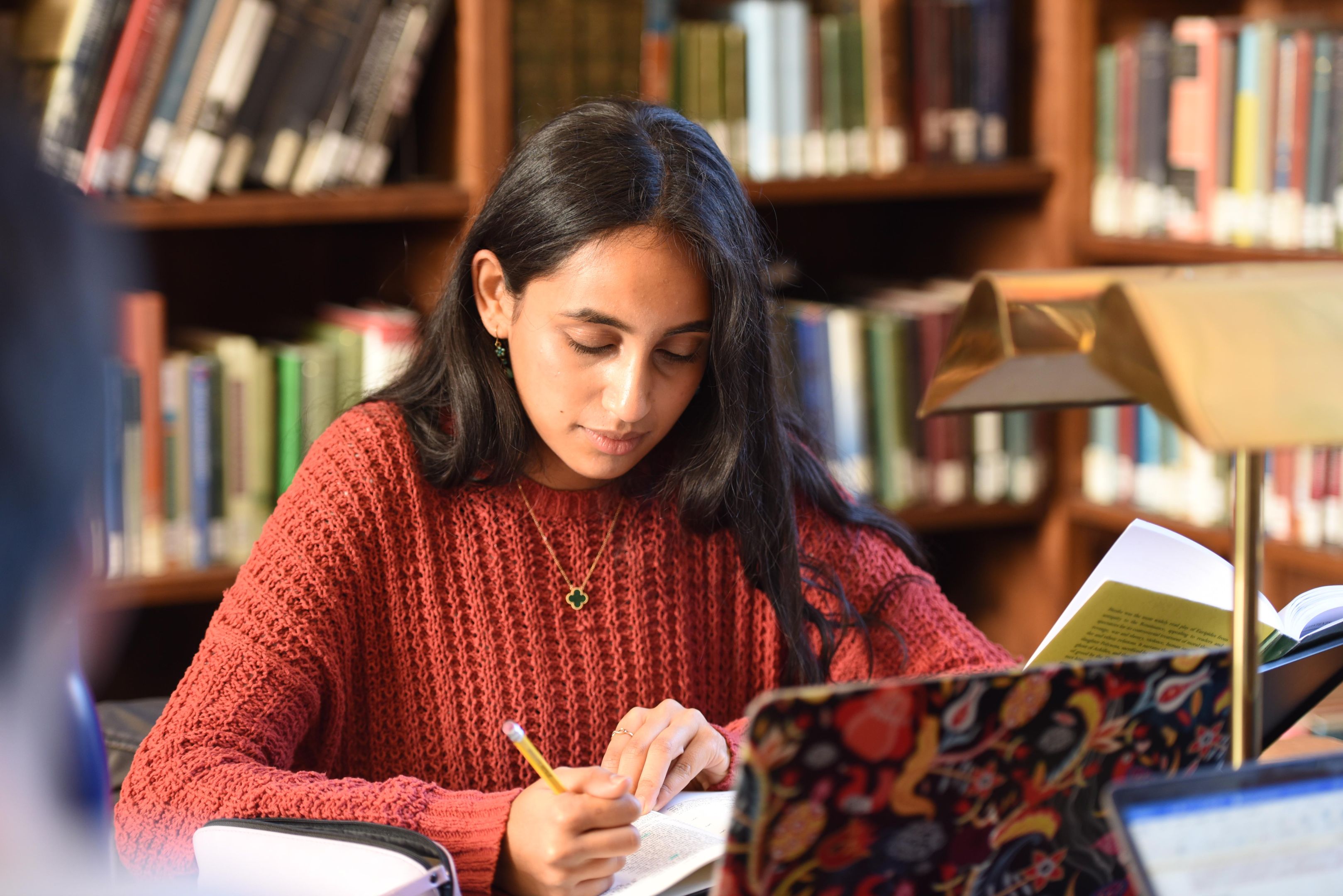
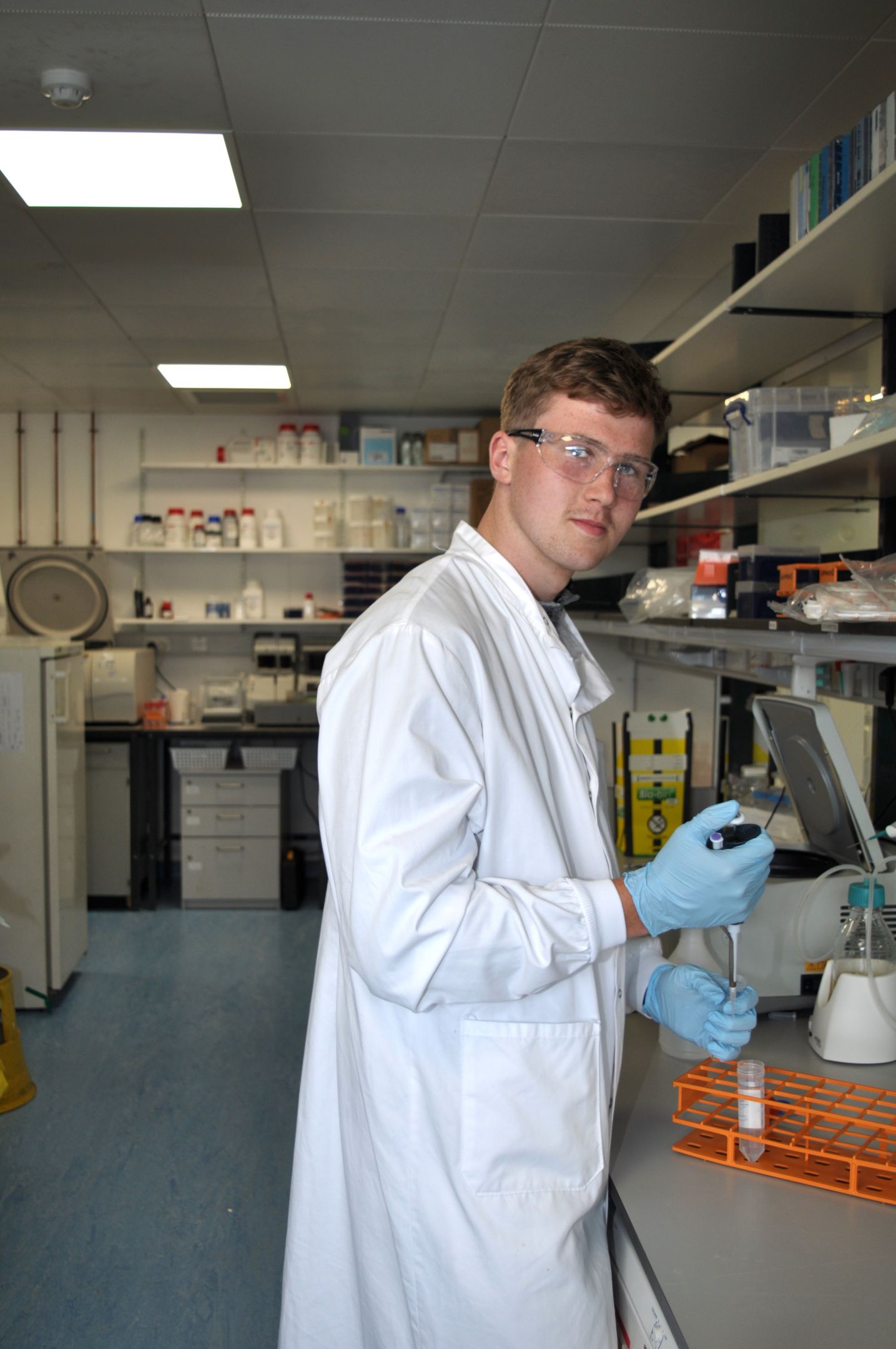
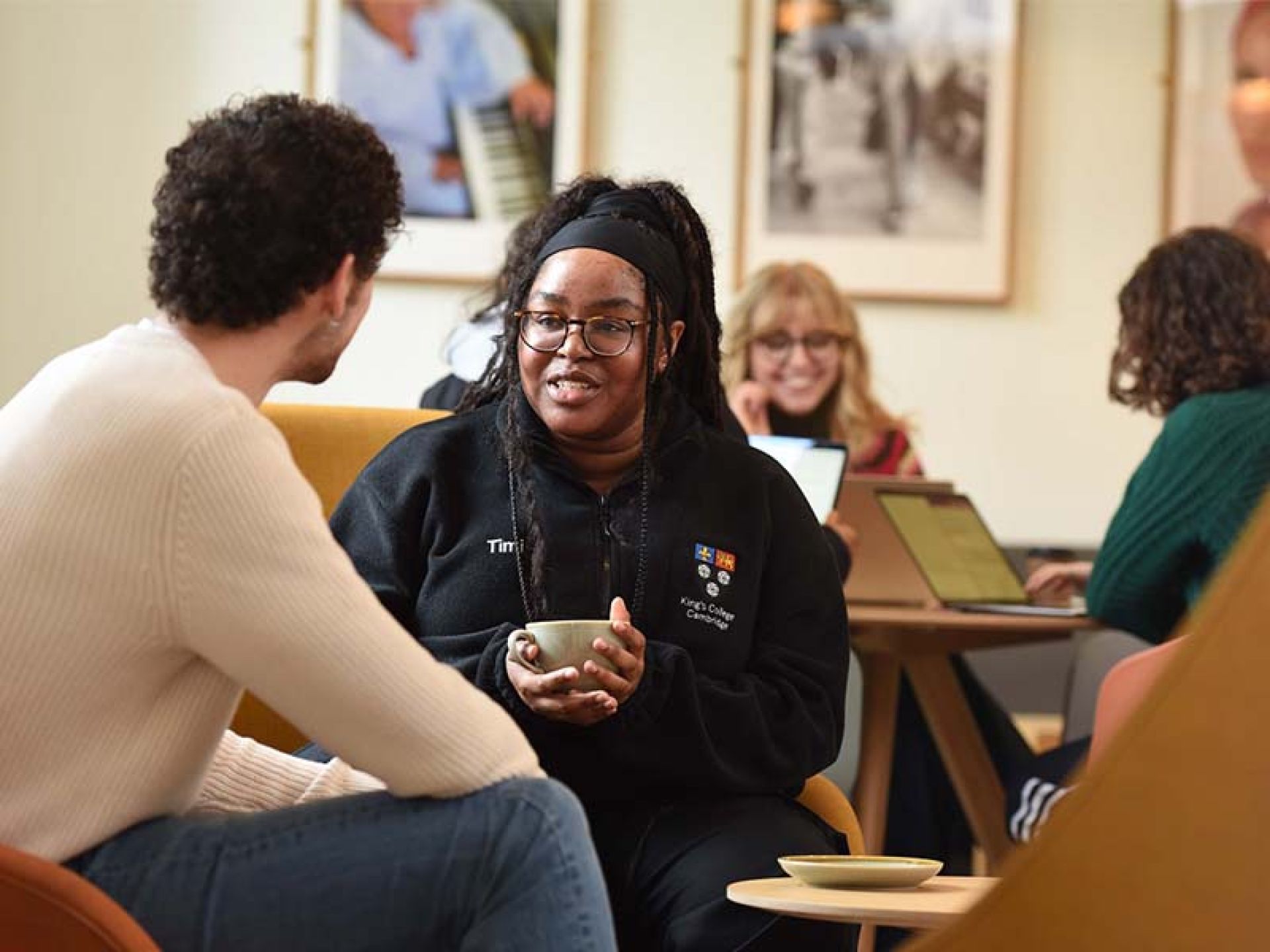
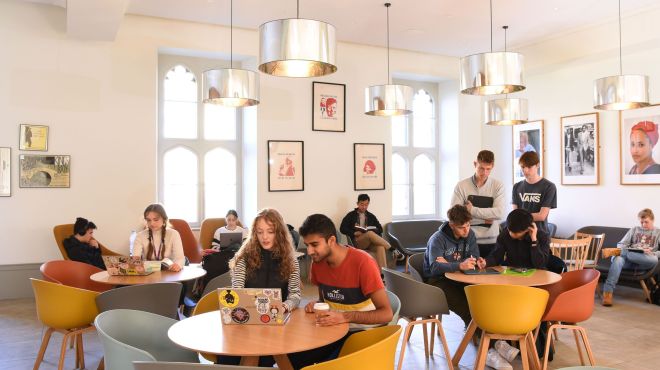
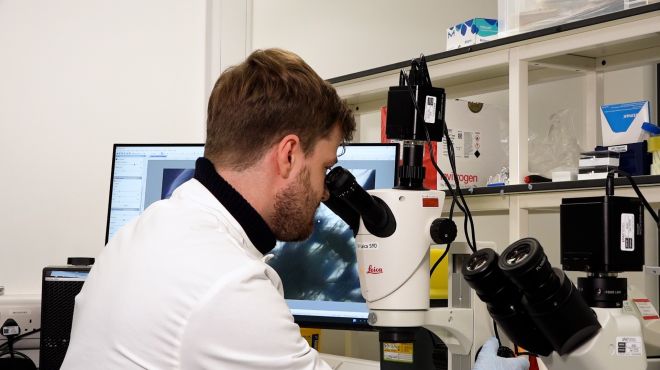
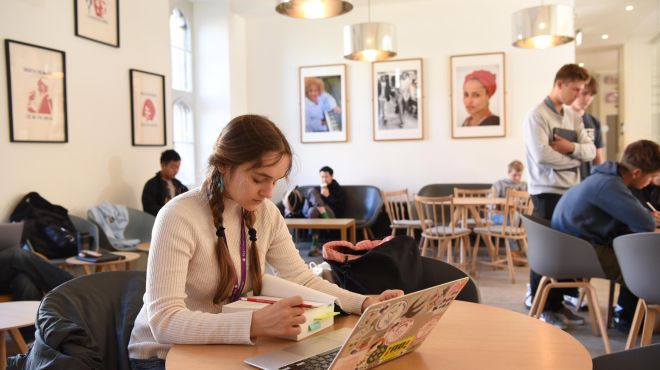
 Female Graduate Student Working In Library Male student wearing lab coat and goggles in a lab Female student having converstaion with another male student

Latest News

Catch up on the latest news posts from across the college
View all news
Woman with glasses photographed at the seaside

Errollyn Wallen CBE becomes new President of The Royal Society of Musicians

Body

Errollyn Wallen (KC 1999) has been appointed President of The Royal Society of Musicians to succeed Dame Judith Weir (KC 1973).

One of the most widely acclaimed contemporary composers, Errollyn was the first woman to win an Ivor Novello Award for a body of classical work, and the first black woman to have a composition played at the BBC Proms. Her music, often inspired by the River Thames, has been performed at the opening ceremony for the 2012 Paralympic Games, as part of the 2022 Festival of Nine Lessons and Carols service, and even played in outer space.

She has established herself as a composer of international stature, a pianist and vocalist, a broadcaster and communicator and as a teacher and enabler of other musicians. The Royal Society of Musicians looks forward to the next stage in its long history under her Presidency, which marks the third successive Master of the Queen's/King's Music to hold the position, following Dame Judith and Sir Peter Maxwell Davies CH CBE.

Upon taking up the role of President, Errollyn said:

I am delighted to be succeeding Dame Judith Weir as President of The Royal Society of Musicians which provides such valuable support to musicians who are unable to work through accident or illness. I look forward to fulfilling my role and supporting this amazing charity in its vital and significant work for the musicians of the UK.

Speaking upon the completion of her Presidency, Dame Judith said:

It has been one of the great honours of my life to represent RSM as its President during the last decade. The Society is exceptionally well administered, and completely focused on its main charitable purpose. It is highly professional and yet instantly responsive to any musician who needs its help. I have found it enriching to better understand the changing landscape of musicians’ lives via RSM’s all-round view of our profession. I am therefore delighted that Errollyn Wallen CBE will now assume the role - we are all indeed fortunate that this inspirational and generous composer has agreed to take over RSM’s Presidency in the coming years.

The Royal Society of Musicians is the UK’s oldest music charity, set up in 1738 to support musicians in need. Today, it provides financial assistance, advice and guidance to music professionals across the UK who are unable to work due to physical or mental ill health. Open to all music professionals, it supports performers, teachers, technicians, administrators and everything in between, whatever genre they work in. RSM provides grants for physical and emotional therapies, access to specialist practitioners and short-term living expenses. 


Read more
Errollyn Wallen CBE becomes new President of The Royal Society of Musicians
Conductor Richard Farnes

Orchestra conductor Richard Farnes recognised in the King’s New Year Honours list

Body

Our congratulations to King's alumnus Richard Farnes (KC 1983), who has been awarded a CBE (Commander of the Order of the British Empire) for services to music in the New Year Honours list for 2026.

Richard’s distinguished career spans both symphonic music and opera. He was a Chorister in the King's College Choir before entering Eton College as a music scholar in 1977. He returned to King's as Organ Scholar in 1983, and later studied at the Royal Academy of Music, the Guildhall School of Music and Drama, and the National Opera Studio. He has conducted a wide range of orchestras in the UK and across the world. With the BBC Symphony Orchestra he has appeared at the BBC Proms in London and at the Dubai Proms. From 2004 to 2016 he was Music Director of Opera North in Leeds.

Read more
Orchestra conductor Richard Farnes recognised in the King’s New Year Honours list
Laidlaw Scholars at a workshop

The Laidlaw Scholars Leadership & Research Programme arrives at King’s

Body
Pairing innovation with leadership excellence through its new home at the King’s E-Lab, the Programme invests in the next generation of global citizens.

The Laidlaw Scholars Leadership & Research Programme empowers undergraduates to develop the skills and character to become ethical global leaders. The fully funded 18-month programme combines rigorous academic research, international experiences, and leadership development, cultivating integrity-driven leaders prepared to create meaningful, real-world impact. 

The programme includes two fully funded summers, first in the Scholar’s chosen organisation to learn on-the-ground, practical lessons in leadership and then to conduct a group research project in another part of the world; a tailored leadership and research training course with workshops, mentors and interactive sessions to develop skills relevant to success in both areas; and opportunities to engage with a vibrant, global community of passionate students, researchers and changemakers.

Now in its new home in the King’s E-Lab, the Laidlaw programme at the University of Cambridge is dedicated to nurturing the next generation of leaders with a dynamic fusion of innovation and entrepreneurial thinking, strengthening the programme’s commitment to supporting impactful projects, bridging a range of disciplines and backgrounds, and connecting people with a commitment to creating a more just and equitable future.

Full details of the programme can be found here.

Together with the Laidlaw Foundation, the E-Lab believes that good leaders come in all shapes and sizes: the quiet and the gregarious, the scientist and the poet, the musician and the athlete. Whatever a student’s passion or background - all have the potential to lead and this programme is an important way to immerse oneself in new challenges, to build exciting collaborations and to learn from the experience of leading in different contexts.

Maryam Bham, a student at Lucy Cavendish and part of this year's E-Lab residential cohort, says:

Entrepreneurship and leadership are not only about ideas, they are about people, connection, conviction, and courage. At the King’s E-Lab, I experienced a space where I could see those same values come to life.

Sophie Harbour, Executive Director of the King’s E-Lab and Fellow, adds:

The Laidlaw Leadership and Research Programme provides students with the opportunity to learn how to channel their creativity and compassion to drive meaningful impact. This aim sits at the heart of all our E-Lab activities and it is why we are so excited to provide a new home for the Programme and help provide valuable pathways for students of all disciplines to embrace the possibility of changing the world.

Applications for the 2025/2026 cohort are launching the week of the 24th November and Susanna Kempe, CEO of the Laidlaw Foundation, will be in King’s for a fireside chat with the Provost

Read more
The Laidlaw Scholars Leadership & Research Programme arrives at King’s
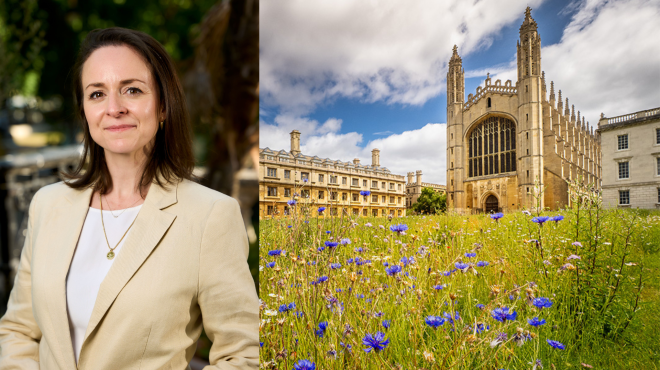
collage image of wildflower meadow and of a white male wearing glasses

New artist-in-residence to explore and challenge human ideas of climate crisis

Body

In a new and ambitious project, currently titled “A Normal Life”, artist Marcus Coates has joined King’s College as its artist in residence. Developed in collaboration with King’s, “A Normal Life” will put him – and by default us, as individuals – under the spotlight. The multi-faceted project will engage with, and be shaped by, world-leading scholars and business leaders, the community of King’s and the city of Cambridge.

The experience of living through today’s unfolding and deepening permacrisis poses profound and urgent questions to and of society, individual citizens, institutions and world leaders. Questions like “Who is accountable?” and “Who is responsible?” resonate ever more sharply as we call ourselves and others to account for bringing our people and our planet to the edge of the precipice. Contemporary artists, working at a distance from formal structures of power, are uniquely positioned to ask such difficult questions.

Marcus Coates is known for his sustained commitment to working at the intersection between nature and culture, and between art and science. Marcus makes films that address humanity and the natural world and explore the connections between them, working with drama and in collaboration. His 2022 series of films, entitled “The Directors” and produced by Artangel, has been widely acclaimed for its powerful and sensitive exploration of psychosis.

"The generous spirit of cross-disciplinary interaction which is at the core of the College has been a revelation to me. A place steeped in the past but profoundly rooted in the questions of today and the future,” commented Marcus. “My research for A Normal Life is informed by a range of disciplines from neuroscience, medieval English literature, history of law, evolutionary biology, politics and more." 

“It’s been remarkable and a great privilege being part of an ethos that celebrates thought and creates space for the imagination. 

Marcus Coates

Marcus will work with world experts with widely different perspectives to investigate our complicity in the earth crisis, as well as scrutinizing the cultural forces, the ideologies, values, and myths that shape our behaviour. His work will foreground those whose lives have been shaped by climate impacts – from small island nations threatened by rising seas to the farmers of the Fens facing unprecedented threats due to climate change – as well as those resolutely in denial of the crisis.

The project is co-curated by Clare Cumberlidge and Frances Morris (KC 1978) CBE, King’s College alumna and Honorary Fellow. “Marcus has received an incredible welcome from the staff and students at King's, a community which offers a near-perfect environment in which to develop and test his ambitious new project which focuses on personal responsibility in the era of climate emergency,” said Frances Morris. 

“Internationally renowned for its scholarship across the humanities and sciences, King's has a long track record of independent thought, challenging tradition and embracing cross-disciplinary innovation. Marcus's residency is generating multiple opportunities for research, reflection and imaginative collaboration with analytical and creative thinkers from across the College community.”

Marcus and the project team will organise a series of workshops and other opportunities for engagement across the College community in 2026.

Read more
New artist-in-residence to explore and challenge human ideas of climate crisis
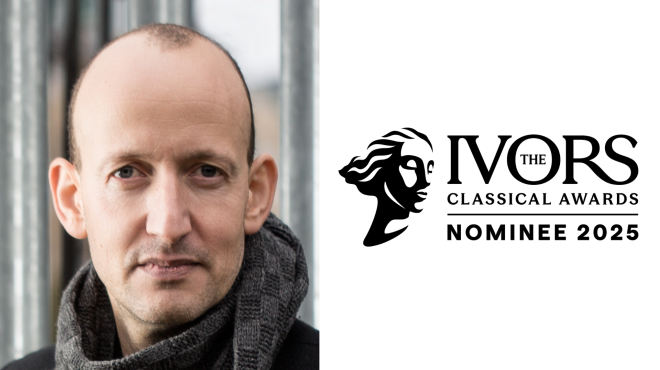
a headshot of a white man next to a decorative image of the Ivor Classical Awards 2025 logo

King's composer Professor Richard Causton shortlisted for an IVOR Classical award

Body

Richard Causton, University Professor of Composition and Fellow in Music, has been nominated for a 2025 IVORS Classical Award.

His composition If I Could Tell You (commissioned and premiered earlier this year by the Fidelio Trio) has been shortlisted for an IVORS Classical Award in the Best Small Chamber Composition category.

Judged by composers for composers, the IVORS Classical Awards recognise excellence in craft and creativity. They are the UK's flagship awards for classical composition. Presented by The Ivors Academy, they celebrate creative excellence in British and Irish composing. Previous winners include Sir Harrison Birtwistle, Errollyn Wallen CBE, Dame Judith Weir, Jonny Greenwood and Mark-Antony Turnage.

The final announcement is made at the Awards Ceremony on the South Bank on 11th Nov and also on BBC Radio 3. 

Find out about all the nominees for this year's IVORS Classical Awards.

Read more
King's composer Professor Richard Causton shortlisted for an IVOR Classical award
Day 2 hematoids

New lab-grown human embryo model produces blood cells

Body
Cambridge researchers have found a new way to produce human blood cells in the lab that mimics the process in natural embryos – a discovery that holds potential to simulate blood disorders like leukaemia, and to produce long-lasting blood stem cells for transplants. 


University of Cambridge scientists have used human stem cells to create three-dimensional embryo-like structures that replicate certain aspects of very early human development - including the production of blood stem cells.

These structures, which the scientists have named ‘hematoids’, are self-organising and start producing blood after around two weeks of development in the lab - mimicking the development process in human embryos. They differ from real human embryos in many ways, and cannot develop into them because they lack several embryonic tissues, as well as the supporting yolk sac and placenta needed for further development.

Hematoids hold exciting potential for a better understanding of blood formation during early human development, simulating blood disorders like leukaemia, and for producing long-lasting blood stem cells for transplants.

The human stem cells used to derive hematoids can be created from any cell in the body. This means the approach also holds great potential for personalised medicine in the future, by allowing the production of blood that is fully compatible with a patient’s own body. The new method mimics the natural developmental process, based on a self-organising human embryo-like model, where the cells’ intrinsic support environment drives the formation of blood cells and beating heart cells within the same system.

The findings are published today in the journal Cell Reports.

Professor Azim Surani, Emeritus Fellow of King’s, Director of Research at Cambridge’s Gurdon Institute and senior author of the paper, said: 

This model offers a powerful new way to study blood development in the early human embryo. Although it is still in the early stages, the ability to produce human blood cells in the lab marks a significant step towards future regenerative therapies - which use a patient’s own cells to repair and regenerate damaged tissues.

Professor Surani is the winner of the 2025 Kyoto Prize in the Life Sciences and Medicine. Read more about his work and this prestigious award here.


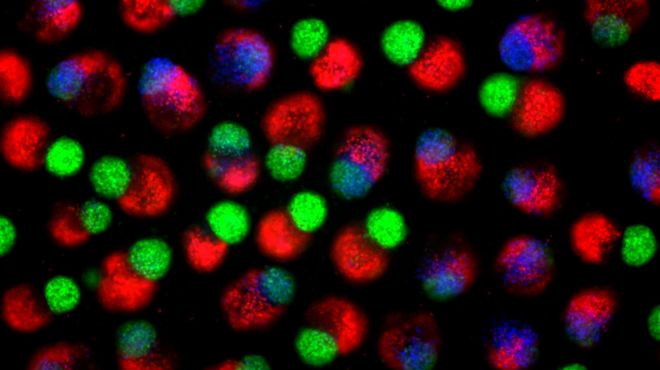
Image above shows day 2 hematoids: human stem cells start to self-organize into three-dimensional clumps establishing primary germ layers, including endoderm (red), ectoderm (green) and mesoderm (blue) derivatives. Primary germ layers give rise to all the tissues and organs of the body.

Read more
New lab-grown human embryo model produces blood cells
E-Lab residential programme 2025

The King’s E-Lab welcomes its 2025-2026 cohort of residential students

Body

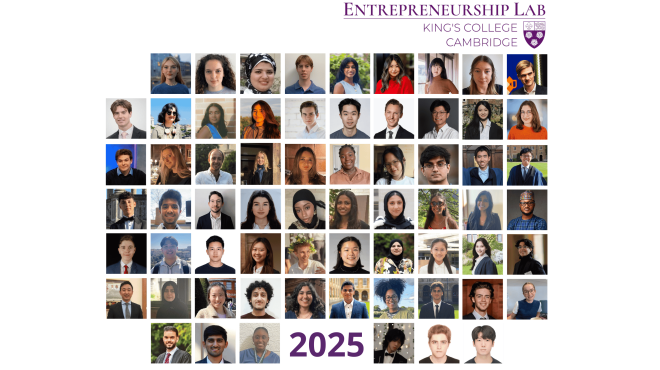
The King’s Entrepreneurship Lab (E-Lab) is delighted to welcome a new cohort of students to the 2025-2026 Residential Programme. A total of 65 participants from 12 Cambridge Colleges will form the fifth cohort of the year-long programme at King’s. 

The incoming cohort of the Residential Programme will arrive on 28 September to get ready to kickstart a week of activities on entrepreneurship. Made up of PhDs, MPhils and undergraduates from across many Cambridge departments, the students will take part in a mix of spotlight talks, interactive workshops, pitch training and socials to build their entrepreneurial thinking. 

Read more
The King’s E-Lab welcomes its 2025-2026 cohort of residential students
Universidad Adolfo Ibáñez, Campus Peñalolén Sede Pregrado

Architecture exhibition opens in the College Chapel

Body

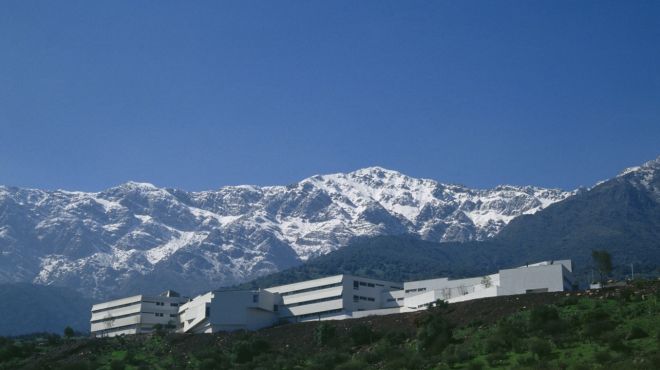
The exhibition ‘Andean Contours – University Buildings’ by José Cruz Ovalle will run until 28 September, exploring Chilean architecture and reflecting on the connections between architectural design and higher education.

José Cruz Ovalle is a renowned Chilean architect who has worked internationally, with projects in Spain, Argentina, Colombia, and, of course, his home country of Chile. This exhibition highlights two university campuses he designed and built in Santiago and Valparaíso.

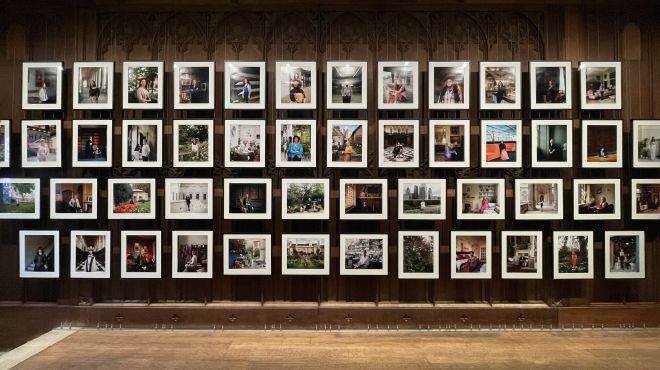
For this installation, the easels that previously supported the ’50 Portraits’ exhibition have been transformed into a new structure. This time, they carry a bespoke design made of pliable wood, forming a meandering surface. The images are carved—not printed—onto specially coated wooden panels, and every element has been carefully designed and 3D-printed to honour the unique architecture of the Chapel.

Exhibition Opening

Monday 1 September 2025

King’s College Audit Room (from 5pm)

King’s College Chapel (from 6pm)

*

On Tuesday 2 September José Cruz Ovalle, Peter Clegg (designer of Stephen Taylor Court), and Michelle McNamara (Pritzker Prize Laureate) will present their work, focusing on university buildings.

These events are organised by Dr Felipe Hernández and supported by King’s College Cambridge and the Universidad Adolfo Ibáñez.


Read more
Architecture exhibition opens in the College Chapel
Basim Musallam by Rory O'Bryen

Basim Musallam (1943 - 2025)

Body

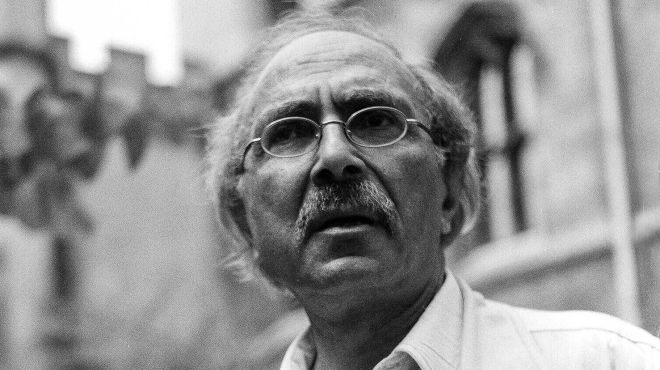
It is with great sadness that we share the news of Life Fellow Dr Basim Musallam's death on 21 August 2025.

Born in Lebanon, Basim was a highly distinguished historian of the Middle East who burst onto the academic scene in 1983 with his book Sex and Society in Islam: Birth Control before the Nineteenth Century. In addition to his many books, he wrote and starred in multiple episodes of a documentary series The Arabs - A Living History 1979 - 1983 which aired on Channel 4 (UK) and PBS (US).

Educated at the American University of Beirut and Harvard University, he joined the University of Cambridge as a lecturer in Islamic Studies in 1985 and later served as Director of the Centre of Middle Eastern Studies. 

He had been a Fellow of the College since 1990 and served the College in many capacities, most notably as Director of Studies in Oriental Studies/Asian and Middle Eastern Studies, as Vice Provost and also briefly as First Bursar. He was an extraordinary mentor to many younger Fellows, to whom he was willing to give endless time. 

*

A memorial event, open to all in the King's community, to celebrate Basim's life and work will take place in Hall on 31 January at 3pm. 

Read more
Basim Musallam (1943 - 2025)
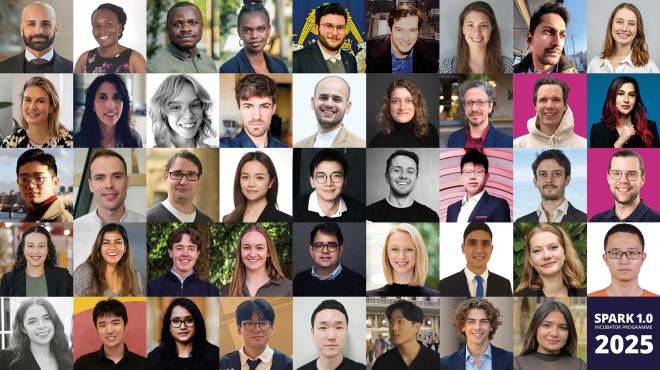
Headshots of all participants in the SPARK programme

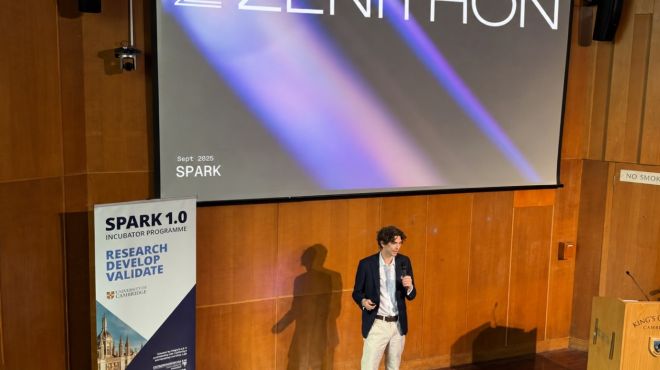
King’s E-Lab SPARK incubator reveals first cohort

Body

Created by the King's E-Lab, in partnership with Founders at the University of Cambridge, SPARK will act as an entrepreneurial launchpad. This programme will offer hands-on support, world-class mentorship and practical training to enable world-changing ventures covering challenges such as disease prevention and treatment, fertility support, and climate resilience. The combined networks of successful entrepreneurs and investor alumni and venture-building expertise brought by King’s E-Lab and Founders will address a critical gap to drive innovation. 

More than 180 applications were received for SPARK 1.0, reflecting strong demand for early incubation support. Of the 24 selected companies, focused on AI, machine learning, biotechnology and impact, 42% are at idea stage, 40% have and early-stage product and 17% have early users. Around half of the selected companies are led by women. Four of the startups are founded by King’s students.  

The intensive incubator will run for four weeks from the end of August. Each participant will receive specialised support from Founders at the University of Cambridge and King’s E-Lab mentors and entrepreneurs-in-residence to turn their concepts into companies that can attract both investment and ultimately grow into startups capable of driving economic growth. 

The programme is free for students graduating in summer 2025, postgraduates, post-docs, researchers, and alumni who have graduated within the last two years. This is made possible through University funding as well as a generous personal donation from Malcolm McKenzie (KC 1977), Chair of the E-Lab’s Senior Advisory Board.  

Kamiar Mohaddes, Co-Founder and Director of King's E-Lab, says: 

Cambridge has been responsible for many world-changing discoveries, but entrepreneurship isn't the first thought of most people studying here. Driving economic growth requires inspiring the next generation to think boldly about how their ideas can shape industries and society. We want SPARK to be a catalyst, showing students the reality of founding a company. We look forward to seeing this cohort turn their ambitions into ventures that contribute meaningfully to the economy.

Read more
King’s E-Lab SPARK incubator reveals first cohort
Library arches seen from Webb's Court

Jane Austen Open Day at King’s College Library

Body

King’s is taking part once more in Open Cambridge, the initiative that offers special access to the extraordinary spaces and places in Cambridge that are normally closed to the general public or charge admission. 

On Wednesday 17 September the College Library and Archives will host an exhibition to mark two hundred and fifty years since the birth of Jane Austen. The free exhibition will showcase first and early editions of the author’s well-known novels, the autograph manuscript of her unfinished novel Sanditon, and various documents that highlight the Austen family’s connection with King’s.

Wednesday 17 September, 10.30am-4pm 
King’s College Library

PLEASE NOTE: Access for this event is via the gate on King’s Lane (between Queen’s Lane and King’s Parade)

*

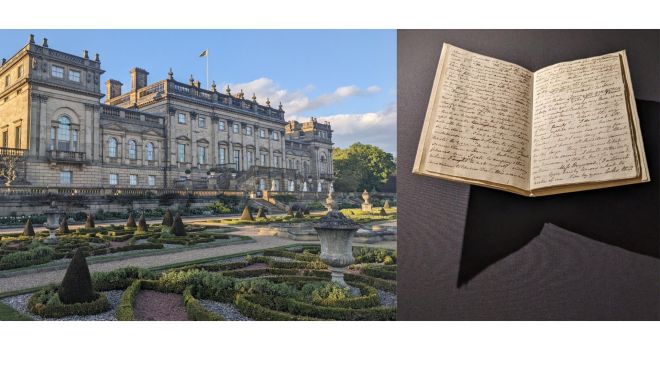
Earlier this year, the autograph manuscript of Jane Austen’s final novel, Sanditon, went on loan to Harewood House in Yorkshire as part of their exhibition Austen and Turner: A Country House Encounter.

The Sanditon manuscript was given to King’s College in 1930 by Jane’s great-great niece Mary Isabella Lefroy, in memory of her sister Florence and Florence’s husband, the late Provost Augustus Austen Leigh (1840-1905), who was one of Jane's great-nephews.

Read more
Jane Austen Open Day at King’s College Library
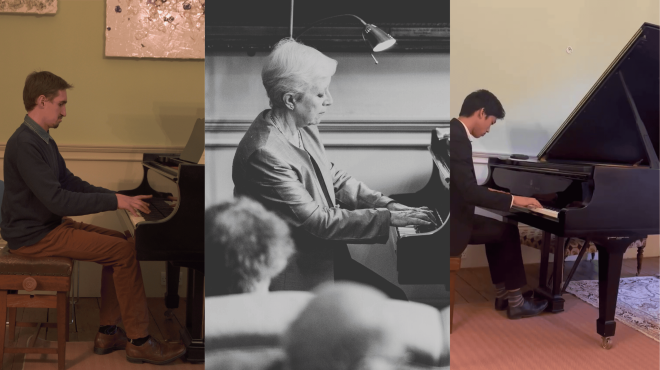
Susan Tomes and the two winners of the prize photographed playing piano

Susan Tomes Music Prize awarded to two students

Body

Now in its second year and established by renowned concert pianist and writer Susan Tomes (KC 1972), the Susan Tomes Prize for Music aims to recognise the positive impact that all forms of music have on the King’s community. Nominations are invited from Fellows, staff and students who had been moved by a moment of music making by a student of the College. 

The winners of the 2025 Susan Tomes Prize are MPhil student Cristóbal Palisson (who has since graduated) and fifth year medic James Wang. They received a cash prize and a copy of Susan’s book The Piano: A History in 100 Pieces

Cristóbal (MPhil in Classics) was nominated for being “invaluable in resurrecting the Provost’s Lodge series”. Those nominating him mentioned that Cristóbal "has programmed a long series of engaging and enjoyable concerts. His passion and enthusiasm for the concert series is outstanding and when on occasion he has played piano in one, it has always been beautiful.”

James received the award with the following citation: “James Wang has excelled in countless classical, choral, and jazz settings at King’s as a talented pianist, singer, and multi-instrumentalist, but what is truly unique about James is his capacity to create an encouraging, inclusive, and meaningful environment for music making. James is undeniably a highly-skilled musician, and each time I have heard him play I have been astounded by his technique and emotional expression. More poignantly, though, when playing in 'Jazz Reflections' organised by James last term, I witnessed firsthand his open-mindedness, kindness, and nonjudgemental nature.”

*

Susan Tomes was the first woman to read music at King’s, arriving in 1972 as part of the first cohort of female undergraduates. She is one of the UK’s most renowned concert pianists and the author of seven books. Her most recent, Women and the Piano – a History in Fifty Lives, goes hand-in-hand with her performances of music by female pianist-composers who have historically been neglected.

Read more
Susan Tomes Music Prize awarded to two students
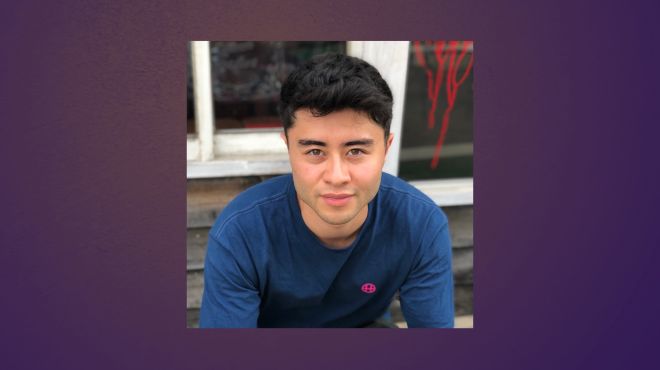
A smiling young man with dark hair wearing a blue top

E-Lab Research Associate awarded ARIA research grant for innovative project to address climate instability

Body
Chris Micklem has been awarded a £500,000 research grant from the Advanced Research + Invention Agency (ARIA), the largest award size possible for the grant.

A huge congratulations to Chris Micklem who has been awarded a £500,000 research grant from the Advanced Research + Invention Agency (ARIA), the largest award size possible for the grant.

It comes as a part of ARIA’s Programmable Plants opportunity space, led by Programme Director Angie Burnett, and it aims to support explorations into how we can programme plants to remove more CO₂, fight drought, and deliver medicines to those in need.

Chris, a King’s E-Lab Research Associate and a postdoctoral researcher at the Sainsbury Laboratory, is seeking to pioneer a new direction in synthetic biology through the design of gene circuits that use noise, instead of suppressing it. By embracing stochasticity, not fighting it, the aim of Chris’s project is to program plants more robustly and more effectively.

In this era of increasing climate instability, such unexplored approaches may hold the key to enabling a more sustainable coexistence of humanity with the planet and, for Chris, it is hoped that his project will help accelerate progress towards such a future.

Chris’s work has also been showcased for his use of AI as a part of a deep neural network-based approach to facilitate more effective use of photosynthetic bacteria for climate positive purposes.

Alongside James Beattie and Charles Emogor, Chris joined Coco Newton, Nadia Mohd-Radzman and Ismail Sami as E-Lab Research Associate this year. Read more about their work here.

On receiving the award, Chris said:

It is a huge privilege to be selected for ARIA’s Programmable Plants Opportunity Seed. What is so exciting about ARIA’s approach is the direct mandate to turn ambitious science into real-world solutions to humanity’s greatest challenges. This focus, coupled with the King’s E-Lab’s invaluable support, provides the perfect environment to pursue both groundbreaking research and its commercial potential, to drive transformative change.

About ARIA:

ARIA is an R&D funding agency created to unlock technological breakthroughs that benefit everyone. Created by an Act of Parliament and sponsored by the Department for Science, Innovation and Technology, we fund teams of scientists and engineers to pursue research at the edge of what is scientifically and technologically possible.


Read more
E-Lab Research Associate awarded ARIA research grant for innovative project to address climate instability
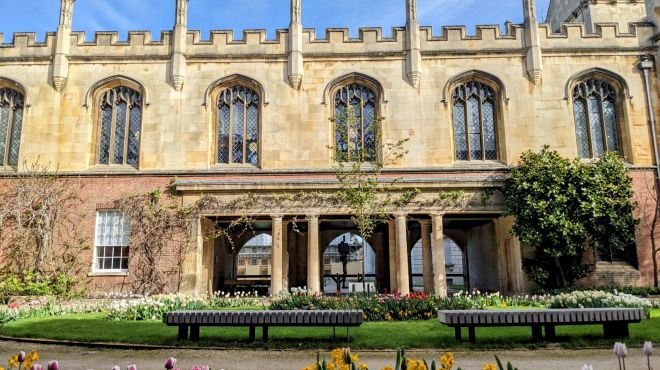
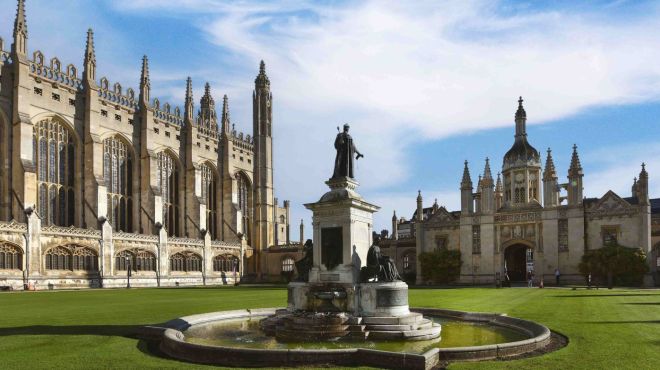
King's College first court. A central fountain stands on a large green lawn with the Chapel to the left and the gatehouse to the right.

New Dean of Chapel appointed

Body
The Reverend Canon Dr Hueston Finlay will succeed the Reverend Dr Stephen Cherry in 2026

King’s College is delighted to announce that Hueston Finlay, Vice-Dean of St George’s Chapel, Windsor, and Warden of St George’s House, has been appointed as the next Dean of Chapel. He will take up the post following Stephen Cherry’s retirement in January 2026.

Dr Finlay has been a canon at St George’s Chapel since 2004 and been the Warden of St George’s House since 2008, which convenes discussions on major social and ethical issues. He had previously been Dean of Chapel at Magdalene College, Cambridge and Chaplain of Girton College. He holds degrees from Trinity College Dublin in engineering and theology, a doctorate in philosophy from King’s College London and has studied pure mathematics at the Open University. He is currently an Honorary Research Fellow at the University of Aberdeen.

“King’s College Cambridge is one of the world’s leading academic establishments. Since 1441, education, religion, learning and research have been at the heart of its ethos. I look forward very much to joining the College, to working once again with students, and to immersing myself in the endeavours of this very special place. It will be a great privilege and a personal pleasure to be part of such a renowned institution.” -  Hueston Finlay.

Provost Gillian Tett commented “We very much look forward to welcoming Hueston Finlay to King’s as Dean of Chapel in the new year. I’d also like to thank Stephen Cherry for his many years of service to King’s, first as Chaplain between 1989 and 1994 and as Dean since 2014.”

Read more
New Dean of Chapel appointed
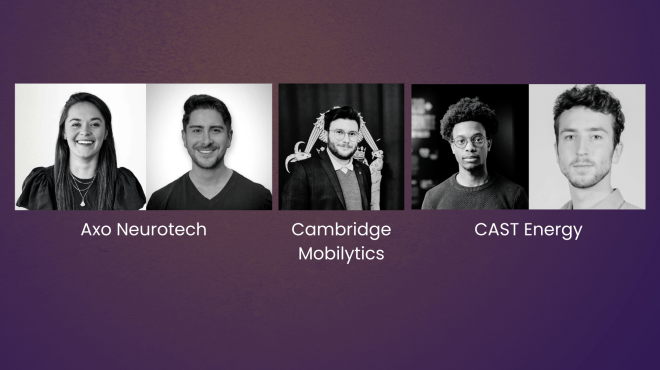
Five black and white profile photos of the entrepreneurs behind Axo Neurotech, Mobilytics and CAST Energy against a purple background

Winners of 2025 Entrepreneurship Prize announced

Body
Axo Neurotech, Cambridge Mobilytics and CAST Energy have been awarded prizes by the judging panel.

We are delighted to announce the 11th year of awards under the College’s annual entrepreneurship competition, intended to encourage King’s members (past and present) to develop their entrepreneurial ideas and convert their creativity and knowhow for sustainable commercial and social benefit.

This year’s top prize, with a value of £20,000, has been awarded to Axo Neurotech, a £10,000 second prize goes to Cambridge Mobilytics, and CAST Energy receives the third prize of £5,000.

Founded by Dr Amy Rochford (KC 2018, Engineering) and Nathan Jackrazi (KC 2018, Engineering), AxoNeurotech is on a mission to build a seamless natural interface. Axo's next-generation neural interface uses cutting-edge material science and a biology-first approach to solve the problem of integrating electronics with the body, with the clear aim of improving patients' lives. 

Listen to Amy here sharing her journey from academia to industry, focusing on neurotechnology's potential to transform treatments for brain and nervous system injuries.

Eliott Fournet (MBA student) founded Cambridge Mobilytics to aggregate underutilised charging data from electric vehicle infrastructure operators across Europe to create valuable predictive models and market intelligence. The company acts as a trusted intermediary, purchasing and standardizing charging data to offer (among other things) clean datasets for car manufacturers and financial institutions.  

CAST Energy is the early-stage startup led by Chris Tagnon (MPhil student in Industrial Systems, Manufacture, and Management) and Joseph de Solages. It offers a solar power generation system, designed for easy implementation in remote areas thanks to its containerized format. This innovative system is fully modular and transportable in a standard 20- or 40-foot container that can generate up to 240 kW and offer an impressive storage capacity of 960 kWh, surpassing most of the solutions on the market. The system is perfectly suited to transform access to clean energy in places previously difficult to equip.

**

The Entrepreneurship Prize competition was established in 2014 with a gift from Stuart Lyons CBE (KC 1962) and culminates each year in the ‘Lyons Den’, where finalists present their full business plans to an expert panel.

If you would like to find out more about the King's Entrepreneurship Prize and how to enter the competition, please email enterprise@kings.cam.ac.uk

Read more
Winners of 2025 Entrepreneurship Prize announced
Multiple reflective glass windows viewed from below framed by a tree and a sunny, cloudy sky

The compelling economic case for climate investment

Body

First published 12 March 2025

A report by the climaTRACES Lab with Boston Consulting Group and the Cambridge Judge Business School highlights the importance of investing in climate mitigation and adaptation and the significant economic consequences of failing to do so.

Allowing global warming to reach 3°C by 2100 could reduce cumulative economic output by 15% to 34%. Alternatively, investing 1% to 2% in mitigation and adaptation would limit warming to 2°C, reducing economic damages to 2% to 4%. This net cost of inaction is equivalent to 11% to 27% of cumulative GDP—equivalent to three times global health care spending.

These are among the findings of the Boston Consulting Group (BCG) Climate Change and Sustainability consulting experts, Cambridge Judge Business School, and the University of Cambridge’s climaTRACES Lab report, Too Hot to Think Straight, Too Cold to Panic: Landing the Economic Case for Climate Action With Decision Makers, published today.

“Research on climate change impacts across all regions and sectors is expanding rapidly,” said Kamiar Mohaddes, King’s Fellow in Economics, Co-Founder and Director of the King’s E-Lab, and Director of the University of Cambridge climaTRACES Lab. “What stands out is that productivity loss—not merely capital destruction—is the primary driver of economic damage. It is also clear that climate change will reduce income in all countries and across all sectors, affecting industries ranging from transport to manufacturing and retail, not only agriculture and other sectors commonly associated with nature.”

“The economic case for climate action is clear, yet not broadly known and understood” said Annika Zawadzki, BCG managing director and partner, and a co-author of the report. “Investment in both mitigation and adaptation could bring a return of around tenfold by 2100.”

Another challenge is that the costs and benefits of the transition are not evenly distributed among countries. Even so, the net cost of inaction is high enough that it will likely justify unilateral action from the world’s biggest emitters. The report looks at five priority levers that can be pulled to address these challenges:

  • Reframe the debate on the costs of climate change
  • Create transparency on net cost of inaction across
  • Strengthen national climate policies to accelerate mitigation and adaptation
  • Reinvigorate international cooperation on climate change
  • Advance our understanding of the net cost of inaction

**

climaTRACES Lab is an interdisciplinary initiative at the University of Cambridge focusing on climate, nature, and sustainability research. Their data-driven research and policy engagement covers the following four themes: Communication & Communities, Macroeconomics & Sustainability, Green & Sustainable Finance, and Nature & Biodiversity. Collaborating with a network of climate and nature experts globally, we conduct cutting edge research for wider societal benefit, and create and test innovative policy communications formats that translate the evidence and multidisciplinary research generated by the lab for policy and industry audiences.   

Read more
The compelling economic case for climate investment
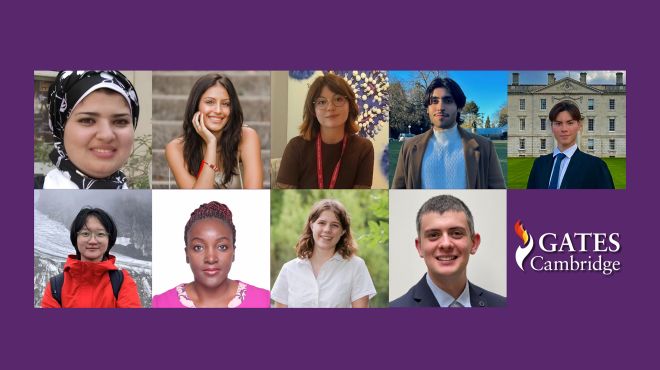
Profiles of the nine Gates Scholars 2025 against a purple background

2025 Gates Cambridge Scholars announced

Body

First published 1 May 2025

95 new scholars have been selected to form the Gates Cambridge Class of 2025, with 9 of them joining King’s next Michaelmas Term.

We are delighted to announce that 9 of next year’s Gates Cambridge Scholars Class of 2025 will be joining us at King’s – the second largest cohort we have welcomed since the programme was established 25 years ago.

Reham Aboud, Naina Agrawal-Harding, Asja Campara, Muaz Chaudhry, Joshua Heihre, Yu Huang, Ifeyinwa Nnakenyi, Abigail Schipper and Sam Shelton will be studying MPhil and PhD courses in subjects ranging from Stem Cell Medicine to Anthropocene Studies. They come from Egypt, Australia, China, the United States and Bosnia and Herzegovina, among other countries.

Professor Deborah Prentice, Vice-Chancellor of the University of Cambridge and Chair of the Board of the Gates Cambridge Trust, said:

“We are incredibly proud of all that Gates Cambridge has achieved. This exceptional programme is successfully producing the leaders that will address many of the common challenges facing humanity. As we celebrate 25 years of impact, we look forward with excitement to what the next 25 years will bring.”

Read about the journeys of the Gates Cambridge Class of 2024 scholars here.

About Gates Cambridge

The Gates Cambridge Scholarship programme was established through a US$210 million donation to the University of Cambridge from the Bill and Melinda Gates Foundation in 2000; this remains the largest single donation to a UK university. Since the first class in 2001, Gates Cambridge has awarded 2,218 scholarships to scholars from 112 countries who represent nearly 800 universities globally (more than 200 in the USA) and around 90 academic departments and all 31 Colleges at Cambridge.

Read more
2025 Gates Cambridge Scholars announced
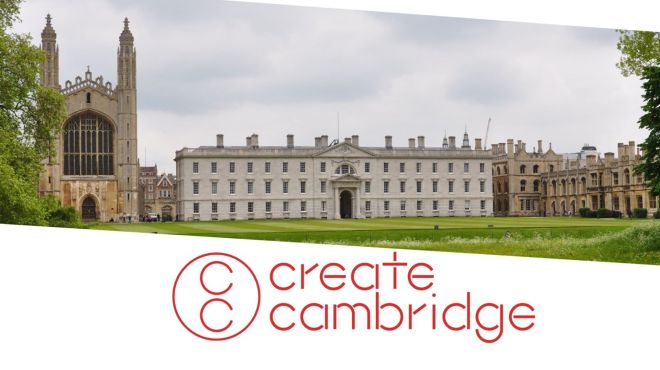
King's College Chapel and the Gibbs Building with the Create Cambridge logo.

King’s partners with local organisations in the new cultural compact Create Cambridge

Body

First published 27 March 2025

Initiated by cultural organisations based in and around Cambridge along with the city’s universities, Create Cambridge aims to support the development of the cultural sector in the region.

Create Cambridge is a new cultural compact for the Cambridge City Region – an initiative born from a series of conversations hosted at King's that follows a proven model used across the country for catalysing cultural development through long-term cross sector partnerships.

As well as King’s College, Create Cambridge involves organisations such as Anglia Ruskin University, Cambridge City Council, Cambridge Curiosity & Imagination, Cambridge Junction, the Fitzwilliam Museum, Raspberry Pi Foundation, and Wysing Arts Centre.

The vision of Create Cambridge is to position Cambridge as a truly International City of Culture, one which embraces diverse perspectives and artistic expressions, building on the city’s strength in research and innovation, and enabling us to tell new stories that might also help us design a more inclusive and sustainable future.

Create Cambridge envisions a city where culture is not just celebrated but serves as a dynamic force for positive change, inclusivity, and the pursuit of shared ambitions.

By embracing collaboration, celebrating diversity, and surfacing and addressing inequities, Create Cambridge aspires to make Cambridge not just a city with a storied past but a city whose story is continually unfolding - with this new narrative shaped by its people and the genius of this place.

Find out more about Create Cambridge, how to get involved, and sign the Open Letter to the City here.

Read more
King’s partners with local organisations in the new cultural compact Create Cambridge
A large stately home with topiary next to an image of the Sanditon manuscript

Jane Austen’s 'Sanditon' manuscript goes on exhibition

Body

First published 1 May 2025

The autograph manuscript of Jane Austen’s final novel, 'Sanditon', has gone on loan to Harewood House in Yorkshire as part of their new exhibition ‘Austen and Turner: A Country House Encounter’.

The 'Sanditon' manuscript comprises three small booklets, the third of which features in the exhibition.  It is Jane Austen’s last novel, which she was working on towards the end of her life. The final page of the manuscript is dated 18th March 1817 and is followed rather poignantly by many blank pages. Austen died in July 1817, leaving the novel incomplete.

The manuscript was given to King’s College in 1930 by Jane’s great-great niece Mary Isabella Lefroy, in memory of her sister Florence and Florence’s husband, the late Provost Augustus Austen Leigh (1840-1905), who was one of Jane's great-nephews.

The exhibition at Harewood House, co-curated by Harewood House Trust and the Centre for Eighteenth Century Studies at the University of York, celebrates the 250th anniversaries of the birth of both Austen and the painter JMW Turner in 1775. Through Austen’s and Turner’s eyes, the show explores the world of the country house in their time and their impact on how we think about stately homes today.

This is the first time the 'Sanditon' manuscript has been exhibited in the north of England, and we are delighted that it is being made available to new audiences beyond Cambridge. King’s Library has its own plans to exhibit its extensive holdings of Jane Austen’s works this year, including the other two booklets of the 'Sanditon' manuscript, in September. Details will be announced in due course.

Further details of the exhibition can be found here.

Read more
Jane Austen’s 'Sanditon' manuscript goes on exhibition
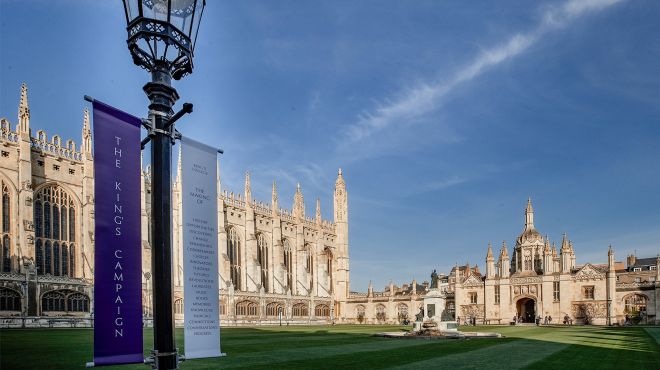
King's College front court with King's Campaign banners hanging from a lamp post in the foreground

King’s fundraising campaign reaches £100 million goal

Body

First published 23 May 2025

The King’s Campaign has reached its £100 million goal, allowing the College to attract and enable more of the best students regardless of economic or social background, deliver exceptional teaching and world-class research, and preserve and enhance its historic buildings.

The King’s Campaign was publicly launched in December 2018 to raise £100 million, under the leadership of Provost Professor Michael Proctor. Thanks to the generosity of King’s alumni, friends and supporters a total of £102 million has now been reached, in the College’s most ambitious fundraising effort in its recent history.

During the Campaign more than 6,500 alumni, friends and supporters of King’s made a donation, at all giving levels and from members of the King’s community across the world.  In addition over £36 million has been pledged in future legacies.  £2.75 million has been raised from the College’s annual telephone appeals and the first King’s Giving Day in December 2024. 

'We are deeply grateful to those donors who commit to making regular gifts of all sizes over several years, providing a steady, guaranteed stream of income to benefit important areas of the College such as student hardship, bursaries, welfare and mental health, and the Chapel and Choir' said King’s Development Director Lorraine Headen. 'Some alumni have been giving this way since graduation, and we cannot thank them enough.'

The Campaign total was surpassed in May thanks to a £6 million gift from David Sainsbury (KC 1959) and the Gatsby Charitable Foundation, to support a new Executive Director post for the King’s E-Lab and create a new flexible meeting space in the southwest part of Chetwynd Court. The space will provide a greatly needed home for E-Lab and other College events, bringing the King’s community closer together and fostering innovation in line with one of the main Campaign priorities.

Encouraging the brightest and best

Over half of what has been raised has gone directly to supporting students, to help in multiple ways. At the launch of the Campaign a £33 million gift from an alumnus was announced, establishing the College’s transformative Student Access and Support Initiative.  A further philanthropic donation in 2020 set up the innovative Bridging Programme, which has now helped over 60 offer holders from traditionally low attainment schools spend time in King’s before their course starts and prepare for life and study at Cambridge. Recently the College partnered with IntoUniversity to open a new education centre in Middlesbrough to provide academic support, mentoring and aspiration-raising activities for young people in one of the most deprived parts of England.

At the other end of the educational journey, as King’s students start to think about life beyond their first degree, the King’s E-Lab, launched in 2021 thanks to a donation from Malcolm McKenzie (KC 1977), is fostering innovation and providing entrepreneurial and career skills. This builds on the success of the Entrepreneurship Prize Competition founded by Stuart Lyons (KC 1962) in 2014.  Since then the Entrepreneurship Prize has recognised 23 winning businesses, awarded over £325,000 in funding, and an expert panel of judges has provided valuable advice and mentorship.

A previous gift from David Sainsbury and the Gatsby Charitable Foundation is enabling  a Summer Research Programme aimed at inspiring talented science students to think about going on to a PhD and further research; and in 2024 the College appointed its first Futures Tutor, to provide students with careers advice and coaching to support them in their personal and professional development, thanks to a donation from an alumna.

The King’s Student Welfare and Mental Health Fund was established at the start of the Campaign from a legacy gift and has enabled the creation of a programme of care and activities directed at the welfare and mental health of resident students.  The Fund provided vital support through COVID, and further generous gifts have allowed the College to respond to the increasing complex needs of our students and recruit a Mental Health Advisor, and a Cognitive Behavioural Therapist.

Empowering Minds

The Campaign has also added to the College’s teaching excellence and boosted its research capacity, with a range of academic posts funded since its start. Recent gifts have included £1.75 million from Mervyn King (KC 1968) to create a new Research Fellowship in economic history; $5 million from Roger Evans (KC 1964) and Aey Phanachet to endow two named Research Fellowships; a gift from an alumna to establish the first Sydney Brenner Research Fellowship; and the Enactor Alan Turing Fellowship and PhD Programme is now in its sixth year. Graduate students contribute enormously to the research culture of the College and play a vital role in teaching, mentoring and inspiring undergraduate students, before going on to contribute to society in myriad ways. 

Protecting our Heritage

One of the Campaign’s key priorities has been the protection and enhancement of the College’s exceptional heritage and environment, both now and for future generations.

An early gift from alumnus Ian Jones (KC 1980) to support the Choir is also helping to maintain the fabric of the Chapel, including enhancing the lighting. Over the course of the Campaign more than £5 million has been given to support the Choir, in donations from alumni and friends around the world.

In 2023 the College completed work on a year-long conservation of the Chapel roof and installed 438 new solar panels, thanks to a significant legacy gift. A major project to restore the interior of the 300-year-old Gibbs Building has received generous initial funding from Malcolm McKenzie and other alumni.

Sarah Legg (KC 1986), Chair of the Campaign Advisory Board, said: 'This is a fantastic achievement and reflects the tremendous support and commitment of King’s alumni  around  the world. King’s was the making of me, and of so many of us; I’m delighted that thanks to the Campaign, more talented students who might not otherwise have the chance to come to King’s will get the support they need not only throughout their time here, but also be equipped with the skills to go out into the world and make a difference.'

The Provost Dr Gillian Tett said of the Campaign: 'King’s is an exceptional environment in which to be a student and an academic. Thanks to the generosity of the amazing King’s community, over this Campaign we’ve been able to create 15 new Research Fellowships; a fund of £5m for MPhil and PhD studentships, which have already enabled a large number of students to do graduate research; and welcome a record number of students from disadvantaged backgrounds and support them to thrive here. For our students and Fellowship alike, this is game-changing.  

Reaching our goal is not of course an ending. The Campaign is one part of the long story of this very special place and the people who believe in it, and we haven’t finished yet. We’re incredibly grateful to everyone for their support.'

Read more
King’s fundraising campaign reaches £100 million goal
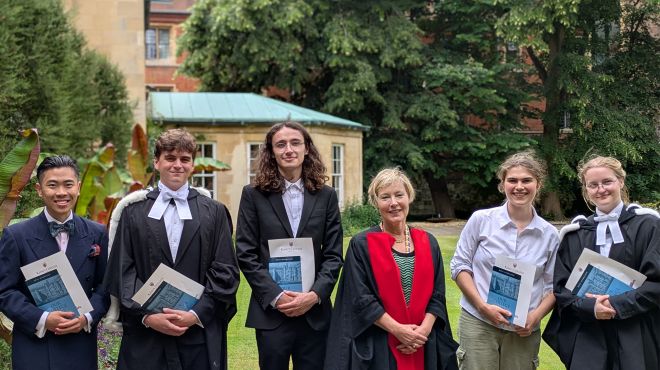
Five people wearing smart academic clothes smile holding a book and a certificate. There is a smiling woman in the middle wearing a black gown with Red detail at the front. They are in a formal garden on a sunny day.

Provost’s Prize 2025 awarded to five students

Body
This year’s winners are graduate students Fee Robinson and Spencer Lee Boya and undergraduates Harry Gant, Jack Robinson, and Teddy Graham.

Established in 2018, the Provost’s Prize recognises those students who make a significant contribution to the College community during their time at King’s.

This year’s winners Fee, Spencer, Harry, Jack and Teddy received the award with the following citations:

The amount of work Fee Robinson has accomplished this year is astonishing. From the outside it appears she has single handedly kept the KCGU together, bridging gaps between College staff and the other members constantly. The grads would not have had anywhere near as many events and Formals this year without her. Her efforts on the Grad Bar and Formals MOU were huge. She stepped into the role of King’s Affair Food and Drink coordinator after the previous students dropped out and, although the road to the event has still been very rocky, Fee has negotiated everything brilliantly. On the committees we’ve been on together she has been a positive force, unafraid to ask questions and push at areas she believes will be a benefit to her fellow graduate students.  Despite all of this work Fee has remained level-headed and positive.

As a postgraduate student on a short course, the impact of Spencer Lee Boya in the King’s community is remarkable. In the last two years he has worn many hats, all with grace. He was President of the KCGS [now KCGU] and took active part in the Communications Committee meetings, always trying to find ways to better promote the research and achievements of postgraduate students. As Co-President of KCMS and conductor in many of their concerts, he has helped devise an interesting programme and made an effort to share their music-making with all at King’s, including staff. As a pianist he performed at a recent alumni event where he was not only a great instrumentalist but also a great representative of the student community. And, finally, as a boxer and change-maker at CUABC Spencer’s work will have a lasting impact so we are not surprised to see him shortlisted for a CU Sports Award in the ‘Unsung Hero’ category.

In the current climate of difficult choral recruitment, Harry Gant is the model Choral Scholar: flawless in preparation, delivery and teamwork. When he arrived at King’s he hit the ground running, most memorably stepping into a solo there and then at the Barbican in London, when one of his colleagues left the stage during the concert. More recently, he has delivered noteworthy solos on recordings and each year on TV.  As a college musician, he has taken a leading role in the running of KCMS, and this year he has directed the King’s Men. His greatest asset is his modesty: nothing about Harry is flashy or self-absorbed. His musical performance speaks of someone who cares first and foremost about the team and the end-product, and he is happy to be asked to do whatever is required to achieve our common and shared goals. His contribution to music within the College has been exceptional.

Jack Robinson has shown exceptional commitment and work in the context of the responsible investment working group. Over the academic year 2024/25, the group has been preparing a new and comprehensive responsible investment policy for King’s, reiterating the College’s responsibility towards future generations by confirming  divestment from fossil fuels and adopting a clear position of non-complicity with abuse and unjustified harm. As a student member who volunteered to be on the group because he cares deeply about King’s and the questions of responsible investment raised by the working group, Jack has been exemplary in attending meetings, doing significant amounts of work in support of the group’s drafting of a responsible investment policy, engaging constructively with other members of the group and helping to gather views from among the student community. Jack’s overall engagement has shown a level of commitment and excellence that we have rarely seen.

Teddy Graham has stood out as a truly engaged and impactful contributor to the College community. The range of their activities in College is impressive, from running the Art Rooms to assisting with the Student Loan Collection, helping in the Archives, and acting as President of KCSU. Teddy has been the lynchpin of the College Art Rooms for several years now, running events and classes, helping with exhibitions, reorganising the space, sourcing and stocking art supplies, redecorating the rooms, training students, liaising with external artists and societies, running social media accounts, and providing the main point of contact for Art Room Co-ordinator, Nigel Meager. Teddy runs the rooms as an inclusive and welcoming space that provides a creative haven for many members of our community. Alongside the Art Rooms, Teddy has been heavily involved with running the Student Loan Collection. They carried out an impressive summer research project in 2024 on the history of the Collection and spent a great deal of time not only identifying works, but also reorganising the storeroom at the top of A Staircase for ease of access. The chronological history of acquisitions built up by Teddy through their research will serve the College for years to come, and is an important piece of our collective history.

Just the other day someone noticed the small garden of arugula and strawberries that Teddy had planted with the Gardeners’ permission (and following their advice) in Bodley’s Court: all College members are welcome to take as much as they need, which is a very nice gesture!

Read more
Provost’s Prize 2025 awarded to five students
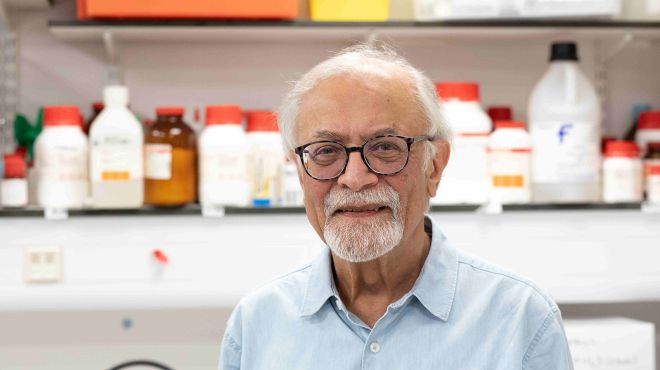
A smiling man with short white hair, a beard and glasses, wearing a pale blue shirt in a lab with bottles on a shelf behind him.

Azim Surani awarded 2025 Kyoto Prize

Body
Professor Surani is to be honoured with a Kyoto Prize by the Inamori Foundation for his significant contribution to the scientific betterment of humankind. The prize presentation will take place in Kyoto on 10 November.

Professor Azim Surani, Emeritus Fellow of King’s and Director of Research at the Gurdon Institute, is the winner of the 2025 Kyoto Prize in the Life Sciences and Medicine for his discovery of genomic imprinting in mammals and elucidation of its molecular mechanisms.

His research demonstrated that both paternal and maternal genomes are indispensable for normal mammalian development and subsequently discovered genomic imprinting that confers specific modifications and complementary functions to each genome. Furthermore, he has played a pioneering role in elucidating its underlying mechanisms, thereby making contributions to foundational scientific insights across a broad spectrum of life science fields.

On being awarded the Kyoto Prize, Professor Surani said:

I am deeply honoured to have been awarded the Kyoto Prize in Basic Sciences for my discovery of genomic imprinting in mammals nearly four decades ago – a discovery that was unexpected, opening up exciting new avenues of research, including epigenetics and human development that we have since pursued.

It has been a tremendous privilege to work with many exceptional young scientists in my laboratory, and I am immensely grateful to them for their invaluable contributions.

You can read more about Professor Surani’s research and the 40th anniversary of his discovery here, and hear him talk about his Journey of Discovery.

The activities of the Inamori Foundation reflect the lifelong beliefs of its founder that “people have no higher calling than to strive for the greater good of humankind and society” and that “the future of humanity can be assured only through a balance between scientific progress and spiritual depth.” The Foundation seeks to promote international mutual understanding and actively contributes to peace and prosperity among all people on earth. It does this through activities of public recognition, research grants, and social contributions towards creative activities to foster science, culture, and the enrichment of the human spirit.

Read more
Azim Surani awarded 2025 Kyoto Prize
Profile photos of two men and a woman smiling against a purple background. All are smartly dressed

King’s alumni recognised in the King’s Birthday Honours

Body
Dominic Richards (KC 1987) is recognised for his longstanding charitable work and leadership in heritage-led regeneration and sustainable urbanism, Michael Downes (KC 1987) for services to music and education, and Ruth Marshall (KC 1991) for services to evidence-based policy-making and innovation.

Our congratulations to the King's alumni who have been recognised in the 2025 King's Birthday Honours:

Dominic Richards (KC 1987) has been appointed a Lieutenant of the Royal Victorian Order (LVO) for his longstanding charitable work and leadership in heritage-led regeneration and sustainable urbanism. He is the Co-Founder and Chair of Our Place, a development company dedicated to creating walkable, mixed-use neighbourhoods that prioritise local character, sustainability, and social cohesion.

Having served as Vice Chair of The Prince’s Foundation, Dominic is currently Chair of The King’s Foundation Australia and a Trustee of The King’s Trust Australia. Under his stewardship, projects such as The Prince’s Terrace in Adelaide—Australia’s first 6 Star Green Star residential development—and the regeneration of Hillview, a historic rural estate in New South Wales, are bringing to life His Majesty’s principles of heritage led regeneration and place-making, championing traditional skills, environmental responsibility, and community wellbeing.

In receiving this honour, Dominic paid tribute to King’s and to the Prince of Wales’s Institute of Architecture, where his commitment to sustainable places and public service first took root:

King’s instilled in me the belief that beauty, community, and legacy matter — that we shape our places, and in turn, they shape us. That belief was given form at The Prince of Wales’s Institute of Architecture, founded by His Majesty 35 years ago, where I was taught the principles of sustainable place-making — ideas that were then visionary and are now, thankfully, gaining wider acceptance.

Dr Michael Downes (KC 1987), Director of Music at the University of St Andrews, has been awarded an OBE for services to Music and Education.

Ruth Marshall (KC 1991) has been awarded an MBE for services to Evidence-based Policy Making and Innovation. Ruth is Head of Futures Capability at the Government Office for Science, and her role focuses on building cross-Whitehall skills in futures and foresight, a strategic reform priority for the civil service identified in the Integrated Review (2021).

*

Former Headmaster of the King's College School Nick Robinson has also been recognised with an OBE for services to Disadvantaged Young People, to Charitable Fundraising and to Music. Nick is the co-founder and chair of Future Talent, a charity supporting young musicians across the UK. 

Read more
King’s alumni recognised in the King’s Birthday Honours
Jim Trevithick, sitting at a bar and reading a newspaper

James Trevithick (1945-2025)

Body

Jim photographed by Martin Bond (A Cambridge Diary)

It is with great sadness that we have learned of the death of Mr James (Jim) Trevithick, Life Fellow at King’s, on 29 May 2025.

Jim joined King’s as a Fellow in Economics 1977. He studied at the London School of Economics obtaining a B.Sc. and M.Sc. in Economics. He came to Cambridge in 1976 as an Assistant Lecturer in the Faculty of Economics after a stint as a Lecturer at the University of Glasgow. He was promoted to a full Lecturer at the Cambridge Faculty of Economics in 1979. In 2002 Jim took early retirement from both the Faculty and from his Official teaching Fellowship at King’s. That same year the College elected him to a Life Fellowship. 

From 1977 to 2002 Jim was one of most important faces of the teaching of economics at King’s. During this period, he was a Director of Studies in the subject and taught macroeconomics at all levels in the College.  His undergraduate lectures at the Faculty were widely acknowledged by students at the time to be amongst the clearest and best organised courses in the Economics Tripos.

Jim was interested in macroeconomic issues such as inflation and unemployment. His later works were mainly concerned with the evolution of ideas in macroeconomics. His academic publications included several well-known texts: The Economics of Inflation (1975), Inflation: A Guide to the Crisis in Economics (1977, second edition 1980), Involuntary Unemployment: Macroeconomics from a Keynesian Perspective (1992). These texts were widely used for undergraduate teaching and were translated into many languages (e.g. Spanish, Italian, Dutch, Portuguese, and Japanese).

Jim was extremely committed to the College, was Praelector in the early 1980s and served as University Proctor.

He lived in College throughout his Fellowship and will be remembered very fondly by many of his students and colleagues at King’s.

Remembering Jim Trevithick - his wake

In accordance with Jim’s will, his ashes will be interred in the crypt of the Chapel in a private ceremony, immediately following his funeral in a side chapel. These will take place on Thursday 19 June

Although Jim instructed in his will that there should be no memorial service, he did provide for a wake, and this will take place in the Fellows’ Garden from 6.00pm to 8.30pm on the day of his funeral. (College Hall in the event of inclement weather). All are welcome; entry to the Fellows’ Garden is directly from Queens’ Road. If you would like to come please register via this link.  

Also that day Jim will be remembered at the Sung Eucharist in Chapel at 5.30pm, and anyone who would like to attend this service is very welcome and can reserve a space by e-mailing kings.chapel@kings.cam.ac.uk


Read more
James Trevithick (1945-2025)
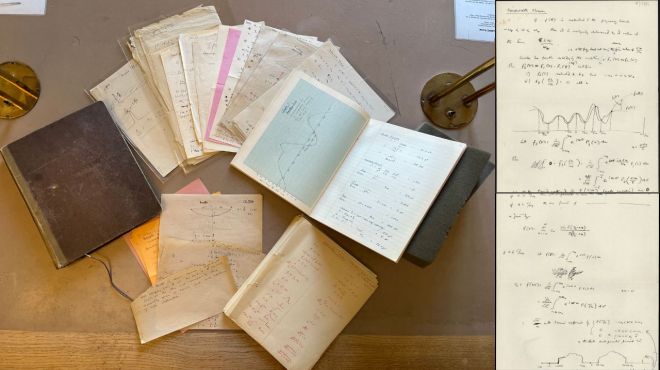
A selection of mid-century notebooks and papers with handwritten mathematic graphs, equation and writing.

Alan Turing's 'Delilah' papers saved for the nation

Body
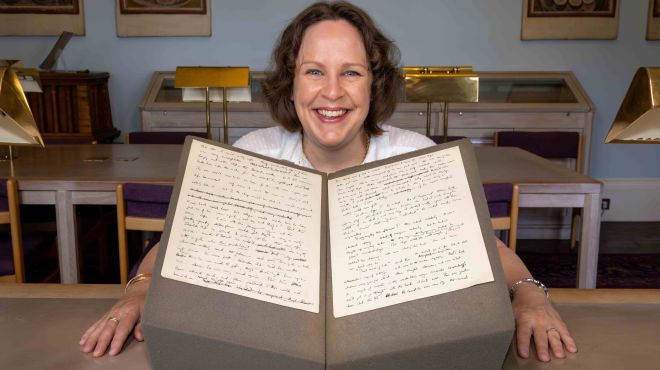
A rare and significant archive of Alan Turing's unpublished Second World War papers has found a permanent home at King's.

Following his ground-breaking work on the Enigma machines at Bletchley Park, in 1943 Turing (KC 1931) turned to building a portable voice encoder for short-distance transmission to be used in military operations. The project was code-named 'Delilah'. With the help of electrical engineer Donald Bayley they built a single prototype to encipher a speech for transmission via a telephone line or VHF radio link with accurate and complete reproduction at the other end.

During the development work at Hanslope Park, now the home of HMGCC (His Majesty’s Government Communications Centre), Turing and Bayley kept a logbook of their experimental results. Bayley also kept handwritten notes of lectures Turing gave to interested Hanslope Park engineers about the mathematics behind the project, along with loose pages of diagrams, calculations, explanations, and other electronic and mathematical theorems and problems.

Unpublished evidence of Alan Turing's work has rarely survived, and the papers were at risk of leaving the country unless a UK institution or individual tried to purchase the items and retain them in the UK for the public to enjoy. The notebooks were saved thanks to a major donation from trading firm XTX Markets, Friends of the Nations' Libraries, and further support from the National Heritage Memorial Fund and King's College.

"It’s brilliant news that the Friends of the Nations’ Libraries charity has successfully campaigned to save Alan Turing’s vital notebooks. Turing was not only a pioneering figure in science and mathematics, but also a national hero” said Secretary of State for Culture Media and Sport Lisa Nandy.

“This is a powerful example of what can be achieved when private and charitable sectors come together. After a government export ban was placed on the notebooks, this collaboration has ensured that these treasures will be preserved for years to come.”

The papers consist of more than 40 pages of unpublished ‘Delilah’ project notes written by Alan Turing and Donald Bayley and are the most important archive of Turing material to come to auction. They will join the largest collection of Turing-related documents at King’s College, Cambridge. Once digitised they will become part of the Turing Papers online archive, freely available to scholars and students around the world.
Alex Gerko, Founder and co-CEO, XTX Markets said, “The 'Delilah’ papers are a unique collection of notes from one of the nation’s greatest mathematicians. It’s important that this archive remains in the UK and is made publicly accessible, so we are thrilled to be part of that effort.”

Alan Turing arrived at King’s as an undergraduate in 1931 and was made a Fellow in 1935, maintaining a lifelong connection with the College. The Turing Archive was founded in 1960 following a donation of his papers by his mother, Sara Turing.

“Alan Turing’s work laid the foundations of computer science, artificial intelligence and much of our modern world. We are honoured to house the ‘Delilah’ papers at King’s and are deeply grateful to our partners in this endeavour, particularly XTX Markets, Alex Gerko, and the Friends of the Nations’ Libraries,” commented King’s College Provost Gillian Tett.

Geordie Greig, Chair of Friends of the Nations' Libraries said: “This extraordinary private donation means that crucial papers written by one of Britain’s geniuses have been saved and can be studied at Cambridge. It is a wonderful act of generosity by XTX Markets and Alex Gerko and we are delighted to have played a part in bringing together this brilliant collaboration between XTX Markets and King’s College, a centre of academic excellence to save our heritage."
Read more
Alan Turing's 'Delilah' papers saved for the nation
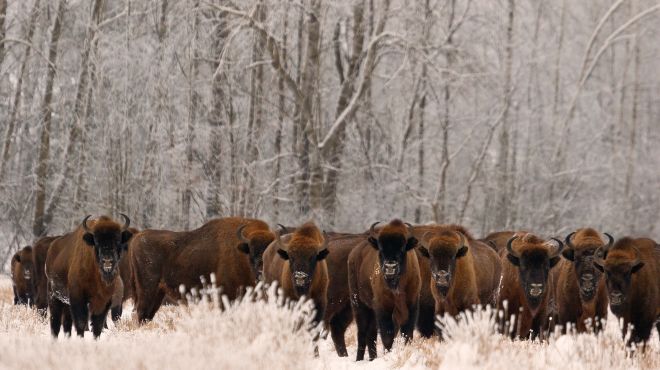
Several brown bison stand in the middle distance with white snow covered grass in the foreground and frosty winter trees in the background.

Study by King’s PhD student shows conservation efforts are bringing species back from the brink

Body
Ash Simkins’ review of over 67,000 animal species has found that while the natural world continues to face a biodiversity crisis, targeted conservation efforts can be successful.

The study draws on data from the IUCN Red List, the world’s largest database of species conservation status. The researchers say their results, reported in the journal PLOS Biology, highlight both the successes and the need for urgent action.

The researchers, led by the University of Cambridge with the IUCN, BirdLife International, and Oxford and Durham Universities, used Red List data to assess whether conservation measures had been put in place, and whether those actions had a positive impact on a given species’ conservation status.

“We found that almost all the species that have moved from a more threatened category to a less threatened category have benefitted from some sort of conservation measures,” said lead author Ash Simkins, a PhD candidate in Cambridge’s Department of Zoology. “It’s a strong signal that conservation works.”

While there is no ‘one size fits all’ solution, the researchers observed some connections between conservation success stories. Many of these species live in isolated areas, such as islands, where intensive conservation efforts – such as habitat protection, captive breeding and reintroductions – can be fully implemented.

“While biodiversity loss is a genuine crisis, it’s vital that we celebrate the success stories wherever and whenever we can,” says Ash. “It’s so hard for a species to improve its conservation status, but with the right effort, we can turn things around.”

The Iberian lynx, once the world’s most endangered cat, has rebounded from just a few hundred individuals to a few thousand. And the European bison, which was hunted to extinction in the wild in the early 20th century, now roams parts of Eastern Europe thanks to sustained conservation efforts over decades.

Ash states that like human healthcare, preventative measures in conservation are preferable and more cost-effective to emergency interventions:

“Humans have gotten pretty good at what could be considered ‘A&E’ conservation – focusing on species at very high risk of extinction. What we’re less good at is preventing species from becoming threatened in the first place. We need to move beyond treating the symptoms of biodiversity loss and start addressing the root causes.”
Ash also emphasises the need for collaborative, locally driven conservation. “It’s vital that we as conservationists are working with stakeholders, rather than dictating to them, whether that’s an Indigenous community in Papua New Guinea or a farmer in Somerset. Conservation doesn’t have to be a zero-sum game – there are compromises that can benefit both the natural world and human society.”

Read more
Study by King’s PhD student shows conservation efforts are bringing species back from the brink
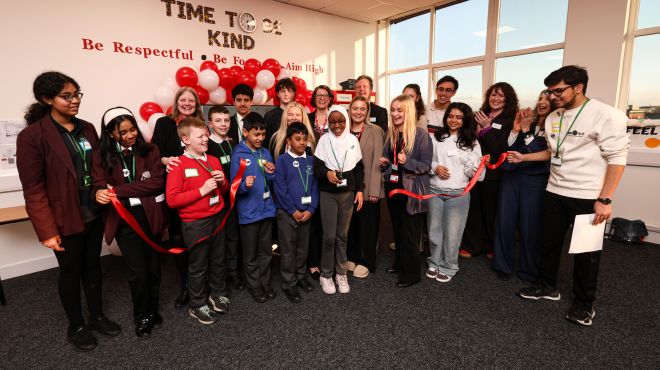
Group of children with King's students and staff formally open the new centre

King's partners with IntoUniversity to open new education centre in Middlesbrough

Body
Young people facing disadvantage from Middlesbrough and the surrounding areas will have a significantly enhanced opportunity to attend higher education, thanks to a new children’s education centre in the heart of the town.

The new education facility, which officially opened on 25 March 2025, is jointly funded by education charity IntoUniversity, and King’s College Cambridge, celebrated an opening event at its centre in the Wrkspace on Linthorpe Road. King’s has been committed to student outreach in the North East of England for more than 20 years and works with a number of secondary schools in the region to encourage talented students to pursue further study.

The centre employs four full-time members of staff and will be used to offer after-school academic support, mentoring with local university students and professionals, in-school aspiration-raising workshops and enrichment and work experience opportunities.

Middlesbrough is an IMD (index of multiple deprivation) decile 1 area, meaning it’s among the 10% most deprived places nationally. The local progression rate into higher education is just 20%, compared to 44% of students nationally, making the area a prime location for an IntoUniversity centre.

Attending the event were around 20 students aged 7-18 who are set to benefit from the centre for the next academic year and beyond, with some of them delivering speeches.

Primary school students took part in a variety of activities during the event replicating the type of activities they will be engaging with in the year ahead. Secondary school students posed questions about future study and careers to attending guests.

IntoUniversity has a proven track record of improving attainment into higher education for students facing disadvantage, and currently supports over 56,000 young people each year at their 44 centres nationwide.

58% of students who attend IntoUniversity centres go on to progress to university, compared with 29% of students from similar backgrounds nationally. The Middlesbrough centre builds on work the organisation already does in the North East through its centres in Newcastle and Hull, among others.

“We’re delighted to be collaborating with IntoUniversity to support the foundation of their new Middlesbrough centre,” said King’s College Provost, Dr Gillian Tett. “King’s has long-standing connections to the North East through our schools’ outreach work in the region and see this as a valuable opportunity to further support talented young people and their aspirations.”

Dr Rachel Carr, Chief Executive and Co-Founder of IntoUniversity, said:

“Middlesbrough is a place very close to my heart, as my parents were from the town and I still have many family and friends here. It therefore gives me great pleasure to be able to open a centre here, and to be partnering with King’s College Cambridge to deliver a programme which will have a lasting impact for young people in Middlesbrough.

“We look forward to working closely with local schools, parents and carers and of course the amazing young people who are the heart and soul of these centres. Young people in Middlesbrough have so much talent, but circumstances can mean their opportunities to reach their full potential are limited.

“We believe that with the right support these young people can thrive in their educational journeys and ultimately reach positive post-school destinations. Thanks to our partner, King’s College Cambridge, and to everyone else who has made this centre possible.”

Read more
King's partners with IntoUniversity to open new education centre in Middlesbrough
Student band on stage at the Cambridge Junction

King’s drummer and her band win University’s competition

Body
The final of ‘Take it to the Bridge’, the annual popular music competition, took place on 7 March at the Cambridge Junction.

Second year Music student Kenzie Robertson performed alongside her band members and lead singer Iona Luke delivering a show-stopping set that won over the audience and the panel of judges, chaired by BBC Radio 1 Music Editor Matt Fincham and including Anton Browne (The BRIT School), Rebecca May (Cambridge 105), and Damien Yare (Warner Music Group).

As well as Iona Luke, student bands Garbhán McEnoy, Hot Content, and Postbox had also been selected to participate in the final of 'Take it to the Bridge' after a hot-contested first round in Michaelmas Term. A total of 20 Cambridge students from 16 colleges battling it out in the annual University’s band competition, with hundreds of students and local residents packing the Junction.

The winning act walks away with an artist support package which includes professional studio time, a photoshoot, industry mentorship, and the opportunity to record and release two songs of release quality. Last year’s winner, Quasar (with King’s medic James Wang on keyboard), had the opportunity to perform for an audience of thousands on the main stage of the Cambridge Club Festival.

“We are all absolutely thrilled to have won the ‘Take it to the Bridge’ competition. It was an incredible night, core memories for all of us, sharing huge amounts of joy and pride. The atmosphere was amazing, and all the bands went to the pub together afterwards - it was a special night where music brought all of us and our friends and families together" says Kenzie "We are so excited for the recording sessions coming up, and I personally can’t wait to see where Iona’s song writing takes her - I really believe she is something special.”


Image: Kenzie with her band and Iona Luke photographed by Chris Loades

Read more
King’s drummer and her band win University’s competition
Elizabeth Zachariah in the lab

The E-Lab launches the 2025 Entrepreneurial Essay Competition

Body
UK-based students studying at sixth form (or equivalent) level, regardless of subjects studied, are welcome to enter.

 The King’s Entrepreneurship Lab (E-Lab) is delighted to introduce the third edition of the Entrepreneurial Essay Competition. The purpose of the competition is to encourage UK-based students to pursue entrepreneurial aspirations and understand better how to launch an enterprise. The E-Lab is particularly keen to foster this entrepreneurial spirit among students who might not traditionally consider entering the world of business and hope this competition encourages more young people to apply to Oxbridge and Higher Education.

 E-Lab associate Rhys Williams says “after the success of last year’s competition, where we received hundreds of fantastic essays exploring the entrepreneurial spirit, we are very excited to be launching the competition again! We look forward to reading the amazing essays and to welcoming the prize winners to the College in autumn”.

 Students should choose between one of the three possible essay questions exploring the importance of entrepreneurialism and the challenges that business people face. UK-based students currently in years 11, 12 and 13 in England and Wales; S4, S5 and S6 in Scotland; or years 12, 13 or 14 in Northern Ireland - regardless of subjects studied - are welcome to enter the competition. A winner, and two runners-up, will be invited to King’s College for a prize-giving ceremony in autumn, and the winner will receive a cash prize of £1,500, with each runner-up receiving £750.

The deadline for entries is 25 July 2025. The choice of questions and full details on eligibility and the rules can be found on the E-Lab website here. You can find the essays written by last year’s fantastic winners here.

 Read more about the E-Lab and sign up to their newsletter here.

Read more
The E-Lab launches the 2025 Entrepreneurial Essay Competition
A montage of art works including painting, sculpture and photography

2025 Rylands Art Prizes awarded

Body

First Published 21 February 2025

Adrian Novac and Teddy Graham are the joint winners, with the second and third prizes also shared this year.

Works in oil, textiles, watercolour, acrylic, photography, installation and sculpture produced by students and staff are currently on display in the Art Rooms, all entries of this year’s Rylands Art Prize.

Chef Adrian Novac is the artist behind 'Chasing Dreams and other Misfortunes', the oil painting that stood out as exceptional and was awarded first prize. It features a powerful horse with the shadow of a women at its feet, bathed in flowers. Adrian shares first place with Teddy Graham, winner of the Rylands Prize in 2023 and 2024. 'Remains', Teddy’s work this year, explores love and loss, memories and promises, in what at first glance looks like a wedding dress with a box of matches placed next to it, on a small table.

Second prize was also jointly awarded to MPhil student Yu Huang for the skilful ink piece 'Hanging Scroll' and Psychology and Behavioural Sciences finalist Smilte Razanovaite for 'Anatomy of the Soul', a mixed-media study of vulnerability and healing.

In third place were the works of History student Biba Marks and Joanna Patterson-Cross from the Admissions & Outreach team, both exploring remembrance.

The 2025 prize was judged by King’s Fellow Sophie Pickford, who says “King’s is known as a creative college, but the powerful range of works that greet you when you enter the room speak to something deeper; a self-reflexivity and astonishing emotional range that highlight our wonderfully imaginative community.”

You can view all of this year’s entries in the main Art Room (at the top of A staircase) until 28 February.

Read more
2025 Rylands Art Prizes awarded
A meadow with a river to the left, people punting and other walking on the bank

New local partnership to deliver a brighter future for Grantchester Meadows

Body

Grantchester Meadows is one of Cambridge’s most picturesque landscapes. The 50 acres of meadows run alongside the banks of the River Cam between Cambridge and the historic village of Grantchester. Attracting thousands of visitors each year, the meadows have been enjoyed for over a century for walking, picnicking, punting, swimming and nature and the scenery. The meadows were enjoyed by the Bloomsbury Group in the first half of the 20th century and also feature in the poem ’Watercolor of Grantchester Meadows’ by Sylvia Plath and a 1969 song by Pink Floyd.

The meadows are owned by King’s and have historically been leased for grazing cattle. However, a rapidly growing population of residents and tourists over the past 20 years has put the meadows under increasing pressure. The meadows have become treated more like one of the city’s parks and commons and there are competing interests between different uses of the meadows, including the ability to provide environmental benefits.

A new partnership between King's and local charity Cambridge Past, Present & Future has just been agreed, so that Grantchester Meadows can be better maintained and improved for the benefit of nature, the environment and people.

Cambridge Past, Present & Future will be responsible for the management of the meadows on a day-to-day basis. The charity already owns and manages other green spaces including Wandlebury Country Park, Coton Countryside Reserve and Barnwell Meadows. They also recently became the owners of Grantchester Tea Garden, which was gifted to the charity by the former owner after his death.

Read more here.

Read more
New local partnership to deliver a brighter future for Grantchester Meadows
Two smiling women standing under a classical stone archway with the King's College gatehouse in the distance

Quantedge-Cambridge Refugee Scholarship supports two new MPhil students

Body

Nazdar Ayzit and Aaron Huq joined King’s in October, to study for one-year MPhils in Economics and Modern South Asian Studies respectively. Both want to use their time at King’s and their own experiences to help create change and develop a greater understanding of the economic and social realities that drive global inequalities.

Nazdar is a Kurd, and grew up in Turkey. With her MPhil she is studying issues of low social trust among discriminated and marginalised minorities. 

‘When I first heard back about the Quantedge Foundation’s decision to grant me the scholarship, I had to check the email a few – or a few dozen – times to make sure I was not delusional! How could I be so lucky, in a world that has so little compassion for, or even knowledge of, the Kurdish existence. With this opportunity I want to look at what factors determine the observed social distrust of discriminated minorities – and how development policies can drive sustainable growth by winning back that trust.’

Aaron is from Bangladesh originally. Their research focuses on indigenous lives and voices in South Asian history, whose history is often forgotten or forcefully removed from the mainstream narrative. Aaron’s hope is to continue with a PhD, and ultimately an academic career.

The Quantedge-Cambridge Refugee Scholarship at King’s is now in its fifth year. It was first awarded in 2020, and is available annually, in support of students who have come from regions of instability or conflict. Applications for the academic year 2025/2026 are now open.

Read more
Quantedge-Cambridge Refugee Scholarship supports two new MPhil students
A photo of a smiling woman with short hair and glasses next to another smiling woman wearing a floral scarf. These photos are on a purple background.

King’s Members recognised in 2025 New Year Honours

Body

This article was originally published 2 January 2025.

Our warm congratulations to the four King’s Fellows and alumnae who have been recognised in the 2025 New Year Honours:

Dr Eleanor Sharpston (KC 1973 and Emerita Fellow) has been made Dame Commander of the Order of St Michael and St George for services to Justice and to the Education of Law in the UK and Europe.

A distinguished Barrister, Dame Eleanor has combined a career in practice at the Bar with academic posts, such as her recent Arthur Goodhart Visiting Professorship in Legal Science at Cambridge.
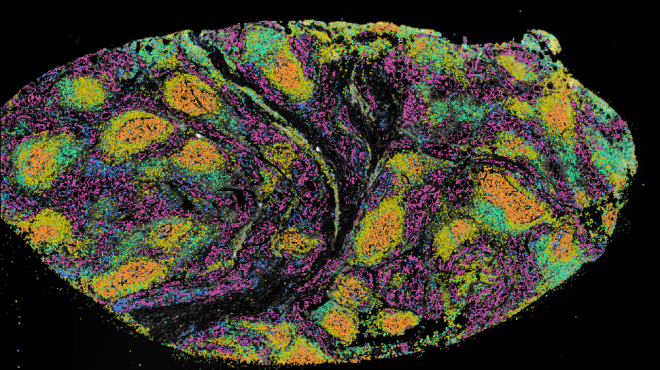
She was Advocate General of the European Court of Justice in Luxembourg from 2006 until 2020 - one of the first women to hold this key position.

In her time as a student at King’s, she was Captain of the Boat Club.

Professor Ashley Moffett (Fellow in Medical Sciences at King’s since 1997) has received a CMG, joining the list of Companions of the Order of St Michael and St George, for services to Women’s Reproductive Health and to Clinical Research and Practice.

An authority on the immunology of human reproduction, Professor Moffett has taught and trained generations of medical students and physicians both in the UK and East Africa.

Following the announcement, she commented:

"I am delighted by this honour that is a tribute to the hard work and dedication of my many colleagues both here in Cambridge and in Uganda who are working together so tirelessly to support women in the field of maternal health."

In March 2024 Professor Moffett received an honorary doctorate at the Karolinska Institutet for a lifetime of research.

Among those recognised in this year's Honours are also two other King's alumnae:

Ruth Cairnie (KC 1974) has been awarded a damehood for services to Industry. Dame Ruth is the Chair of Babcock International Group plc and the Senior Independent Director at BT Group plc. She was the first woman to chair a major UK defence company. 

Dr Jocelyn Cornwell (KC 1972) has been awarded an MBE for Services to Patients’ Experience of Care and to Patient Safety. She founded The Point of Care Foundation to keep patients' experience of care high on the agenda of policy-makers and boards, and to work with managers and frontline staff to improve the experiences of both staff and patients.

Read more
King’s Members recognised in 2025 New Year Honours
50 framed portrait photographs of women against a dark wood panelled background

New portrait collection marks 50 years of women at King’s

Body

The portraits were commissioned to mark the 50th anniversary of the admission of women as students to the College, and were first displayed in the Chapel during the 50 Years of Women at King’s Festival in 2023.

The subjects reflect a broad cross-section of the King’s community, from the trailblazing women who first arrived in 1972 to some of the newest undergraduates. They include Fellows and students, alumnae from a range of different disciplines, careers and generations, and the staff who work behind the scenes to keep the College ticking.

The collection has now been installed in the Portrait Gallery outside the Hall. They become an important part of the King’s permanent art collection, helping to address the balance of visual representation of women on the College’s walls.

Read more about the 50 portraits collection here.

Read more
New portrait collection marks 50 years of women at King’s
Two smiling men wearing glasses stand in front of King's College Chapel and the Gibbs building

King’s academics leading in battery technology development

Body

Zhuanghan Li’s work on battery technology while a Research Fellow at King’s led to starting up Molyon with King’s Entrepreneurship Lab Research Associate Ismail Sami

As the world leans into electrification, battery technology is vital. While current generation lithium-ion batteries are showing their limits, next-generation lithium-sulfur (Li-S) batteries promise better performance at a lower cost, and better supply chain resilience since sulfur is abundant. 

“Current batteries, like the ones in our phones, our laptops, our electric vehicles, they’re just not good enough: they’re expensive, they contain critical rare materials like cobalt, and they’re also just not good enough in terms of performance.” argues Molyon CEO and co-founder Ismail Sami.


Molyon has recently secured $4.6 million in funding from early-stage investors IQ Capital and Plural to start building a pilot production facility in Cambridge where prototype Li-S batteries can be produced. 

Read more about this successful collaboration here.

Read more
King’s academics leading in battery technology development
A smiling group of men and boys wearing black tie stand outside the Sydney Opera House at night

Choir of King's College celebrate a successful Australian tour

Body

In mid-July the College’s world-famous choir embarked on their second tour of Australia under the guidance of Director of Music Daniel Hyde. 

The 9-date sold-out tour saw the Choir visit multiple venues and cities across the country, including a performance at the prestigious Sydney Opera House. This year the Choir premiered and released an Australian commission, performed with local instrumentalists, and took part in a specially organised encounter with Australia’s First Nations people.

You can read a full re-cap of the Choir's tour here.

Read more
Choir of King's College celebrate a successful Australian tour
A man with grey hair and a blue jumper stands looking out of a stone window

Geoffrey Hinton (KC 1967) wins 2024 Nobel Prize for Physics

Body

On 8 October 2024, Geoffrey Hinton (KC 1967) was awarded the Nobel Prize for Physics, alongside John Hopfield, for their foundational discoveries and inventions that enable machine learning with artificial neural networks.

Machine learning based on artificial neural networks is currently revolutionising science, engineering and daily life. It has long been important for research, including the sorting and analysis of vast amounts of data. John Hopfield and Geoffrey Hinton used tools from physics to construct methods that helped lay the foundation for today’s powerful machine learning.

When we talk about artificial intelligence, we often mean machine learning using artificial neural networks. This technology was originally inspired by the structure of the brain. In an artificial neural network, the brain’s neurons are represented by nodes that have different values. These nodes influence each other through con­nections that can be likened to synapses and which can be made stronger or weaker. The network is trained, for example by developing stronger connections between nodes with simultaneously high values. This year’s laureates have conducted important work with artificial neural networks from the 1980s onward.

Geoffrey Hinton used a network invented by John Hopfield as the foundation for a new network: the Boltzmann machine. This can learn to recognise characteristic elements in a given type of data. Hinton used tools from statistical physics, the science of systems built from many similar components. The machine is trained by feeding it examples that are very likely to arise when the machine is run. The Boltzmann machine can be used to classify images or create new examples of the type of pattern on which it was trained. Hinton has built upon this work, helping initiate the current explosive development of machine learning.

Following a long career in academia and a decade at Google, in which he became known as "the Godfather of AI" and won the Turing Prize, he resigned from Google in 2023 and has been speaking publicly on the risks he sees AI posing. He visited King's in May 2023, seeing material newly acquired by the Turing Archive and his old room on X Staircase in Bodley's Coujrt before giving a talk to a packed audience with the University's Centre for Existential Risk.

smart_displayGeoffrey Hinton - Two Paths to Intelligence

Read more
Geoffrey Hinton (KC 1967) wins 2024 Nobel Prize for Physics
A woman curly hair and yellow glasses stands beside a pier

Errollyn Wallen appointed Master of the King’s Music

Body

Our congratulations to King's alumna Errollyn Wallen CBE (KC 1999), who has been appointed Master of the King’s Music by King Charles.

One of the most widely acclaimed contemporary composers, Errollyn was the first woman to win an Ivor Novello Award for a body of classical work, and the first black woman to have a composition played at the BBC Proms. Her music, often inspired by the River Thames, has been performed at the opening ceremony for the 2012 Paralympic Games, as part of the 2022 Festival of Nine Lessons and Carols service, and even played in outer space.

Following the appointment, Errollyn said "It will be a privilege and a great honour to serve His Majesty The King, the United Kingdom and the Commonwealth. I look forward to championing music and music-making for all." 

Errollyn will succeed Dame Judith Weir (KC 1973) who was chosen by Queen Elizabeth II in 2014 and was the first woman to hold the role.

You can read more about this recent appointment here, and listen to Errollyn talking about her influences and experiences on BBC Sounds

Read more
Errollyn Wallen appointed Master of the King’s Music
A smiling man with dark grey hair and a red shirt

King’s Fellow awarded the Albert Einstein Medal 2024

Body

Professor George Efstathiou, King’s Fellow in Astrophysics, former director of the Institute of Astronomy and founding director of the Kavli Institute for Cosmology, has been awarded this year’s Albert Einstein Medal.

Since 1979 the Albert Einstein Medal has been awarded to deserving individuals for outstanding scientific findings, works, or publications related to Albert Einstein.

The public award ceremony will take place on 9 October in Bern during the Physics Colloquium at the University of Bern, where Professor Efstathiou will give a lecture entitled ‘Do we have a standard model of cosmology?’.

Read more
King’s Fellow awarded the Albert Einstein Medal 2024
Three photos of the three winning teams, each with three smiling winners.

Winners of 2024 Entrepreneurship Prize announced

Body

We are delighted to announce the tenth year of awards under the College’s annual entrepreneurship competition, intended to encourage King’s members (past and present) to develop their entrepreneurial ideas and convert their creativity and knowhow for sustainable commercial and social benefit.

This year’s top prize, with a value of £20,000, has been awarded to Flare, a £10,000 second prize goes to EduVantage, and CellaNexa receives the third prize of £5,000.

Founded by recent graduates Gabriel Brown (KC 2020, Theology), Morgan Saville (KC 2020, Computer Science) and Geno Racklin Asher (KC 2020, Mathematics), Flare builds custom safety apps that help universities, colleges and schools safeguard students and promote a positive brand image. By selecting from their menu of pre-built feature modules, clients can order a safety app that is tailored to their unique needs. While all the maintenance and technical details are handled by Flare, institutions can enjoy full ownership and control over their app. The service is scalable and cost-effective.
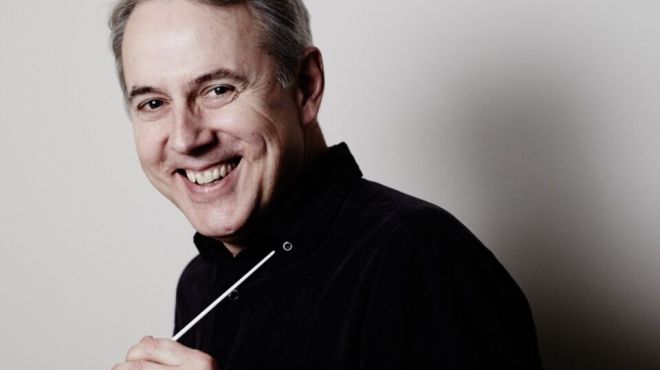
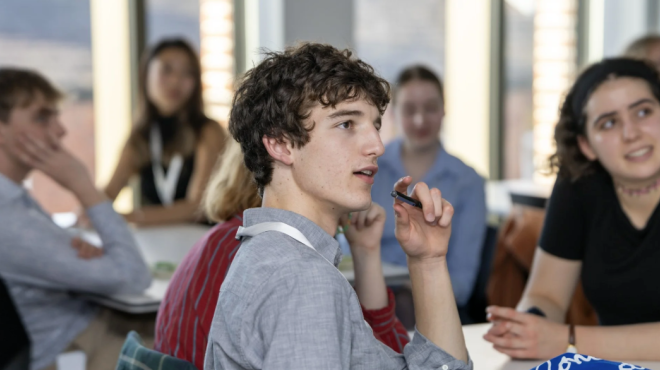
Flare’s initial market is the secondary and higher education sector in the UK, but there are also significant growth opportunities in construction and the public sector, as well as in many businesses that employ lone workers.
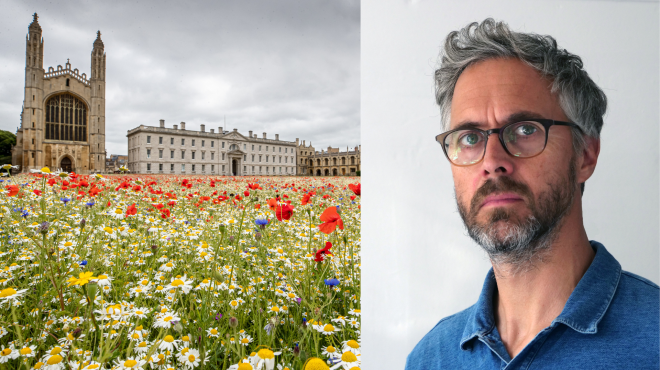
Presented by Sonia Ramanah (KC 1995, Social and Political Sciences), EduVantage is a School Information Management System (SIMS) suite designed to streamline, unify and simplify administrative and educational processes, with features and functionalities that meet the diverse needs of students, teachers, administrators and parents. As an off-the-shelf, accessible, cost-effective, agile and user-friendly SIMS, EduVantage is uniquely positioned for UK small schools who require flexibility in timetabling and student admissions and progressions as well as Less Developed Countries with limited digital resources, connectivity and skills. The software was originally developed by a London school as an innovative solution to meet its requirements to track, assess, manage and monitor the diverse needs of the vulnerable students on its roll, after a scan of the existing SIMS marketplace identified a gap in the market. 

CellaNexa is a business idea led by Wennan Sun (KC 2022, Economics) which hopes to revolutionize drug delivery. Its AI-powered protein engineering platform is designed to harness the unique properties of self-assembling proteins from long terminal repeats (LTR) retrotransposons. The platform expertly identifies these proteins and refines them through advanced machine learning-driven design techniques. It develops protein nanoparticles that excel in targeting ability, payload capacity, immune evasion, and manufacturability, specifically focusing on targeted delivery to brain and cancer tissues.

*

The Entrepreneurship Prize competition was established in 2014 with a gift from Stuart Lyons CBE (KC 1962) and culminates each year in the ‘Lyons Den’, where finalists present their full business plans to an expert panel.

If you would like to find out more about the King's Entrepreneurship Prize and how to enter the competition, please email: enterprise@kings.cam.ac.uk

Read about past winners of the Entrepreneurship Prize here.

Read more
Winners of 2024 Entrepreneurship Prize announced
Two smiling men and a smiling woman in a nun's habit.
29 January 2026 5 - 7pm
Audit Room

Cambridge-Africa at Kings: Social and Spiritual Life of Electricity in Tanzania’s Mission Hospitals

Body

The seminar is on the Social and Spiritual Life of Electricity in Tanzania’s Mission Hospitals and will be presented by both Dr Michael Degani, Department of Social Anthropology, University of Cambridge and his research collaborator Professor Vendelin Simon, University of Dar es Salaam, Tanzania. The talk will be followed by drinks so we can network and have further discussions.  Please find a notice attached and some further information below:

Abstract:

Electricity is a fundamental prerequisite to safe, effective, and healthcare services in rural African settings, yet it is often expensive, unreliable and unevenly distributed. Based on two months of ethnographic fieldwork conducted across five regions in Tanzania, we describe in this talk how Catholic mission hospitals mobilize institutional agency to navigate the precarious energy landscape. We show how they draw on their various networks of donors as well as the sedimentations of existing missionary infrastructure to create a patchwork of energy sources that include state connections, diesel generators, insertion into church powered mini-grids, and independent solar. We then show how this patchwork affects the rhythms, textures, and spatial patterns of work and care amongst nurses, patients, kin, doctors, administrators, and technicians. In drawing on these multiple sources, these institutions exemplify an important strategy for operating in resource-poor environments and embed electricity in an ethic of care.


The seminar will be online also:

https://cam-ac-uk.zoom.us/j/83738842359?pwd=aqn1Fr7lMQSbHn81pY3JthfpuTKlbZ.1

Meeting ID: 837 3884 2359 

Passcode: 918653

Read more
Cambridge-Africa at Kings: Social and Spiritual Life of Electricity in Tanzania’s Mission Hospitals
Waiters serving wine
21 March 2026 12 - 5pm

Foundation Lunch 2026

Body

We would be delighted if Members who matriculated in and before 1975, and their guests would save the date for the Foundation Lunch taking place in College on Saturday, 21 March.

The charge to attend the Foundation Lunch is £35.00 per person. This price includes a three-course meal with wine, or non-alcoholic alternative.

This year marks the 60th Anniversary for Members from the class of 1966 and we would be particularly delighted if as many from the year as possible joined us for the Foundation Lunch and used it as an opportunity for an informal class reunion. Alternatively, the 50th Anniversary Reunion Dinner on 19 September is another occasion where we will encourage those from 1966 to use the event to celebrate their own milestone. 

How You Will Be Invited

Invitations to register for this event will be sent by email in the New Year. Hard copy invitations will only be sent to those without an email living in the UK.

Evensong 

As part of the programme, Members will be invited to attend a special choral Evensong in which returning members of the Choir are invited to sing. For more information please email the Choir Office: choir@kings.cam.ac.uk

Accommodation 

A limited number of college guestrooms are available to Members and can be booked in advance. For availability and prices please contact the Porters’ Lodge directly by emailing: guestrooms@kings.cam.ac.uk.

Guest rooms can also be booked at other colleges via the University Rooms website. If you wish to stay overnight in Cambridge but would like a few creature comforts (a television, room service etc), a number of city centre hotels offer a University members’ rate. Please visit:www.alumni.cam.ac.uk/benefits/camcard for further details.

Extra Information

The dress code for the day is smart casual.

The College would be happy to aid your networking with contemporaries before or after the event. If there is anyone you would like to get in touch with but have lost contact details for, just let us know. In compliance with the Data Protection Act, we will try to help.

Please understand that refunds will not be issued to event cancellations made less than 14 days prior to the event.

Future Events 

If you have programme suggestions or ideas that you would like to put forward for the Foundation Lunches of future years, please get in touch: events@kings.cam.ac.uk

Read more
Foundation Lunch 2026
King's fountain with members in background
28 March 2026 3 - 11pm

20th, 25th & 30th Anniversary Reunion

Body

King’s College invites Members from the classes of 2006, 2001, and 1996 to save the date for their reunion event in College on Saturday, 28 March 2026 to celebrate their 20th, 25th and 30th Anniversary since matriculation.

Members from 2005, 2007, 2000, 2002, 1995, and 1997 will also be invited to join the celebration.

Please note that there is a £65 charge to attend the formal dinner in Hall (Non-Resident Members and guests). Daytime only tickets will also be available. 

The full programme will be published when registration opens in January 2026. Daytime activities will be family friendly and will include an Easter egg hunt for children. This will be followed by a formal dinner in Hall.

Accommodation & Parking
A limited amount of parking will be available in College on 28 March and ensuite rooms at Harvey Court Building on West Road (Gonville & Caius College) will be available to book once registration opens for those who wish to stay overnight. 

How you will be invited
Invitations to register for the reunion and accommodation will be sent in the New Year. Further details will be shared once registration opens.

Read more
20th, 25th & 30th Anniversary Reunion
True for Alan Turing, by Sir Antony Gormley, at King's College, Cambridge
08 May 2026 5 - 6pm
King's College, Cambridge

Alan Turing Lecture 2026

Body

The 2026 Alan Turing Lecture will be given by Raymond E. Goldstein FRS, Alan Turing Professor of Complex Physical Systems. 

Further details on the event programme and registration will be available in the New Year.

Read more
Alan Turing Lecture 2026
tulips in Webbs Court
16 May 2026 11:30am - 5:30pm

King Henry VI Circle Lunch

Body

King’s College, Cambridge kindly requests that you save the date for the King Henry VI Circle Lunch on Saturday, 16 May 2026

Leaving a gift in your Will, which is also known as legacy giving, plays a vital role in the continued success of the College; legacy gifts are one of the most powerful and thoughtful ways in which alumni, friends and supporters can be part of the College’s future. This annual lunch and day programme is held to thank and recognise the College's Legators - those who have included King’s College in their Will.

Invitations to register for the event will be sent in the New Year.


Legacy Giving

Whether you are an existing College Legator or someone who is thinking about leaving a gift in their Will to King's College Cambridge, we would be delighted to hear from you. Your intentions matter and we encourage you to talk to us about them. In doing so, it lets the College know what's important to you.

Tel: +44 (0)1223 331481
Email: legacies@kings.cam.ac.uk

King's would like to recognise you appropriately for your most meaningful gift. However, if you prefer to stay anonymous, we respect that.

All individuals should seek independent, qualified advice before making a charitable bequest.

Read more
King Henry VI Circle Lunch
Back Path
06 June 2026 12 - 3pm

10th Anniversary Reunion Lunch 2026

Body

On behalf of the Provost and Fellows of King’s College, the Development Office is delighted to invite Members from the class of 2016 to save the date for their 10th Anniversary Reunion on Saturday, 6th June 2026.

Members are welcome to bring a guest. The cost to attend is £30 per person. 

Programme
The programme will include a drinks reception followed by a two-course lunch. A full copy of the programme can be found here. 

Parking
A limited number of parking spaces will be available in the King's College car parks, located off of West Road. Please indicate when registering whether you will need parking.

How you will be invited
Invitations to register for the reunion will be sent in the New Year. Further details will be shared once registration opens.

Read more
10th Anniversary Reunion Lunch 2026

Follow us on Instagram!