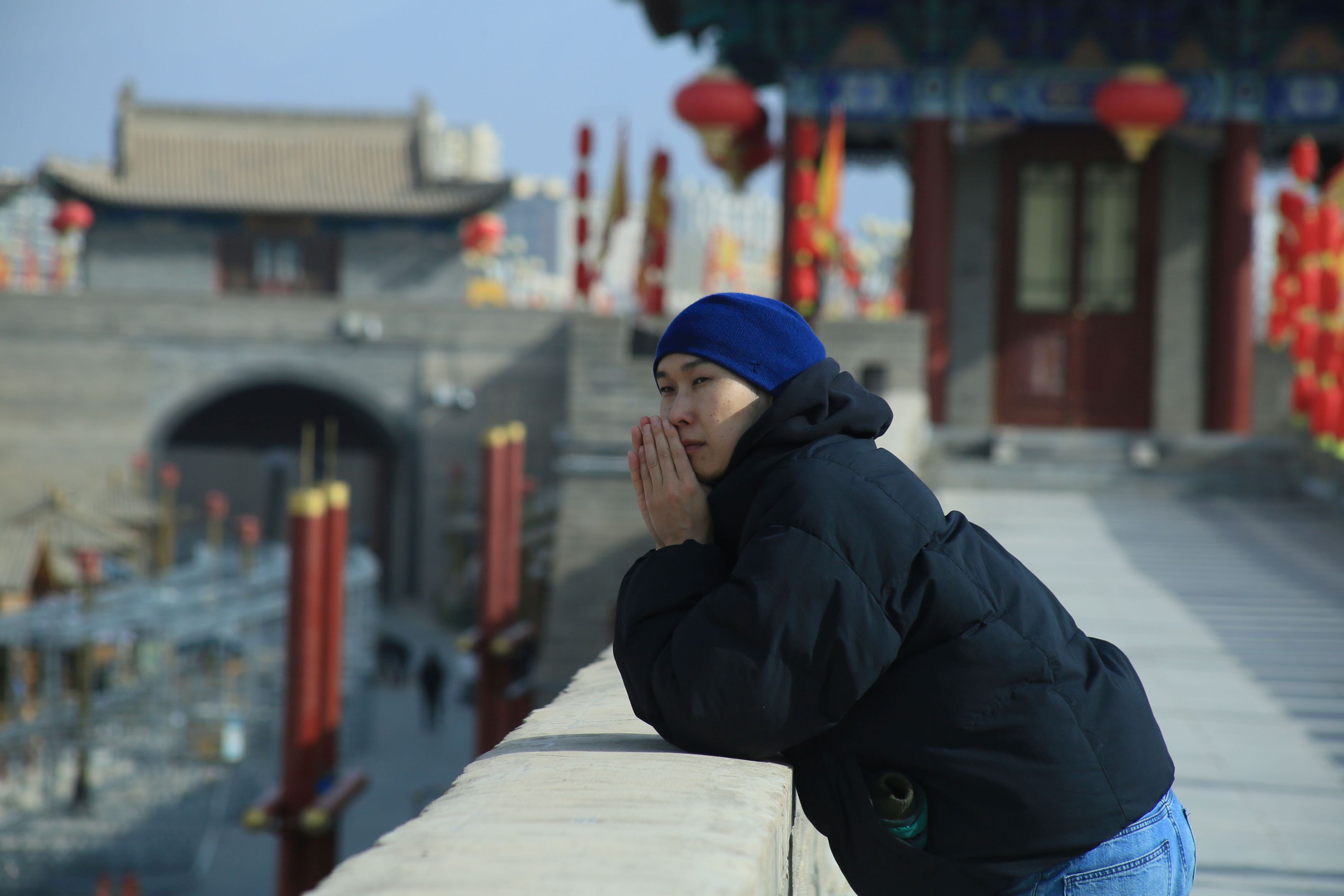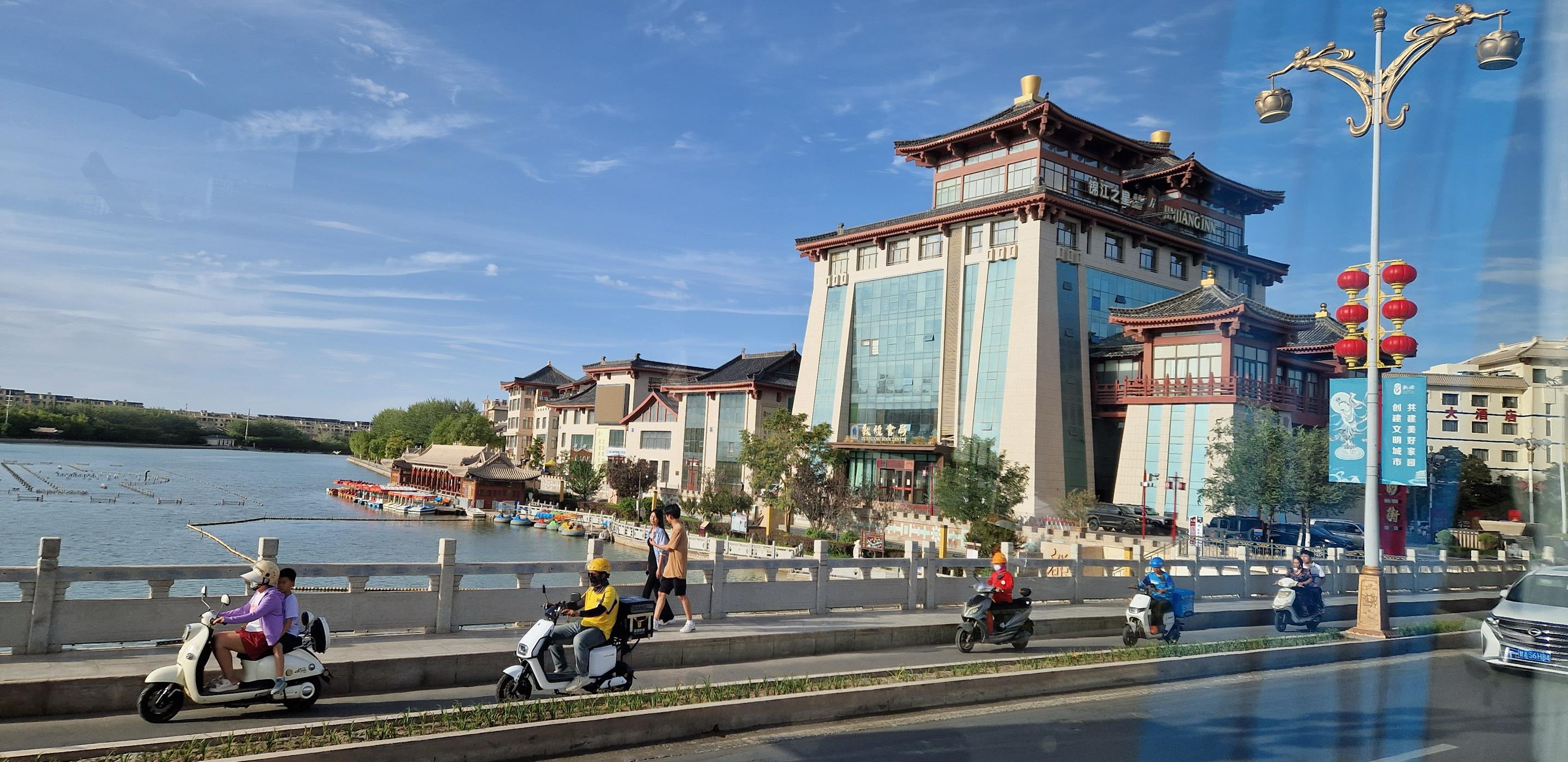
Bridge over a river in Gansu province
Kings logo

The Silk Roads programme at King's College

An interdisciplinary research programme to study the history and culture of the countries of the Silk Roads
Decorative image

About the Silk Roads programme

Through a generous donation, King’s has initiated a programme for the study of the history and culture of the Silk Road countries, societies, and cultures of Asia from the Western borders of China to the Mediterranean Sea, as well as their relationships with China in the East and Europe in the West.

This broad programme of studies includes lectures, seminars and conferences, as well as graduate scholarships and Research Fellowships, which explore relationships and the movement of materials, knowledge, and technologies between China and the Mediterranean at any period in history up to the present day.

To keep up to date with Silk Roads Programme activities, join the mailing list.

Members of the Silk Roads programme
Gareth Austin, smiling man with short hair wearing a blue suit and a yellow tie

Gareth Austin

Bio

Professor Gareth Austin became the Director of Research at King's in April 2025.

Read more
Gareth Austin
A man in a dark jacket and a white shirt in front of a red staircase

Francesco Bianchini

Bio

Francesco is a medievalist and a member of King's Silk Roads team. He has published on royal patronage of South Asian religions, Sanskrit manuscripts, Buddhist scriptural traditions and their Chinese translations (Perfection of Wisdom) and epigraphic sources. For the Silk Roads programme, he is looking at medical encounters and "healthscaping" between South Asia, Southeast Asia and China, with a focus on mobility and knowledge exchange. He has taught religion and history courses at Oxford, Heidelberg, Mahidol and Cambridge.

Read more
Francesco Bianchini
A woman in a blue top in front of a yellow wall

Katie Campbell

Bio

Katie is an archaeologist who works on the cities of medieval Central Asia and the Caucasus. She completed degrees in history and archaeology at the Universities of Exeter and York, and then worked on a variety of research and commercial archaeology projects across Central Asia and the Middle East, employed by organisations including the British Museum and the Universities of Oxford, London, Stanford and Copenhagen. 

Her doctorate, completed as a Nizami Ganjavi scholar at Oxford, examined archaeological evidence for the Mongol Conquest of the early 13th century and its impact on cities in Central Asia. 

While at King’s she will focus on cities over a longer period, from the 11th to the 15th century, charting changes in their fortunes against the backdrop of dramatic political, linguistic and cultural changes as Turkic and Mongol groups moved into the area.

Read more
Katie Campbell
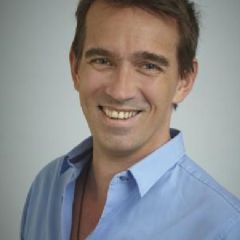
A man in a blue shirt

Peter Frankopan

Bio

Peter is the foremost expert on the Silk Roads in the UK, Professor of Global History at Oxford University, Director of the Oxford Centre for Byzantine Research, Senior Research Fellow at Worcester College, Oxford and associate fellow at King’s College. He works on the history of the Mediterranean, Russia, the Middle East, Persia, Central and Southern Asia, and on relations between Christianity and Islam, and is particularly interested in exchanges and connections between regions and peoples.

Read more
Peter Frankopan
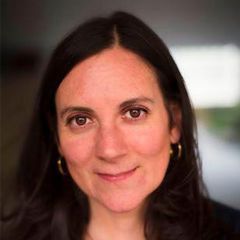
Caroline Goodson, a smiling woman with long dark brown hair and brown eyes

Caroline Goodson

Bio

History and archaeology of Early Medieval Europe, especially Italy and North Africa; Material Culture; Urbanism; Environmental History.

Read more
Caroline Goodson
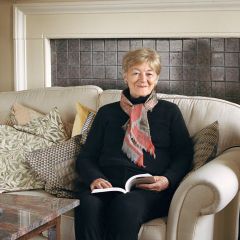
A woman sits on a sofa with a book open on her lap

Caroline Humphrey

Bio

Caroline Humphrey's PhD (1973) from the University of Cambridge was on 'Magical Drawings in the Religions of the Buryats', supervised by Edmund Leach. Since 1978 she has held appointments in the Department of Social Anthropology (Cambridge). Together with Urgunge Onon she founded the Mongolia and Inner Asia Studies Unit (MIASU) in 1986. She retired from her post as Sigrid Rausing Professor of Collaborative Anthropology, University of Cambridge in October 2010 and became Director of MIASU.

Read more
Caroline Humphrey
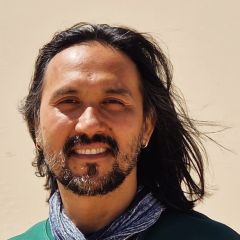
A man with dark shoulder length hair and a beard

Reza Huseini

Bio

Reza Huseini is a historian of Iran, India and Central Asia. Growing up in Afghanistan, a country disrupted by war for the last four decades, his journey of education and research is set against an experience of forced migration. He studied history at JNU in New Delhi before moving to Leiden University with a Cosmopolis scholarship. There, for his second MA in history, he researched the historical and cultural interconnectivity between Iran, India and Central Asia. Reza is also a calligrapher of Persian. 

His doctoral dissertation, undertaken at Leiden University, investigated the diverse and dynamic processes of the early Muslim conquests of Bactria in the seventh and eighth centuries. To do so, he worked with a range of Arabic and non-Arabic documentary and literary sources together with other sources of material culture to analyse the consolidation and naturalisation of early Muslim rule in eastern Iranian regions. The diversity in populations, historical and cultural interconnectivity between Iran, India and Central Asia, and Reza’s experience of living in these regions, inspires his ongoing research into the formation of political ideologies. 

Reza’s research at King’s engages with political theories that fostered cohesion between the diverse societies of the Turco-Mongolian empires, which left their traces not only on language and culture, but also on the landscape of these regions.   

Current Projects:


(Under Contract with Edinburgh University Press)

The Arab Conquest of Bactria: Local Power Politics and Arab Domination (651–750 CE)

(Monograph)

The Mongols of Mughal History: Imagining World Empire in Sixteenth-Century India


Research:

Edited Volume or Journal Special Issue (peer reviewed)

2023- With Jelle Bruning, eds., “Textual Sources and Geographies of Slavery in the Early-Islamic Empire, ca. 600-1000 CE.” Journal of Slavery & Abolition Special Issue (136 manuscript pages.) https://doi.org/10.1080/0144039X.2023.2264110

Articles and Book Chapters (peer reviewed)

2025- "From Shadow to Light: Transition of Chinggisid Sacred Kingship under Ghazan Khan and its Rivaval under Akbar," in The Ethics of Idolatry: Sun and Cosmos Worship in Judaism and Islam, edited by Azafr Moin and Jonathan Schofer. Columbia University Press, forthcoming 2025.

2025 "Local Administration in the Late Antiquity Bactria: Documentary Evidence," in State Documents Colloquium, edited by Areou Azad. Edinburgh University Press, forthcoming 2025.

2024- With Jos Gommans. “New Dawn in Mughal India: Longue Durée Neoplatonism in the Making of Akbar’s Sun Project.” Journal of the Royal Asiatic Society. https://doi.org/10.1017/S1356186323000664 

2024- “Between the Arabs and the Turks: Household, Conversion and Power Dynamics in early Islamic Bactria (700–772 CE).” In The Ties that Bind: Mechanisms of Social Dependency in the Early Islamic Empire, edited by Petra M. Sijpesteijn and Edmund Hayes. Cambridge University Press, forthcoming 2024.

2024- “The pre-Mongol city of Balkh as seen by its residents: a report from the Fadaʾil-i Balkh,” in UNESCO Thematic Collection of Cultural Exchanges along the Silk Roads: Architecture, Monuments and Urbanism, edited by Elena Paskaleva and Michael Turner. UNESCO, Paris, forthcoming 2024

2023- “Slavery Represented in Bactrian Documents.” In Textual Sources and Geographies of Slavery in the Early-Islamic Empire, ca. 600-1000 CE, edited by Jelle Bruning and Said Reza Huseini, Special Issue, Journal of Slavery & Abolition. https://doi.org/10.1080/0144039X.2023.2264116

2022- “Thinking in Arabic, writing in Sogdian: Arab Sogdian Diplomatic Relation in the early eighth-century.” In From the Ruler of Samarqand to the Andalusian “Law of the Muslims”: Sogdian, Greek and Arabic Documents and Manuscripts from the Islamicate World and Beyond, edited by Andreas Kaplony and Matt Malczycki, 67–87. Leiden: Brill. https://doi.org/10.1163/9789004527874_004

2022- “The Rebellion of Ḥārith b. Surayj (116–128/734–746): A Local Perspective.” Al-ʿUsur al-Wusṭā 30 (2022): 516–53. https://doi.org/10.52214/uw.v30i.9040

2022- With Jos Gommans. “Neoplatonic Kingship in the Islamic World: Akbar’s Millennial History.” In Sacred Kingship in World History: Between Immanence and Transcendence, edited by Azfar Moin and Alan Strathern, 192–222. Columbia University Press, Doi: 10.7312/moin20416-010

2022- With Jos Gommans. “Neoplatonism and the Pax Mongolica in the Making of Sulh-i Kull: A View from Akbar’s Millennial History.” Modern Asian Studies 56 (2022): 870–901. Doi: 10.1017/S0026749X21000044

2021- “The Muqaddam Represented in the pre-Mongol Persian Documents from Ghur.” AFGHANISTAN 4, no. 2 (2021): 91–113. Doi: 10.3366/afg.2021.0074

2021- “Acts of Protection represented in Bactrian Documents.” Annales Islamologiques 54 (2021): 107–124. Doi: 10.4000/anisl.7655

2020- “The Idea and Practice of Justice Represented in Bactrian Documents.” Association for Iranian Studies, Newsletter 41, no. 2 (2020): 28–31.

2013- “Medieval Tibet in Perso-Islamic Sources.” Journal of Himalayan and Central Asian Studies 18, no. 4, CHINA SPECIAL (2013): 251–283.

2012- “Destruction of Bamiyan Buddha: Taliban Iconoclasm and Hazara Response.” Journal of Himalayan and Central Asian Studies 16, no. 2, BAMIYAN SPECIAL (2012): 1550

2012- “Discovery of Bactro-Achaemenid Site in Northern Afghanistan.” Yavanika: India Society for Greek and Roman Studies 14 (Rohilkhand University, May 2012).c.

Invited Comments and Opinion Essays (not peer-reviewed)

2020- “The Mughal Experiment with Islamic Extremism: A Sixteenth-Century Lesson for Today.” Leiden Islam Blog, Leiden University, available online https://leidenislamblog.nl/articles/the-mughal-experiment-with-islamic-extremism-a-sixteenth-century-lesson-for-today

2018- “Bactrian Documents: New Source for the early Islamic history of Tukharistan.” Humanities Common, available online https://emco.hcommons.org

2021- “Women in late Antique Bactrian Documents.” Leidenmedievalistsblog, available online https://leidenmedievalistsblog.nl/articles/women-in-late-antique-bactrian-documents

2021- “Thumbnail impression on clay sealings from early Islamic Bactria,” Material Cultures III, Humanities Common, available online https://emco.hcommons.org

2020- “Ownership notes in imperial Mughal codices.” Muse & Manuscripts: Lessons in codicology and Paleography, available online https://mouse.digitalscholarship.nl/lessons/babur


Presentations (selected)

2024 “Transition of Chinggisid Kingship under Ilkhanid Ruler Ghazan Khan and its Revival under Mughal Emperor Akbar,” Silk Roads Seminar Series, King’s College, Cambridge, 18 October.

2024 “War and Diplomacy in Medieval Khurasan,” Law, Society, and Politics in Afghanistan: Prospects for Dialogue, Inclusion, and Representation. ALPA Conference, American University, Washington DC, 11 October.

2024 “The Rebellion of Fāʾiq-i Khāṣṣa in Samanid Khurasan,” How Rebellion Ends: Conflict Resolution in the Late Antique and Early Islamicate World, 500-1000 CE. Hamburg University, 12 September. 

2024 “Forms of Political Structure in Medieval Khurasan,” Cambridge Afghanistan Series Conference, September 6.

2024 “A Sixteenth Century Mongol Observation of Tibet,” Lanzhou University, 3 August.

2024 “The Mongol Inspiration of Mughal Political Ideology,” Lanzhou University, 3 August.

2023- “Tarikh-i Alfi: Mughal Millennial History,” Ancient India-Iran Trust, Cambridge, 10 November.

2023- “Slavery in Eastern Iranian Regions: the case of Late Antique Bactria,” The Elahé Omidyar Mir-Djalali Institute of Iranian Studies, and Faculty of Music, University of Toronto, and Invisible East Project, Oxford, 16 October (Online).

2023- Chair and Discussant, History Panel, European Conference on Iranian Studies (ECIS 10), Leiden University, 24 August.

2023- “Form of Political Structure in the Late Antique Bactria,” European Conference on Iranian Studies (ECIS 10), Leiden University, 24 August.

2023- “Local Administration and Political Structure in Late Antique Bactria: Documentary Evidence,” State Documents from the Medieval Islamicate World, Trinity College, Oxford University, 21-23 June.

2023- “New Dawn in Mughal India: Longue Durée Neoplatonism in the Making of Akbar’s Sun Project,” Joint presentation with Jos Gommans for the conference on The Ethics of Idolatry: Sun and Cosmos Worship in Judaism and Islam, UT Austin, 17 April.

2023- “The Arab Muslim Conquests of Qum: Cooperation, Co-existence and the Rise of a New Urban Centre in Iran during the early Islamic Period,” Water & the Urban/Rural Nexus in the Medieval Islamic World, Radboud University, Nijmegen 30-31 March.

2023- “Tarikh-i Alfi: Akbar’s Millennial History,” Persian Impact on History, Literature and Culture of Central and South Asia, British Institute of Persian Studies and Institute of Language Studies and Research, Kolkata, 1-2 March.

2022- Chair and Discussant, Panel on Land Management and the Organisation of Production, A Hard Row to Hoe Conference, Oxford University, 12 December.

2022- “A Sixteenth Century Mongol Observation of Tibet: Mirza Haidar Dughlat and his Tarikh-i Rashidi,” Mongol and Inner Asia Studies Unit, Cambridge University, 15 November.

2022- “A Day in Late Antique Bactria,” (In Persian). For Invisible East Project, Oxford University, 13 October.

2022- “Local Political Autonomy and Overlordship in Late Antique Bactria,” Ahmad Shah Massoud: The Past, Present and Future of Afghanistan II, Emanuel College, Cambridge University, 22-23 September.

2022- “Zoroastrianism in Late Antique Bactria,” IV International Symposium of Young Scholars in the Humanities (ISYS), Ivane Javakhishvali Tbilisi State University, 29 May.

2022- “Slavery Represented in Bactrian Documents,” for Conference on Textual Sources and Geographies of Slavery in the Early Islamic Empire ca. 600-1000, Leiden University, Online Session on 3 March.

2022- “Mongol Nomads in Persianate Discourse,” King’s College, Cambridge University, 22 February.

2022- “Persian Documents form pre-Mongol Ghur,” Invisible East Project, Oriental Institute, Oxford University, 14 February.

2021- “Conquests and Trade in the Early Islamic East,” Networks and Ties of Exchange: Trade ND Merchants Across the pre-Modern Middle East (60-1000) Workshop Leiden University, 3 June.

2020- “Political Fragmentation in Central Asia on the eve of the early Muslim Conquests,” Online Symposium organized by the University of Bukhara, 27 April.

2019- “Between the Arabs and the Turks: The family of Mir b. Bek al-Bamiyāni in early Abbasid Bactria (750-772),” Ties that Bind Conference, Leiden University, 5 December.

2019- “Role of Bactrian local Elites in the Rebellion of Harith b. Suraij in Late Umayyad Khurasan (734-746),” Acts of Rebellion Conference, Leiden University, 7 November.

2019- “The Idea and Practice of Justice represented in Bactrian documents,” 9th European Conference for Iranian Studies, Freie Universität Berlin, 10 September.

2019- “The Idea and Practice of Justice represented in Eastern Iranian world in Late antiquity: The Case of Bactria,” Symposium Iranica, St. Andrews University, 12-14 April (could not attend because my Visa arrived later).

2019- “Early Muslim Patronage and its Impact on the Rise of Local Elites in the Early Islamic Bactria: The case of the Barmakids of Balkh,” NISIS Spring School, Granada, Spain 18-22 March.

2018- “Arab Sogdian Relations reflected in Documents of Mount Mugh,” International Institute for Central Asian Studies (IICAS), Samarkand, 27 September.

2018- “Thinking in Arabic, Writing in Sogdian: Arab Sogdian Diplomatic Relation in the Early Eighth Century Transoxiana,” The International Society for Arabic Papyrology (ISAP), Freie Universität Berlin, 21 March.

2018- “Shia-Sunni Ideological Conflict Represented in the 16th century Mughal Historiography: The Case of Tarikh-i Alfi,” Shia Studies Workshop, Leiden University, 16 November.

2017- “Marriage Regulations in the Eastern Iranian World in the Late Antiquity: The Documentary Evidence,” the Iranian World in Late Antiquity: A graduate Student Workshop, The Chicago Initiative for Global Late Antiquity, the University of Chicago Center in Paris, the Oriental Institute, and the EPHE Paris, 18 September.

2017- “Sixteenth Century Millennium and the Making of the Tarikh-i Alfi in Mughal India,” Global Nodes, Networks, Orders: Three Global History Workshops on Transformative Connectivity, Leiden University, 20 April.


Conferences and Colloquia

2024 Organiser, “Afghanistan: A Neglected Reality”. King’s College, University of Cambridge, 7 June 2024.

2023 Chair and Discussant, History Panel, European Conference on Iranian Studies (ECIS 10), Leiden University, 24 August.

2022 Chair and Discussant, Panel on Land Management and the Organisation of Production, A Hard Row to Hoe Conference, Oxford University, 12 December.

2021- present, Co-organiser of King’s Silk Roads Weekly Seminars.

2021 Co-organiser with Jelle Bruning, Textual Sources and Geographies of Slavery in the Early-Islamic Empire, ca. 600-1000 CE. Two rounds of online conferences on 3-4 December

2020 Co-organiser with Shuqi Jia, Contesting Empires: Sogdiana, Bactria and Gandhara between the Sasanians, the Tang, Turkic rulers, the Umayyads and the early Abbasids (ca. 600-1000 CE), Leiden University, 17-18 September (Virtual meeting).


Documentaries, Discussions (selected)

2024-Understanding Today’s Afghanistan, Mare Newspaper, March 28. https://www.mareonline.nl/wetenschap/de-amerikanen-hebben-nooit-hun-lesje-geleerd/

2024-A Night with Buddha Programme, organised by the Swedish Kulturhuset  Stadsteatern, Stockholm, March 10. https://www.youtube.com/watch?v=R0FZUZARU_8

2023- Influence of Buddhism on Islam (Ta’thiri Buddism bar Iran), BBC Persian Pargar17 June. https://www.youtube.com/watch?v=qjZG-JpPb18&t=1554s 

2023- History of Music in Iran (Sarguzasht-i Musiqi Iran), Part 2 Marjan TV Network (based in London), 6 February. https://www.youtube.com/watch?v=GI79GQmMZNA&t=3674s

2022- History of Music in Iran (Sarguzasht-i Musiqi Iran), Part 1 Marjan TV Network (based in London), 19 April. https://www.youtube.com/watch?v=nuk04nTzIys&t=332s

Read more
Reza Huseini
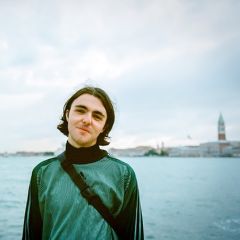
A man in a green top in front of a Venetian lagoon

Angus Russell

Bio

Angus works on the history of Mongol and post-Mongol Eurasia, with a particular focus on the politics and institutions of Rus’ and Moscow in the late medieval period. His doctoral thesis traced the evolution of fiscal models in the regions conquered by the Mongol khans. As part of his research fellowship at King’s, he hopes to explore the role language and translation can play in studying the cross-cultural interactions of pre-modern societies. Angus studied for his PhD in Slavonic Studies at Trinity College, Cambridge, after an undergraduate degree in History and Russian, and a master’s degree in Late Antique and Byzantine Studies at the University of Oxford.

Read more
Angus Russell
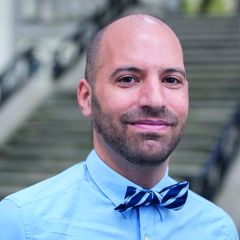
Dror Weil, a smiling bald man wearing a blue shirt and striped bow tie.

Dror Weil

Bio
Research

Dror is a historian of pre-modern Asia, with a particular interest in scientific and intellectual exchanges between the Islamicate world and China. His publications explore the translation and articulation methods of premodern experiences of the natural world, China's participation in the early modern Islamicate book culture, China's reception of Arabo-Persian astronomy and medicine, and the movement of Islamicate knowledge along the Silk Road.

Dror received his BA degree in East Asian Studies and Economics from Tel Aviv University, MA degrees from National Chengchi University in Taipei and Princeton, and his PhD degree in 2016 from Princeton with a dissertation titled: "The Vicissitudes of Late Imperial China's Accommodation of Arabo-Persian Knowledge of the Natural World, 16th–18th Centuries".

Before taking up his position at Cambridge in 2021, Dror held a lectureship in History of Asia pre-1750 at King's College London. Dror was a recipient of the Thomas Arthur Arnold Fund for Excellence in Historical Research fellowship and held postdoctoral fellowships at the Max Planck Institute for the History of Science and the Berlin Center for the History of Knowledge. He also served as a Visiting Professor at EHESS in Paris and Marseille.

Read more
Dror Weil
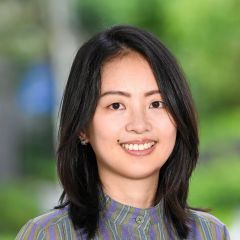
A smiling woman with shoulder length dark hair, wearing a green and purple shirt.

Ruiyi Zhu

Bio

Ruiyi Zhu is a social anthropologist with a keen interest in global China. Her doctoral thesis focuses on Chinese labour migrants in Mongolia’s post-socialist extractive economy, demonstrating how domestic political economic processes influence patterns of transnational engagement. As a research fellow at King’s, she will build on previous research and transition her inquiry from labour surplus to protein deficiency within the broader framework of global China. Specifically, she will explore how biopolitics, nutritional science, and the transnational food industry shape Chinese dietary thoughts and practices. Ruiyi received her PhD from the University of Cambridge in 2023. Before returning to Cambridge, she was a Global Perspectives on Society Postdoctoral Fellow at NYU Shanghai. 

Read more
Ruiyi Zhu

Silk Roads programme events listings
No events found.

decorative tilework

Contact the Silk Roads Programme

If you want to get involved with the Silk Roads Programme, join the mailing list, or find out more about upcoming events using the link below.