Linguistics
Linguistics is the systematic study of human language which draws on methods and knowledge from a wide range of discipline.

At a glance
A Level requirements: A*AA
IB requirements: 41-42 points overall with 7, 7, 6 at Higher Level
Subject requirements: None required
Average students per year: 2
Admissions assessment: Yes
Written work: None

Admissions
Course overview
Linguistics is the scientific study of language, offering insight into both individual languages and the human mind. At Cambridge, you’ll cover core areas like phonetics, syntax, semantics, and language acquisition while also drawing on disciplines such as philosophy, physics, psychology, and neuroscience. The course structure begins with a broad foundation in the first year and allows you to specialise in later years through optional papers. You’ll also complete a dissertation on a topic of your choice in your final year.
For more information about the course and its modules, visit the University website.
Admissions assessment
Candidates for Linguistics who are invited to interview will sit a centralised admissions assessment. Candidates do not need to register for this but will be registered by their colleges automatically. Further information about the assessment can be found here.
Interviews
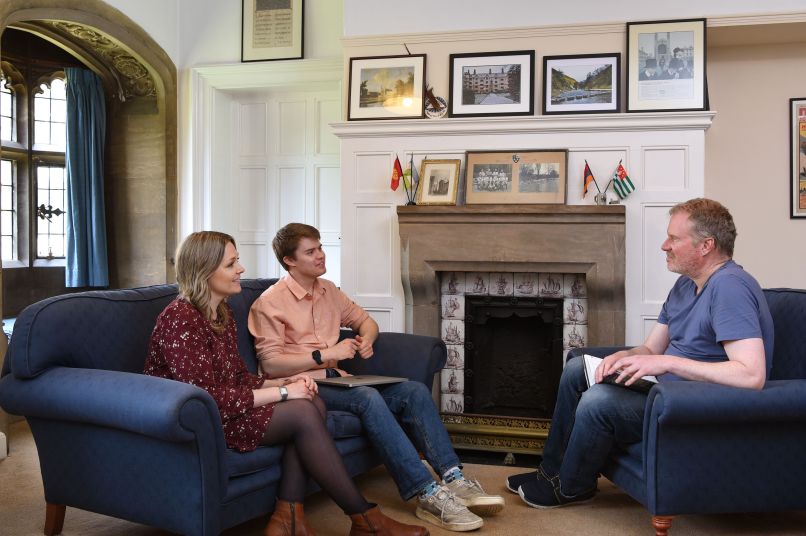
Linguistics interviews at King's typically consist of a single session of around 35 minutes with two members of our linguistics community — usually two Fellows, but sometimes a Fellow and a graduate student.
The interview is designed to explore your logical reasoning and analytical skills, not to test what you already know about linguistics. You can expect to be given data from an unfamiliar language and asked to work through it — for example, you might be shown 20 singular and plural word forms and asked to figure out the patterns behind how that language forms plurals, explaining your reasoning as you go. There are no trick questions, and you won't be expected to have studied linguistics before.
You'll also typically have the chance to talk about your personal statement — so it's worth thinking about which parts you'd most enjoy discussing.
Throughout the interview, be prepared to be challenged and to consider alternative viewpoints. We're not looking for the "right" answer so much as how you think: how you respond to new ideas, adapt your reasoning, and engage with a problem you haven't seen before.
What we look for in an applicant
We’re looking for intellectually curious applicants with a strong interest in language and excellent analytical skills. A good applicant will be open-minded, precise, able to think logically, and enjoy grappling with unfamiliar systems. Many successful applicants have studied at least one essay-based subject and show evidence of independent thought and intellectual flexibility in interviews and written work.
A top tip for applicants
Start thinking critically about the structure and use of language in everyday life. Whether it’s wordplay, dialects, or AI-generated speech, training yourself to ask and investigate how language works is great preparation for the course.
Find out more
You can find out more about Linguistics by visiting the University website and the Faculty of Modern and Medieval Languages and Linguistics website. If you are interested in exploring the different subjects you can study alongside Linguistics, you can read more about Linguistics and Modern Languages at King’s.
King’s also runs Open Days where you can get a taste of what studying here is like. The World of Words Residential, in collaboration with Christ’s College, is an opportunity for students who attend UK state schools in Y12/S5/Y13 NI to find out more about life at the University of Cambridge and explore a variety of academic sessions themed around languages, literatures, and cultures. You might also be interested in the Small Subjects Residential, which offers students in UK state schools in Y12/S5/Y13 NI the chance to use interdisciplinary approaches to tackle the world's big questions.
Life as a King's Linguistics student
Students typically have around four hours of lectures and two hours of supervisions each week, plus practical sessions. The rest of the time is spent on independent reading, writing, and research. At King’s, we usually admit one to two Linguistics students per year. Supervisions are weekly or fortnightly for each paper and offer a space to ask questions, receive feedback on written work, and engage in discussion. Supervisors may go through your essays or guide you through a tricky data set.
Linguistics at King’s is a really friendly environment – we are a small community of linguists (on average 2 per year) so we get lots of individual support and guidance from our Director of Studies. Getting to learn how languages work, are acquired, and all the sounds and patterns in the world’s languages is fascinating! Also, the diversity and culture at King’s makes it the perfect place to study language from a sociolinguistic standpoint!
- Cara, 2nd year
Careers and graduate opportunities
Linguistics graduates pursue a wide variety of careers. Some enter tech fields at Google, Apple, Amazon, or speech recognition and synthesis companies; others go into teaching, speech therapy, publishing, law, or the diplomatic service. Many students also go on to postgraduate study in linguistics or related disciplines at top universities in the UK, Europe, and North America.