Design
Design combines architecture, engineering, and materials science in one degree, giving you the opportunity to design solutions to environmental and societal challenges.
At a glance
A Level requirements: A*AA
IB requirements: 41-42 points overall with 7, 7, 6 at Higher Level
Subject requirements: Mathematics (A* at A Level), Mathematics Analysis and Approaches Higher Level (7 at IB. If this isn’t an option at your school, please contact the College)
Average students per year: 1-2
Admissions assessment: Yes
Written work: Portfolio of artwork, more information below
Admissions
Course overview
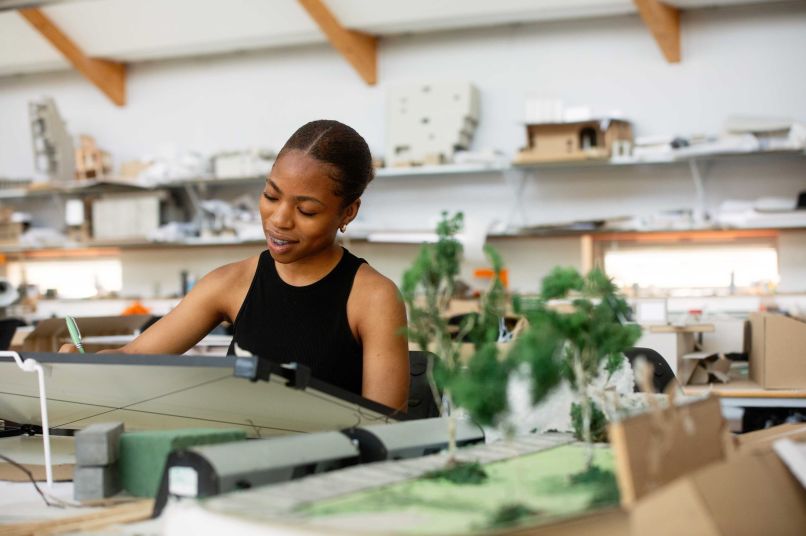
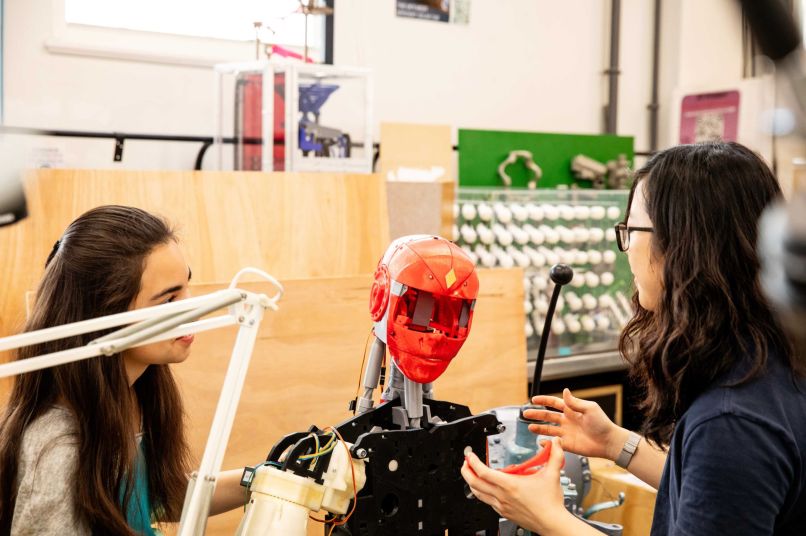
In the Design course, you will combine architecture, engineering, and materials science. The structure of the Design course is slightly different to Architecture, but the method of teaching is the same with lectures, seminars, and studio time. The Design course is structured around a series of core studio projects. The goal of each project is for you to create solutions to real-world issues. You will cover the design of physical objects, apps, artificial intelligence. and electronics.
For more information about the course and its modules, visit the University website.
Admissions assessment
Shortlisted applicants are required to take a 30-minute drawing test in advance of the in-person interview. At interview, applicants will be required to present their portfolio, which is followed by a discussion based on concepts and resolution of the work, while also touching on their personal statement.
Written work
For your application you are required to submit a portfolio of six (maximum) A4 pages. For the interview, please bring as much additional work as you like, including sketch books and finished pieces. You do not have to limit the portfolio to your A Level work. Consider bringing GCSE work and anything that you are working on in your own time. If you have a background in Design Technology or Product Design, please include hand sketching as well as more technical drawing. There is no standard portfolio, so be expansive in your choices. Candidates tend to include (but not limited to) observational drawing, life drawing, model making, 3D modelling, sculpture, painting, and photography. Please make sure that you are confident that you will be able to show us everything that you bring during the time allocated (for portfolio about 15-20 mins including conversation).
Interviews
At interview, we encourage students to think beyond the immediate boundaries of a topic and to develop their own critical position. We are particularly interested in applicants who are motivated, curious, and imaginative. You do not need to have followed a particular artistic or creative pathway, but you should be able to demonstrate an interest in the design of the built environment and the world around you. Strong applicants tend to have broad interests, engage with contemporary culture, and enjoy thinking across conventional disciplinary boundaries. We encourage applicants to read widely, attend exhibitions, watch films, visit buildings and places, and think critically about how objects, environments, and technologies are designed.
Your interview at King’s will likely consist of a single interview with two interviewers. A typical interview consists of a conversation about your interests, followed by a presentation of your portfolio. Please bring your portfolio with you and print any digital work where possible. At the interview, we are interested not simply in finished work but in how you think and develop ideas. Your portfolio should therefore demonstrate a range of approaches and processes and may include drawings, models, photographs, objects, experiments, and work in progress. We are interested in both successes and failures where these help to explain how an idea developed. Above all, the interview is an opportunity for us to understand your interests, curiosity, and creative practice, and for you to engage in a conversation about studying Design at Cambridge.
What we look for in an applicant
The most successful students are motivated and curious. They are well-read and exhibit strong representational skills, which may include drawing and model-making. Design students tend to have broad interests, are knowledgeable about contemporary culture, and are able to work in an interdisciplinary way. A background in art is not essential, however those who excel on the course are extremely skilful at hand drawing and have a flair for thinking in imaginative ways.
A top tip for applicants
Read widely on topics related to design, but also think about how the world around you is shaped by the built environment. Attend exhibitions and visit buildings in person where possible. Take an active interest in contemporary culture including, for example, art, music, and film. Carefully construct your portfolio so that you show a range of work, including in-progress or unfinished pieces. Become aware and develop criticality of your own artistic design and making processes. We encourage you to be able to show us both successes and failures. King’s students tend to be extremely well-rounded individuals who can speak articulately about themselves and their work.
Find out more
You can find our more about MML by visiting the University website and the Architecture department website.
King’s also runs Open Days where you can visit the College and get a taste of the subject.
Life as a King's Design student
Design students will have days in studio and non-studio days, where students attend lectures, which can often take up the full day. In addition, on a weekly basis students will meet with a supervisor for each of the papers in smaller groups of between three to five other students. A typical supervision is one hour long. It will cover information taught during the lectures, however students are required to think through and beyond the boundaries of the topic. At King’s, students are required to write essays in between supervisions, which are often discussed as a group. Supervisions are a forum for students to be challenged by and learn from their peers, while also allowing more in depth discussion with expert tutors.
Careers and graduate opportunities
A degree in Design is an entry point into a range of creative professions. Since the course addresses a number of scales (from the design of a chair to master planning cities), graduates are able to apply their skills in many sectors and the degree is highly transferable.