How you are taught

Cambridge teaching is conducted on both the University and College level and focuses around the unique small-group supervision system.
Kings logo

Academic support

All undergraduates have both a Tutor and a Director of Studies. Both are normally Fellows of the College, although in a few smaller subjects there are ‘external’ Directors of Studies who are usually Fellows of another college.

Directors of Studies

Your Director of Studies oversees your progress in your academic subject. They organise your supervisions, provide academic guidance, and monitor your performance and progress on the Tripos. 

Tutors

Your Tutor is responsible for your educational and general well-being while you are in Cambridge. Tutors can provide advice and guidance on topics relating to your studies in general, but can also support you with pastoral matters.

The College also has Specialist Tutors, such as the Financial Tutor, Welfare Tutor, and the Accommodation Tutor. 
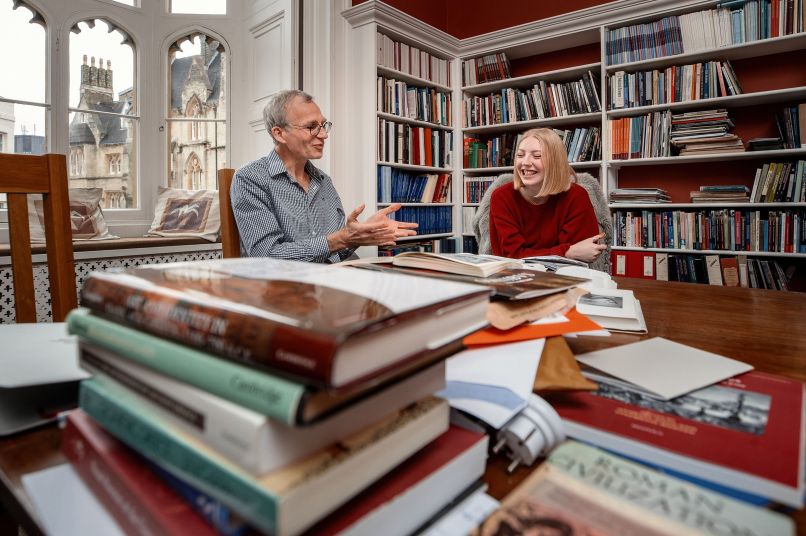
A student with a supervisor sitting behind a pile of books

Teaching arrangements

Teaching is arranged by both the University and by the College.

Teaching at the University consists of lectures, seminars, demonstrations, and practical work. This is organised by, and normally takes place in, Faculties and Departments of the University, and members of all Colleges participate together. Some University teaching may be optional, but most will likely be an essential part of your course.

Supervisions take place at the College. Students discuss some work they have completed in advance with a specialist appointed by their Director of Studies. Supervisions usually last an hour and take place in small groups, but can sometimes be one-on-one. Supervisions provide an opportunity for you to clarify any aspect of your work that you are unclear, puzzled, or intrigued about, and for your supervisors to press you to think about aspects that you have not covered on paper.

Supervisors write reports at the end of every term on each student, which help the Director of Studies gauge a student's progress; because of this, supervisions are a compulsory part of your academic studies and must only be missed in exceptional circumstances, e.g. illness.  
Directors of Studies

A smiling woman with long curly brown hair wearing a black cardigan. She is standing in front of a yellow stone wall.

Zoe Adams

Bio

Zoe's academic interests lie primarily in the realm of labour law, tort law, legal methodology, social ontology, and law and economics.  Zoe describes herself as a ‘critical’ legal scholar, embedding her work in a structural analysis of law’s relationship with capitalism. The issues she explores include the relationship between law and capitalism, and the role of legal concepts in shaping the latter’s development; questions of legal form, and their relationship with political strategy; the relationship between law, gender, and race; and, more generally, the role of law in the perpetuation, and legitimisation, of inequality within the framework of capitalist societies. 

A lot of her work focuses on UK labour law history, with particular emphasis on the history of wage and working time development; the history of industrial relations and legal frameworks governing trade unions and industrial action; and the law’s role in shaping the so-called ‘future of work’. Zoe  was awarded the Yorke Prize for her PhD thesis, "A Social Ontology of the Wage", and her first book, "Labour and the Wage: A Critical Perspective", was published by Oxford University Press in 2020.  It won the Yorke Prize, in 2020, and has since been shortlisted for both the SLSA Early Career Academic Book Prize, and the SLSA Hart Book Prize. Zoe’s second monograph, "The Legal Concept of Work" was published in November 2022. She is now in the planning stages of a third book, exploring the relationship between law and power. 

Read more
Zoe Adams
Ronojoy Adhikari, a smiling man with dark hair and glassed wearing a black jumper

Ronojoy Adhikari

Bio

Dr Ronojoy Adhikari's research interests include the statistical physics of soft materials and the application of mathematics, specifically probability theory, to problems in the natural and social sciences.

Read more
Ronojoy Adhikari
Sebastian Ahnert, a black and white photo of smiling man with mid length dark hair, stubble a shirt and a jumper

Sebastian Ahnert

Bio

Dr Sebastian Ahnert's reserach interests include:

  • The study of structural and functional complexity in biology from the perspective of algorithmic information theory, as well as interdisciplinary applications of algorithmic information theory more generally.
  • Network analysis, in areas of both method development and in interdisciplinary applications of network analysis to biology, the humanities, and social sciences.
Read more
Sebastian Ahnert
Nick Atkins, a smiling man with brown hair and wearing a grey suit

Nick Atkins

Bio

Dr Nick Atkins works on the flow and heat transfer within the internal or secondary air systems of both aero propulsion and energy based gas turbines.

Read more
Nick Atkins
Umang Bhatt, a smiling man with dark hair, a short beard and glasses. He is wearing a maroon jumper and a grey tweed jacket. He is standing outside a Cambridge College

Umang Bhatt

Bio

Umang is an Assistant Professor at the Cambridge Institute for Technology and Humanity (ITH) and its Centre for Human-Inspired Artificial Intelligence (CHIA). His research focuses on building trustworthy artificial intelligence (AI) systems for high-stakes deployment. He develops algorithms and tools that support effective human-AI interaction and manage the partnership between people and AI systems. Drawing on machine learning, cognitive science, philosophy, and law, Umang studies when and how AI systems can be trusted, integrated into human decision-making, and evaluated in ecologically valid settings. His group uses lab and field experiments to assess societal impacts of AI in various domains, with particular attention to healthcare, education, and national security, where human oversight of AI is essential.
 

Born and raised in Basking Ridge, New Jersey (USA), Umang earned his BS and MS at Carnegie Mellon University and his PhD in the Machine Learning Group at Cambridge. He was previously an Assistant Professor and Faculty Fellow at New York University’s Center for Data Science and a Senior Research Associate at The Alan Turing Institute. His work has been supported by the Responsible AI Institute, the Mozilla Foundation, and the Partnership on AI.
 

Read more
Umang Bhatt
Marcus Boeick, a smiling man with short blonde hair, glasses and a blue shirt

Marcus Boeick

Bio

Dr Marcus Boeick is a historian specializing in Modern German and European History. 

"My research and teaching focus on the intricate relationship between the public and private spheres throughout the 20th century, particularly at the intersection of the state, economy, and society. My initial book delved into the contentious history of mass privatization of state assets in post-socialist Eastern Germany during the early 1990s. Currently, my ongoing book project presents a comprehensive and empirically grounded history of private security in 20th-century Germany and Central Europe. My approach encompasses a wide array of sources, ranging from classical references in state archives to media coverage, oral interviews, and material artefacts. I consistently strive to unearth unheard voices "from below" and offer novel perspectives from overlooked areas. Concurrently, I contextualize Germany within its transnational connections and broader global frameworks. I place significant value on interdisciplinary and transdisciplinary collaboration across a diverse spectrum of fields. Born in East Germany shortly before the fall of the Berlin Wall, I completed my studies at Ruhr-University Bochum, situated in the former West German "rust belt" region. Over recent years, I held a Postdoc Fellowship at the Institute of Advanced Studies at University College London and a Guest Professorship at the Imre-Kertész-Kolleg at Jena University. In the past year, I have been awarded a John F. Kennedy Memorial Fellow at the Minda de Gunzburg Center for European Studies at Harvard."

Read more
Marcus Boeick
Giulia Boitani, a smiling woman with long curly brown hair wearing a red jumper against a bright blue background

Giulia Boitani

Bio

Dr Giulia Boitani is a College Teaching Officer in French and Italian at King’s, and the Director of Studies for our First Years.

"I work on medieval literature across Romance languages, particularly medieval French, Occitan and Italian.  My recent research focuses on the role of foundresses in medieval French prose romances, but I also look at medieval manuscripts and their particular idiosyncrasies (every single manuscript of any given medieval text is different!); representations of food and feeding in medieval literature; and the ways in which current critical practices – particularly eco-critical approaches - might engage with medieval thought.

I teach Introduction to French literature, film and thought (FR1) and Introduction to Italian Texts and Contexts (IT1/ITA3) in the first year; Medieval French Literature (FR3), and Translation and Oral Italian (ITB2) in the second, and medieval French and Occitan literature (FR7, FR15) in the fourth year; as well as paleography courses for our MPhil in in European, Latin American and Comparative Literatures and Cultures (ELAC)."

Read more
Giulia Boitani
A bearded man, smiling, wearing a blue blazer, in front of the King's College Chapel and lawn.

Shannon Bonke

Bio

Dr Shannon Bonke is a renewable energy scientist researching catalysts for energy conversion and storage reactions, especially the synthesis of fuels from solar power. His research is interdisciplinary and explores catalytic mechanisms using complementary cutting-edge electrochemical and spectroscopic techniques.

Read more
Shannon Bonke
Richard Bourke, a man with short dark hair and a grey shirt

Richard Bourke

Bio

Professor Richard Bourke works broadly in the history of political thought, mostly covering the enlightenment and its legacy. His interests include political ideologies, the philosophy of history, and the history of democracy. He has also published on modern Irish history. His most recent books include Empire and Revolution: The Political Life of Edmund Burke (2015) and Hegel’s World Revolutions (2023).

Read more
Richard Bourke
Mirjana Bozic, a smiling woman with dark tied back hair and a black polo neck jumper

Mirjana Bozic

Bio

Dr Mirjana Bozic studies language as a cognitive and a neural system. Her research focuses on the brain mechanisms that support language comprehension in monolingual and bilingual speakers.

Read more
Mirjana Bozic
Angela Breitenbach, a smiling woman with long blond hair wearing a white top

Angela Breitenbach

Bio

Professor Angela Breitenbach focuses on Kant, Philosophy of Science, Aesthetics

Read more
Angela Breitenbach
Jude Brown, a smiling woman with tied back blonde hair and a black jumper. She is standing in front of a monochrome abstract artwork.

Jude Browne

Bio

Professor Jude Browne is the Head of the Department of Politics and International Studies (POLIS) and The Jessica and Peter Frankopan Director of the University of Cambridge Centre for Gender Studies (on leave whilst HoD). She is a winner of the University of Cambridge Pilkington Prize and the inaugural winner of the Aaron Rapport Prize for excellence in teaching at Cambridge and she is Director of Studies for Human, Social and Political Sciences (Part II).

Jude Browne's research interests are focused on the concept of political responsibility, political theories of equality, feminist theory, lay governance, public interest, structural injustice, rights, and the impact of technology on society. Her most recent book is ‘Political Responsibility and Tech Governance’ published by Cambridge University Press (2025).

Read more
Jude Browne
Nick Bullock, a smiling bald man wearing a grey jumper and standing in front book shelves

Nick Bullock

Bio

Nick Bullock's research focuses on reconstruction in post WWII Europe, particularly in France and Germany.

Read more
Nick Bullock
Matei Candea, a smiling man with short dark hair and a beard wearing glasses and a casual blue jacket. He is outdoors in a mountain range

Matei Candea

Bio

Professor Matei Candea's research interests include freedom of speech, animals and science, Corsica, methor and theory (comparison, fieldsites, tarde)

Read more
Matei Candea
Richard Causton, a man with short dark hair and a grey jumper against a dark grey background

Richard Causton

Bio

In addition to composition, Professor Richard Causton writes and lectures on Italian contemporary music and regularly broadcasts for Italian radio.

Read more
Richard Causton
A white man wearing a clerical collar and black clothing stands in a church

Stephen Cherry

Bio

Stephen Cherry is Dean of Chapel at King’s College Cambridge. He is also a Fellow of the College and Director of Studies in Theology. A priest in the Church of England, Stephen was previously Director of Ministry the Diocese of Durham and a Residentiary Canon of Durham Cathedral. Before that he was a parish priest in Loughborough for 12 years. Stephen has written a number of books in recent years including Unforgivable? Exploring the Limits of Forgiveness (2024) and Healing Agony: Reimagining Forgiveness (2012). He has a PhD and first degree in theology and a BSc in Psychology. He has a practical interest in inter-faith relations.

Read more
Stephen Cherry
Francesco Colucci, a smiling man with curly dark hair, glasses and a white shirt

Francesco Colucci

Bio

Professor Francesco Colucci studies cells and genes of the immune system in pregnancy and cancer. His research interests include immunology; immunogenetics; trophoblast research; reproductive medicine; natural killer and other lymphoid cells.

Read more
Francesco Colucci
Laura Davies, a smiling woman with long brown hair, a white shirt and a green jacket

Laura Davies

Bio

Dr Laura Davies' research focuses on British literature of the long eighteenth century with a particular interest in life writing and the textual representation of experiences and ideas that resist language or narration, including sound, time, death, spiritual visions, and dreams.
She works on well-known figures such as Samuel Johnson and James Boswell, as well as a range of non-fiction prose including philosophical, religious, and medical texts. Laura founded and leads the interdisciplinary research and public engagement project 'A Good Death?'. 

Read more
Laura Davies
A white man with brown hair and brown-framed glasses

James Dolan

Bio

Dr James Dolan's scientific research is at the intersection of nanophotonics and soft matter physics. He investigated ways to use the (directed) self-assembly of liquid crystals and block copolymers to create two- and three-dimensional optical metasurfaces and metamaterials with dynamically reconfigurable optical properties. James' current research, however, focuses on science communication. He is interested in how scientists’ conceptions of science—what it is, how it works, and what its for—affect how and why they communicate their science. In addition, he is interested in science communication and improvised comedy (improv), exploring the use of improv both as a form of science communication training and as a novel form of public engagement.

James also serves as Financial Tutor.

Read more
James Dolan
Mark Dyble, a smiling man with short dark hair and a white t-shirt

Mark Dyble

Bio

Dr Mark Dyble is an Assistant Professor in Evolutionary Anthropology in the Department of Archaeology where he teaches evolutionary perspectives on human biology, behaviour, and health. Much of his research focuses on the evolution of human social behaviour and is informed by ethnographic fieldwork with hunter-gatherer communities in the northern Philippines, zoological fieldwork with wild meerkats in South Africa, and by computational and mathematical modelling. His central thesis is that social behaviour in humans (or any other species) is strongly related to social organisation: the size, demographic structure, and kinship composition of social groups.

Born and raised in Essex, Mark studied at Cambridge (Clare 2008), Oxford, and University College London before spells as a Research Fellow at the Institute for Advanced Studies in Toulouse (2016–17) and as a JRF at Jesus College, Cambridge (2017–19). He was a Lecturer at University College London for four years prior to returning to Cambridge in July 2023.

Read more
Mark Dyble
Aytek Erdil, a smiling man with long brown curly tied back hair and a dark blue shirt

Aytek Erdil

Bio

Economic Theory, Market Design

Read more
Aytek Erdil
Sebastian Eves van-den Akker, a smiling man with short blonde hair and glasses. He is wearing a navy blue sweater and is standing in front of a book shelf

Sebastian Eves-van den Akker

Bio

Sebastian is a geneticist, and Head of the Plant-Parasite Interactions group, with an interest in the genes that control a dialogue between kingdoms of life: the two-way molecular communication between plants and their parasites. He develops understanding from the position that the two organisms are one interlinked entity, studying the biology of the entire host-parasite complex. He uses genetics to dissect the communication between the two organisms, to understand how evolution drives novel forms and functions, through a development-altering relationship, that is phylogenetically and geographically widespread.

Recent highlights from the lab exemplify the fascinating biology of the study system, the connectedness of the kingdoms, and the central thesis that the two organisms are best studied when considered as one entity. The lab showed that: i) host and parasite each contribute to the cross-kingdom synthesis of Vitamin B5, defining the hologenome theory of susceptibility-gene discovery (Siddique et al., 2022, Nature Communications); ii) the nematode has evolved a novel form of precisely guided somatic genome editing to generate thousands of new transient effector alleles (Sonawala et al., 2024, Cell Genomics); and iii) that the nematode mobilises and ingests parts of the plant genome during infection (Ko et al., 2023 Molecular Biology and Evolution).

Selected recent publications:

U. Sonawala, H. Beasley, P.J. Thorpe, K. Varypatakis, B. Senatori, J.T. Jones, L. Derevnina, and S. Eves-van den Akker* (2024). “A gene with a thousand alleles: the HYPer-variable effectors of plant-parasitic nematodes.” bioRxiv 10.1101/2023.10.16.561705 – In press Cell Genomics.

C.A.M Marshall, M.T. Wilkinson, P.M. Hadfield, S.M. Rogers, J.D. Shanklin, ...S. Eves-van den Akker. (2023). “Urban wildflower meadow planting for biodiversity, climate and society: An evaluation at King's College, Cambridge” Ecological Solutions and Evidence 4(2), e12243.

S. Siddique, Z.S. Radakovic, C. Hill., C. Pellegrin, T.J. Baum, H. Beasley, O. Chitambo , D. Chopra, E.G.J. Danchin, E. Grenier, S.S. Habash, M.S. Hasan, J. Helder, T. Hewezi, J. Holbein, M. Holterman, S. Janakowski, G.D. Koutsovoulos, O.P. Kranse, J.L. Lozano-Torres, T.R. Maier, R.E. Masonbrink, B. Mendy, E. Riemer, M. Sobczak, U. Sonawala, M.G. Sterken, P. Thorpe, J.J.M. van Steenbrugge, N. Zahid, F. Grundler, and S. Eves-van den Akker*. (2022). The genome and lifestage-specific transcriptomes of a plant-parasitic nematode and its host reveal susceptibility genes involved in trans-kingdom synthesis of vitamin B5. Nature Communications. 13, 6190. 

Read more
Sebastian Eves-van den Akker

Quick links

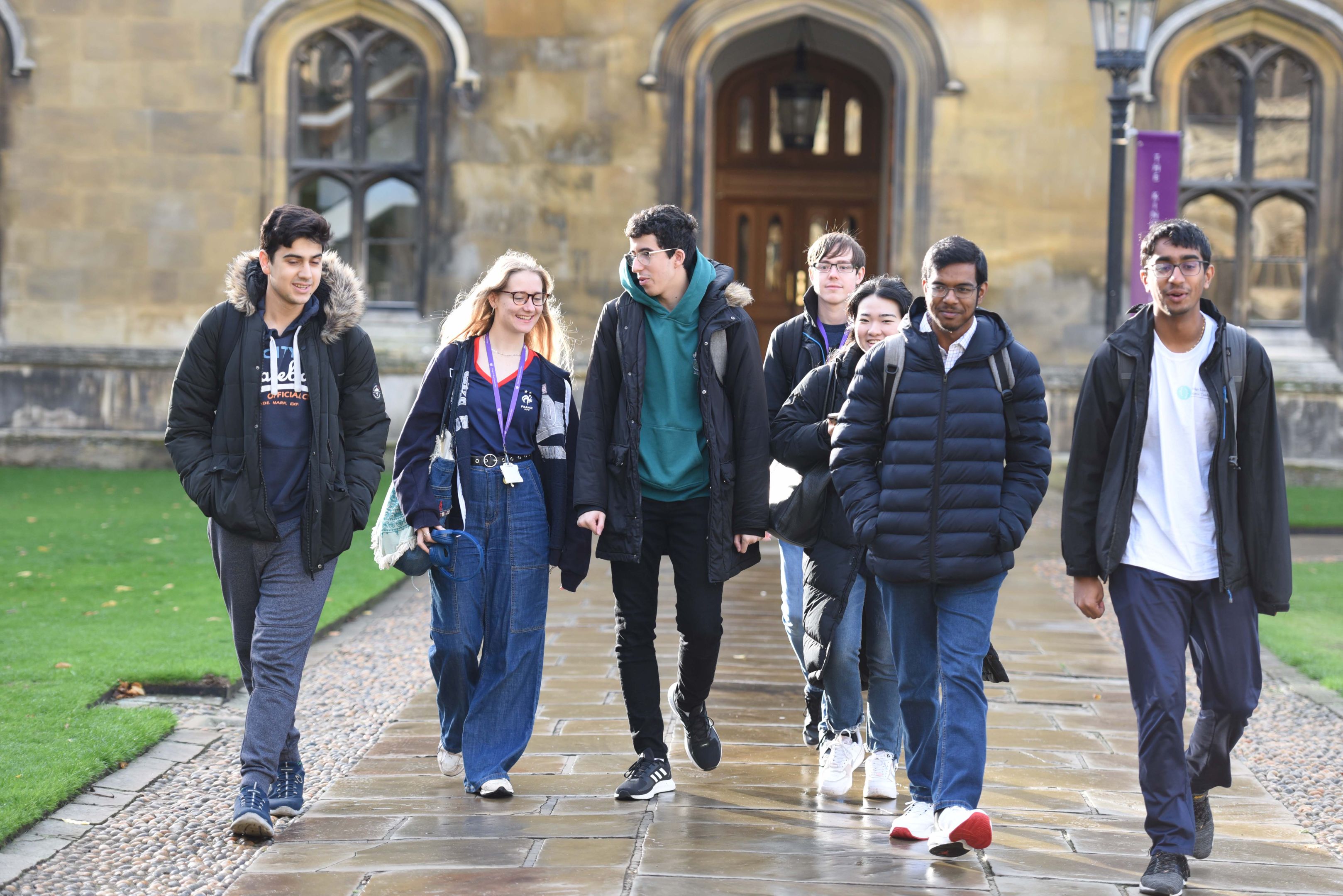
A group of students walking together

How to apply

Applying to Cambridge is similar to applying to lots of other UK universities, with just a few extra steps.
Read more
How to apply
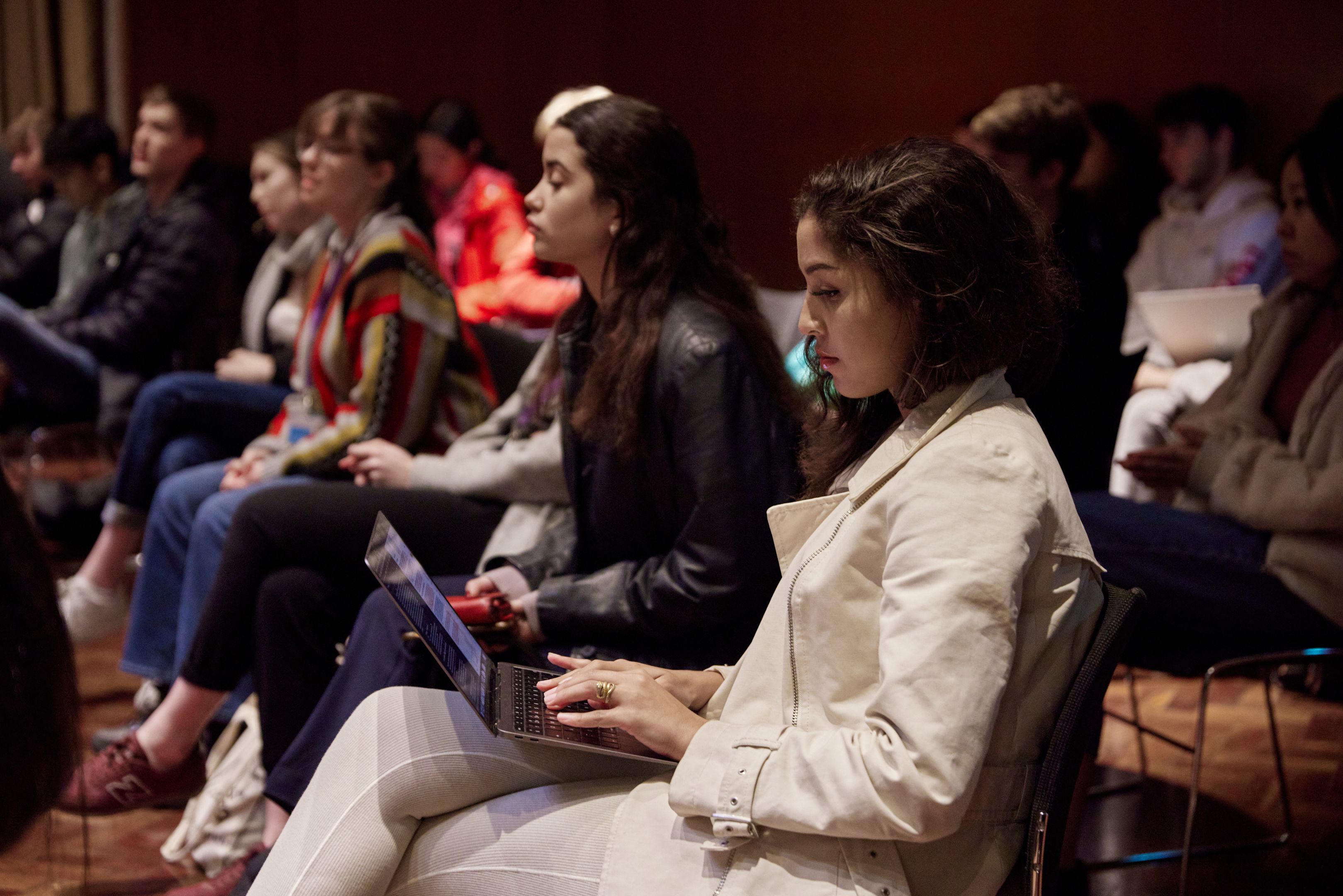
Students in a lecture theatre typing on laptops

Subjects

The courses we offer make King's an academically vibrant place to study. We take intellectual life and research seriously, and we want you to succeed academically while also enjoying your time here.
Read more
Subjects
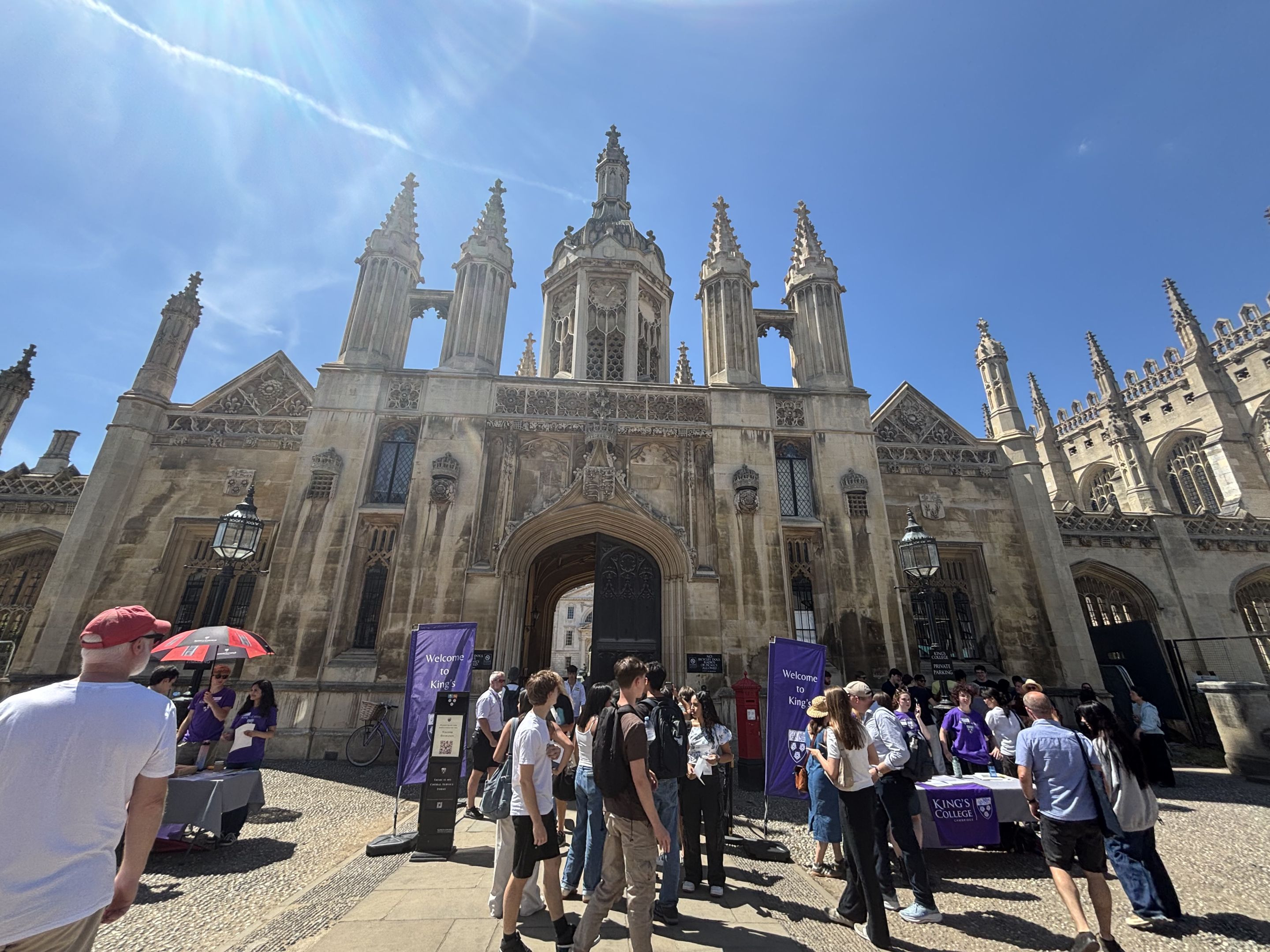
Main gate of King's on an Open Day

Open Days and visiting

Thinking about applying to King’s? Come and see it for yourself!
Read more
Open Days and visiting