News

Kings logo
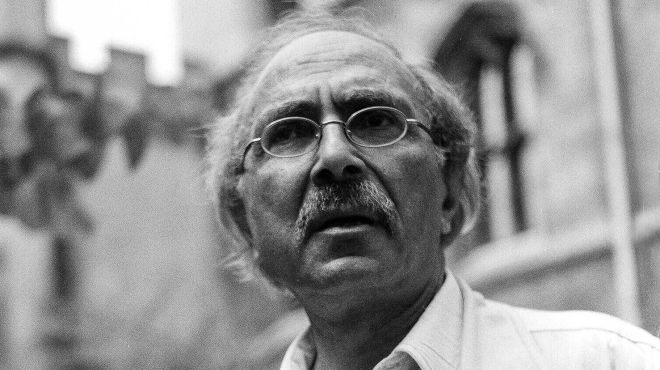
A man with grey hair and a blue jumper stands looking out of a stone window

Geoffrey Hinton (KC 1967) wins 2024 Nobel Prize for Physics

Body

On 8 October 2024, Geoffrey Hinton (KC 1967) was awarded the Nobel Prize for Physics, alongside John Hopfield, for their foundational discoveries and inventions that enable machine learning with artificial neural networks.

Machine learning based on artificial neural networks is currently revolutionising science, engineering and daily life. It has long been important for research, including the sorting and analysis of vast amounts of data. John Hopfield and Geoffrey Hinton used tools from physics to construct methods that helped lay the foundation for today’s powerful machine learning.

When we talk about artificial intelligence, we often mean machine learning using artificial neural networks. This technology was originally inspired by the structure of the brain. In an artificial neural network, the brain’s neurons are represented by nodes that have different values. These nodes influence each other through con­nections that can be likened to synapses and which can be made stronger or weaker. The network is trained, for example by developing stronger connections between nodes with simultaneously high values. This year’s laureates have conducted important work with artificial neural networks from the 1980s onward.

Geoffrey Hinton used a network invented by John Hopfield as the foundation for a new network: the Boltzmann machine. This can learn to recognise characteristic elements in a given type of data. Hinton used tools from statistical physics, the science of systems built from many similar components. The machine is trained by feeding it examples that are very likely to arise when the machine is run. The Boltzmann machine can be used to classify images or create new examples of the type of pattern on which it was trained. Hinton has built upon this work, helping initiate the current explosive development of machine learning.

Following a long career in academia and a decade at Google, in which he became known as "the Godfather of AI" and won the Turing Prize, he resigned from Google in 2023 and has been speaking publicly on the risks he sees AI posing. He visited King's in May 2023, seeing material newly acquired by the Turing Archive and his old room on X Staircase in Bodley's Coujrt before giving a talk to a packed audience with the University's Centre for Existential Risk.

smart_displayGeoffrey Hinton - Two Paths to Intelligence

Read more
Geoffrey Hinton (KC 1967) wins 2024 Nobel Prize for Physics
A woman curly hair and yellow glasses stands beside a pier

Errollyn Wallen appointed Master of the King’s Music

Body

Our congratulations to King's alumna Errollyn Wallen CBE (KC 1999), who has been appointed Master of the King’s Music by King Charles.

One of the most widely acclaimed contemporary composers, Errollyn was the first woman to win an Ivor Novello Award for a body of classical work, and the first black woman to have a composition played at the BBC Proms. Her music, often inspired by the River Thames, has been performed at the opening ceremony for the 2012 Paralympic Games, as part of the 2022 Festival of Nine Lessons and Carols service, and even played in outer space.

Following the appointment, Errollyn said "It will be a privilege and a great honour to serve His Majesty The King, the United Kingdom and the Commonwealth. I look forward to championing music and music-making for all." 

Errollyn will succeed Dame Judith Weir (KC 1973) who was chosen by Queen Elizabeth II in 2014 and was the first woman to hold the role.

You can read more about this recent appointment here, and listen to Errollyn talking about her influences and experiences on BBC Sounds

Read more
Errollyn Wallen appointed Master of the King’s Music
A smiling man with dark grey hair and a red shirt

King’s Fellow awarded the Albert Einstein Medal 2024

Body

Professor George Efstathiou, King’s Fellow in Astrophysics, former director of the Institute of Astronomy and founding director of the Kavli Institute for Cosmology, has been awarded this year’s Albert Einstein Medal.

Since 1979 the Albert Einstein Medal has been awarded to deserving individuals for outstanding scientific findings, works, or publications related to Albert Einstein.

The public award ceremony will take place on 9 October in Bern during the Physics Colloquium at the University of Bern, where Professor Efstathiou will give a lecture entitled ‘Do we have a standard model of cosmology?’.

Read more
King’s Fellow awarded the Albert Einstein Medal 2024
Three photos of the three winning teams, each with three smiling winners.

Winners of 2024 Entrepreneurship Prize announced

Body

We are delighted to announce the tenth year of awards under the College’s annual entrepreneurship competition, intended to encourage King’s members (past and present) to develop their entrepreneurial ideas and convert their creativity and knowhow for sustainable commercial and social benefit.

This year’s top prize, with a value of £20,000, has been awarded to Flare, a £10,000 second prize goes to EduVantage, and CellaNexa receives the third prize of £5,000.

Founded by recent graduates Gabriel Brown (KC 2020, Theology), Morgan Saville (KC 2020, Computer Science) and Geno Racklin Asher (KC 2020, Mathematics), Flare builds custom safety apps that help universities, colleges and schools safeguard students and promote a positive brand image. By selecting from their menu of pre-built feature modules, clients can order a safety app that is tailored to their unique needs. While all the maintenance and technical details are handled by Flare, institutions can enjoy full ownership and control over their app. The service is scalable and cost-effective.

Flare’s initial market is the secondary and higher education sector in the UK, but there are also significant growth opportunities in construction and the public sector, as well as in many businesses that employ lone workers.

Presented by Sonia Ramanah (KC 1995, Social and Political Sciences), EduVantage is a School Information Management System (SIMS) suite designed to streamline, unify and simplify administrative and educational processes, with features and functionalities that meet the diverse needs of students, teachers, administrators and parents. As an off-the-shelf, accessible, cost-effective, agile and user-friendly SIMS, EduVantage is uniquely positioned for UK small schools who require flexibility in timetabling and student admissions and progressions as well as Less Developed Countries with limited digital resources, connectivity and skills. The software was originally developed by a London school as an innovative solution to meet its requirements to track, assess, manage and monitor the diverse needs of the vulnerable students on its roll, after a scan of the existing SIMS marketplace identified a gap in the market. 

CellaNexa is a business idea led by Wennan Sun (KC 2022, Economics) which hopes to revolutionize drug delivery. Its AI-powered protein engineering platform is designed to harness the unique properties of self-assembling proteins from long terminal repeats (LTR) retrotransposons. The platform expertly identifies these proteins and refines them through advanced machine learning-driven design techniques. It develops protein nanoparticles that excel in targeting ability, payload capacity, immune evasion, and manufacturability, specifically focusing on targeted delivery to brain and cancer tissues.

*

The Entrepreneurship Prize competition was established in 2014 with a gift from Stuart Lyons CBE (KC 1962) and culminates each year in the ‘Lyons Den’, where finalists present their full business plans to an expert panel.

If you would like to find out more about the King's Entrepreneurship Prize and how to enter the competition, please email: enterprise@kings.cam.ac.uk

Read about past winners of the Entrepreneurship Prize here.

Read more
Winners of 2024 Entrepreneurship Prize announced