Frontiering and Frictions Around Fibre in Rural Tajikistan
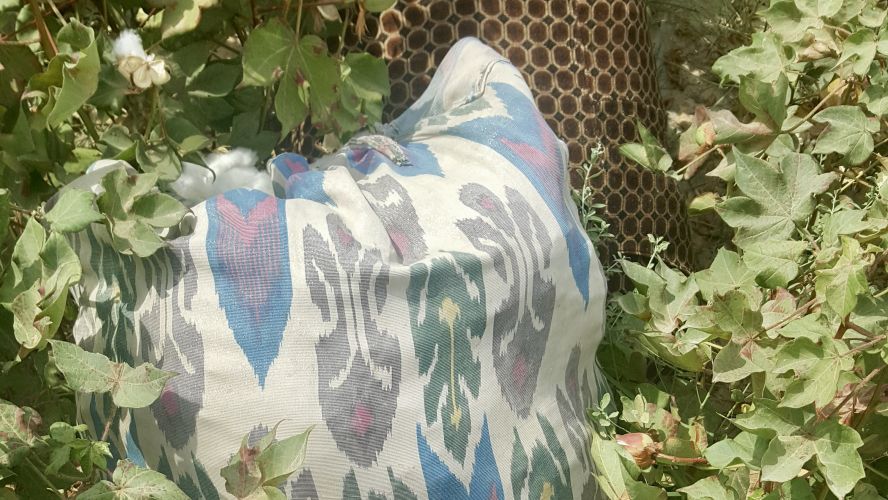
Speaker: Irna Hofman (Leiden University)
Abstract:
In an effort to attract foreign capital to revive its cotton economy, the Tajik state has been actively portraying the country’s rural economy as rich in potential, yet in need of input, capital, and technology in recent decades. As such, the state’s practices and tactics represent ‘frontiering’ in the interest of political and economic elites who control the cotton economy. The state’s success is evident in the presence of increasingly diverse foreign actors in the country’s economy. Foreign actors’ investment is driven by a perceived need to sustain a good relationship with the Tajik leadership, as well as by an interest in sourcing cotton from Tajikistan and supplying their own (e.g., European, Russian, and Chinese) markets and industries. Indeed, the Tajik state has strategically tapped into opportunities emerging from globally shifting geographies of cotton production, and investment in cotton spotlights the agency of the Tajik regime. Foreign actors cannot operate as they wish. Foreign involvement in cotton is geographically confined to specific localities where elites shape the extent to which the rural population becomes entangled in geopolitical rivalries. Recent dynamics in Tajikistan’s cotton sector suggest a transformation in strategies of resource control (cf. Rasmussen and Lund 2018). At the same time, while foreign capital injections do benefit those in power, foreign involvement does more than that alone. Frontiering also triggers unanticipated frictions as the influx of foreign-branded agri-tech and crop seed provides opportunities for farmers to ‘rework’ (cf. Katz 2004) the politics of production, and in rural areas, interactions with foreign enterprises elicit reflections on domestic relations of authority. This talk engages critical geography, everyday geopolitics, and the politics of seed and agri-tech. The presentation is based on various research projects and stints of fieldwork in rural Tajikistan, undertaken between 2012 and 2021.
Bio:
Irna Hofman is a rural sociologist specialising in agrarian and social change in Central Asia. She is a lecturer at the Institute of Cultural Anthropology and Development Sociology of Leiden University, and an Honorary Research Associate of the School of Geography and the Environment, at the University of Oxford. Irna obtained a Ph.D. in Humanities from Leiden University in 2019 and undertook post-doctoral research at the University of Oxford between 2019 and 2022. She has conducted extensive ethnographic fieldwork in Tajikistan, and is one of very few scholars who have studied China’s presence in Central Asia ethnographically. Her research interests broadly sit at the intersection of political economy, political ecology, and political geography. Her current research focuses on lived geopolitics and the politics of agricultural technology in Central and South Asia. Irna’s work has been published in, amongst other outlets, Journal of Agrarian Change, The Journal of Peasant Studies, and Development and Change.
Location: Audit Room and Online
Related Events