Archaeological Approaches to Urbanism and Urban Sustainability in ‘medieval’ Central Asia
Archaeological Approaches to Urbanism and Urban Sustainability in ‘medieval’ Central Asia
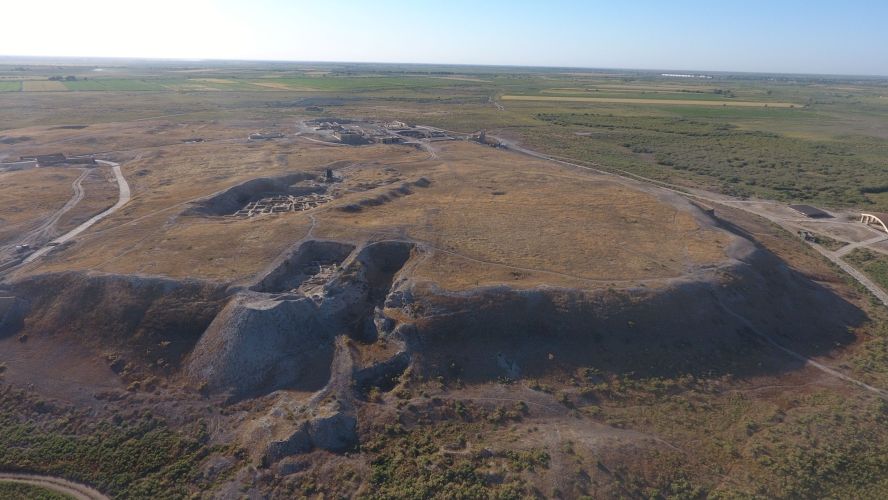
Sustaining urban populations requires careful management of agricultural resources, and a level of flexibility to respond to political shocks, environmental change, and natural disasters including plague, earthquakes and floods. In the oases of Transoxiana, large, abandoned cities testify to a breakdown in the capacity of an urban population to sustain themselves. The resulting archaeological sites known as tobes or tepes are common in the region, with urban abandonment present in several periods. In this workshop, we will approach questions of urbanism and urban sustainability from an archaeological perspective, using especially the example of Otrar and other sites in southern Kazakhstan as well as the adjacent regions of Uzbekistan. The discussion aims to consider how these cities functions and sustained themselves in various periods in the past 2000 years, and ultimately why they failed.
All are very welcome to attend. This is a joint event of King's Silk Roads and the McDonald Intitute for Archaeological Reseach. Funding generously provided by the British Institute for Persian Studies and King's College. It will be held in the seminar room at the Mcdonald Institute for Archaeological Research on Downing Street in Cambridge.
Introduction and Welcome
10:15-10:45
Approaching the urban lifecycle at Otrar
Katie Campbell (King’s College, University of Cambridge)
10:45-11:15
Typology of Kangju Period settlements in the Otrar Oasis
Serik Akylbek (Archeoservice, Kazakhstan)
11:15-11:45
Coffee
11:45-12:05
Mapping and Remote Sensing to understand the development of Otrar
Dato Naskidashvili (University College London)
12:05- 12:35
The discovery of mihrabs in the dwellings of Otrar’s rabad and questions of the initial stage of the spread of Islam in southern Kazakhstan
M. Kozha , M.Gursoy , B.Sizdikov , S.Almazuli (JSC International University of Tourism and Hospitality, Turkistan & Ahmet Yasawi University, Turkistan)
12:35- 13:00
Investigating Otrar’s economy and integration into trade networks from the 10th-15th centuries through glazed pottery
Tata Mamalashvili (Ilia University, Tbilisi)
13:00-14:00
Lunch
14:00-14:30
Architectural features and traditions of burial sites identified in the cities of Otrar and Tuyuktobe (Keder)
Bagdaulet Saparbayevich Sizdikov, Mukhtar Bakadyruly Kozha, Ali Alimbekuly (JSC International University of Tourism and Hospitality, Turkistan; Ahmet Yasawi University, Tukistan; L.N. Gumilyov Eurasian National University, Astana)
14:30- 14:50
Reconstructing Highland Water Systems in Early Medieval Central Asia
Mirae Jo (Washington University, St Louis)
14:50:15:10
Palynological analysis of agriculture and vegetation at Otrar
Maia Chichinadze (Georgian National Museum, Tbilisi)
15:10-15:30
Archaeological Research at the Kultobe settlement
Shynaz Almazuly (JSC International University of Tourism and Hospitality, Turkistan & Ahmet Yasawi University, Turkistan)
15:30-16:00
Coffee
16:00-16:30
The development of urban culture in the 13th-15th centuries in Kazakhstan
M. Kozha , B.Sizdikov , G. Baysarieva (JSC International University of Tourism and Hospitality, Turkistan & Ahmet Yasawi University, Turkistan)
16:30-16:50
Archaeological evidence for urban sanitation
Marekhi Charkseliani (University of Padua)
16:50-17:10
Long-term vegetation history: palynological analysis from Otrar’s reservoir
Tudur Davies (Cardiff University)
17:30
Wrap up and final discussion
Related Events