
Python for Poets: an introduction to computational methods in the humanities
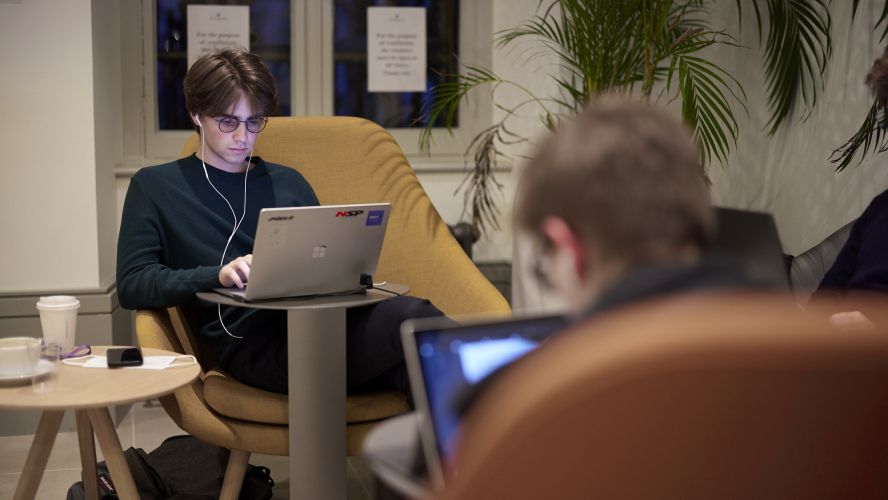
A digital humanities “laboratory”-style supervision at King’s, for postgraduates and advanced undergraduates
Six sessions, Wednesdays 5-6pm, 21 October – 25 November
King’s College Gibbs F6R (back right office inside F6)
Open to third-year undergraduates, MPhil and PhD students in any subject, though priority will be given to those in the humanities and social sciences. No programming experience required.
Background
Hannah Arendt opens The Human Condition (1958) worrying about the launch of the first satellite, Sputnik, in 1957. What troubled her was not the satellite itself but its impact on language. What if the languages of science, “though they can be demonstrated in mathematical formulas and proved technologically, will no longer lend themselves to normal expression in speech and thought”? If science speaks a language totally foreign to non-scientists, and if (as she argues) speech is what makes us political beings, then do we risk creating a society whose language and politics are no longer meaningful to many of its members?
Seventy years later, it seems as if Arendt’s prophecy has come true. The most impactful “languages” in society today seem to be “code”, data, and “AI”. They dominate the economic and social life of the post-industrial world, and, according to many, threaten the future of the humanities and even the social sciences.
This course argues that even us “poets” can, and should, learn to read and speak these mysterious languages of “code” like Python. It also believes that, in a sense, we already do. A concept in the humanities like the “signifier”, a computer scientist calls a “variable”. The course proceeds on that principle. It introduces the building blocks of Python and text mining alongside the humanistic ideas and practices they rhyme with. And it places its emphasis on code literacy: the ability to read, understand and adapt existing code, rather than on writing code from scratch – something even programmers now rarely do after the advent of AI.
Course
Convened by Dr Ryan Heuser, Assistant Professor of Digital Humanities and Fellow of King’s, with the assistance of Ruicen Li, PhD candidate in Digital Humanities at King’s.
This course is organised as a laboratory rather than a traditional class. There is no assessment and no essays. We begin with a discussion of what each of us is studying, and brainstorm how data might help our arguments. We open each session with snippets of what we have been experimenting on. We work together to experiment on a shared corpus, so that you can apply the same methods to your own. And in the final weeks we workshop our individual experiments.
The goal of the course is simple: to enable you to include in your dissertation a graph, a table, data – something, in short, that would make your argument more empirical.
Sessions (provisionally)
1. Texts as data. What is gained and what is lost in translating texts into data?
2. Counting words. Words, “frequencies”, and simple techniques that can answer historical questions about text.
3. Comparing corpora. What distinguishes one body of texts from another? How, for example, does Labour speak differently from the Tories?
4. Words in context. Concordance, collocation, keywords in context — the point at which “distant reading” becomes close again.
5. Your own experiments. What is your research question, and what data would answer it?
6. Show and tell. Everyone shows something they’re working on.
Reading is at most one short piece a week, circulated in advance. There is nothing to prepare before the first session.
How to apply
To apply, send a few sentences on your subject, your year, and what you hope to get out of the course to Ryan Heuser by Monday 19 October.
Places are limited to no more than ten.