Natural Sciences
Welcome to the King’s subject page for Natural Scientists. Here we provide a synopsis of the Natural Sciences course, and a few reasons why King’s is such a good place to study Natural Sciences at Cambridge.
- Natural Sciences at King's
- The Natural Sciences Tripos
- King's Science Fellows
- Applying to study Natural Sciences at King's
- What are we looking for?
- Resources and events
- Student perspectives
- Further information
Natural Sciences at King's

Why King’s? The Fellowship at King’s is strong in Natural Sciences, with several members of the Royal Society and even a sprinkling of Nobel Laureates. The large number of Fellows in the Sciences (more than twenty) combined with a thriving graduate community make King’s a vibrant place for undergraduates. Many of the Fellows are actively involved in teaching both in the College and in the various departments. They also organise various other activities for ‘NatScis’ such as the Seminars for Biologists which occur biweekly, and involve all levels of King’s biologists coming together for an intellectually stimulating and sociable evening.
The Natural Sciences Tripos
The Natural Sciences Tripos is a broad-based and flexible course that allows students a tremendous degree of choice in the subjects they study. The aim is to produce scientists and not merely ‘physicists’, ‘biologists’ or ‘chemists’.
In the first year students study three subjects, choosing from Biology of Cells, Chemistry, Computer Science, Evolution and Behaviour, Earth Sciences, Materials and Mineral Sciences, Physics, and Physiology of Organisms; and students will also study Mathematics (one of three courses at different levels). In the second year there are twenty subjects to choose from, with students usually studying three, and in the third year there are seventeen possible subjects to study, with most students focusing on one.
Students who specialise in this way, even only in their third year, will get a superb education in their chosen subject at King's and in Cambridge, reaching a level as high, or higher, than at any equivalent University. For some subjects there is also the option of a fourth year, leading to an M.Sci. degree.
All experimental subjects have associated practical classes in the relevant departments, and there are supervisions (i.e. tutorials) for each subject every week in College for the first two years, and thereafter in the departments. Full details of the Tripos and its options are available on the Natural Sciences website.
King's Science Fellows
Sebastian Ahnert (Director of Studies) is a Royal Society University Research Fellow in the Theory of Condensed Matter (TCM) group of the Cavendish Laboratory. His research covers several topics, most of which lie on the interface between theoretical physics and biology.
Patrick Bateson, is Emeritus Professor of Ethology in the Zoology Department. He researches the processes that translate genetic and environmental influences into behavioural outcomes.
Michael Bate (Director of Studies) is a Royal Society Research Professor of Developmental Neuroscience. He researches how the machinery underlying coordinated movement is genetically specified and assembled during embryonic development. This involves both analysis of how muscles are assembled, specified and patterned, and investigation of the way in which the neuronal circuits that control movement are generated and begin to function.
Andreas Bender (Director of Studies) is a Lecturer for Molecular Informatics with the Unilever Centre for Molecular Science Informatics. His work relates to virtual screening, the prediction of small molecule properties (such as solubility, logP, pKa) and the integration of biological and chemical data.
Camille Bonvin is a Research Fellow in Theoretical Physics. She works at the Institute of Astronomy and is interested in cosmology, particularly dark energy and modified gravity, weak gravitational lensing, and primordial magnetic fields.
Anne Cooke is the Professor of Immunobiology and runs a research laboratory studying the regulation of autoimmune disease, in particular Type 1 diabetes. Her work focuses on studying factors that influence the development of diabetes, how this disease might be prevented and also treated. Her laboratory also studies tissue repair processes and the ways in which stem cells might be used to replace damaged tissue.
George Efstathiou is a Professor of Astrophysics and Director of the Kavli Institute for Cosmology at Cambridge. He has contributed to studies of large-scale structure in the Universe, galaxy formation, dark energy and the cosmic microwave background radiation.
Chris Gilligan is Professor of Mathematical Biology and head of the School of Biological Sciences. He works on disease, studying the invasion, persistence, scale and variability of epidemics within changing agricultural landscapes.
Jules Griffin (Director of Studies) is a University Lecturer in the department of Biochemistry. He is involved in the development of analytical chemistry approaches to monitor metabolism. In particular he has an interest in studying diabetes, obesity and the metabolic syndrome, but is also involved in projects related to cancer and neurodegeneration. See also his group’s website.
Gillian Griffiths is Professor of Cell Biology and Immunology and runs a research laboratory at the Institute for Medical Research. Her main interests are in understanding the cell biology of cytotoxic T cells, which destroy virally infected cells in the body. She studies a number of genetic diseases in which the T cells do not function properly in order to understand how these cells function normally. Her work combines molecular biology, biochemistry, genetics and imaging. She is a Fellow of the Academy of Medical Sciences, and member of the editorial board of the Journal of Cell Biology and Traffic.
Ben Gripaios is a Lecturer in Theoretical Physics at the Cavendish Laboratory. A particle physicist, his research focuses on the search for new physics at the Large Hadron Collider (LHC) experiment at CERN in Geneva. Much of his work is done in tandem with experimentalists, devising methods to discover and measure the properties of any physics beyond the so-called 'Standard Model'. He also works on building mathematical models to describe new physics, using data from the LHC and other particle physics experiments, as well as data from astrophysical observations.
Barry Keverne is a Professor in the Department of Zoology. He uses molecular genetic techniques to examine brain development and function.
Richard Lambert heads the Surface Science and Catalysis Research Group in the Chemistry Department. Current research includes photocatalysis, harvesting sunlight for hydrogen production, surface-mounted molecular machines, enantioselective and chemoselective reactions, two-dimensional molecular self-assembly, biomimetically-inspired catalytic systems, heterogeneous chemistry of tropospheric mineral aerosols and quantum size effects in metallic nanoparticles.
Sarah Lummis is a fellow in Biochemistry. She works on the molecular characterisation of neurotransmission-gated ion channels (which are involved in the rapid chemical transmission of nerve impulses at synapses).
Dan McKenzie is a Professor of Earth Sciences interested in geophysics, geodynamics and tectonics. He has a current project on the structure of planetary lithospheres and the generation of melt.
Richard Merrill is a Research Fellow in evolutionary biology at King's. He is interested in genetics and the evolution of new species, and specialises in the genetics of the Heliconius cydno and Heliconius melpomene Butterfly species.
David Munday (Director of Studies) is an experimental particle physicist at the European Laboratory at CERN, Geneva. He is a founder member of the ATLAS experiment at the Large Hadron Collider, and leader of the British team in NA48, looking at antimatter differences in kaon particles. He is now working on developing a proposal to continue using this apparatus to measure extremely rare decays of kaons.
Elizabeth Murchison is a Research Fellow studying the genetics and evolution of clonally transmissible cancers. She works particularly on Tasmanian devil facial tumour disease (DFTD) and canine transmissible venereal tumour (CTVT), which are the only known naturally occurring tumours that are spread between individuals by the transfer of viable cancer cells.
Ben Phalan is Zukerman Junior Research Fellow at King's. He researches the impact of agriculture on tropical faunas.
Suchitra Sebastian is a Research Fellow in Physics. She is studying quantum magnets and heavy fermion systems. See the detailed description of her contributions.
Rob Wallach is a Senior Lecturer in the Department of Materials Science and Metallurgy. He is interested in the joining of materials: understanding the basic science and also optimising approaches for new materials. Potential applications include aircraft engine turbine blades, car bodies, and electronic components.
Tom White is a retired University Lecturer in Physics. He worked for forty years in experimental high-energy particle physics at major accelerator laboratories in America and Europe, with interests including rare decays of particles produced in proton-anti-proton collisions. At the Cavendish Laboratory from 1976, he lectured in nuclear, quantum, particle and atomic physics and supervised at various times all the first second, and third year physics courses for King's students as well as specialist courses in the fourth year. In retirement he has studied ancient Greek epic and lyric poetry, and in connection with field trips, ancient sites and the topography of Greece.
Applying to study Natural Sciences at King’s
We take fifteen to twenty students per year, broadly divided between those with ‘biological’ and ‘physical’ interests. Ideally, you will be studying at least two experimentally based science subjects, and be expected to meet our entrance requirements. The University publishes further information about subject combinations for Natural Sciences.
We welcome candidates from all backgrounds, all over the world. Women are underrepresented in most university science courses. We therefore actively encourage applications from women to study Natural Sciences at King's.
We advise you to read about the application process and timetable thoroughly on our how to apply page. Most Natural Sciences applicants who have applied through UCAS will be asked to come to Cambridge for two interviews with two Fellows, and they will also sit a one hour written test whilst in Cambridge, with questions relevant to either biological sciences or physical sciences. The test is set by the Director of Studies and no specific preparation is required.
What are we looking for?
The most important criteria are enthusiasm, dedication and potential and we consider each case on an individual basis. This course requires a considerable commitment in terms of time and energy, as it is one of the most up to date and challenging science undergraduate courses in the UK. But, as our many successful previous students will tell you, it is well worth the effort!
We will be interested in:
- your existing examination results which we consider carefully, taking into account your personal and educational background;
- your academic interests and motivation as explained in your UCAS personal statement and explored further in interviews;
- your school reference and predicted grades for any exams you have yet to take;
- your performance in the written test, which you take with no preparation;
- how you approach scientific questions designed to make you think in interviews - our interviewers will work closely with you to assess your suitability for the challenges of Cambridge Natural Sciences.
At King's, we are looking for promise and potential. So although existing and predicted grades form a central criterion for admissions, we are careful to interpret grades in light of your personal and educational background. We assess each application individually. We are interested to learn about your existing knowledge and skills, but we endeavour also to find out how you would deal with the new materials and ideas you would encounter at Cambridge.
Resources and events
- King's provides general advice about developing your interests.
- There is no required reading material for applicants, but you may find the faculty's introductory reading suggestions useful.
- The ability to link Physics and Mathematics knowledge in developing mathematical models or descriptions of physical situations is fundamental to the study of Physics at Cambridge. This skill is often underdeveloped at school but there are excellent resources available on the NRICH website. See in particular the article about mathematical issues and physNRICH.
- NRICH also has excellent resources to support and enhance the study of Biology and Chemistry. Mathematical issues articles: Biology / Chemistry.
- A level Mathematics is essential for some first year options if you choose them. NRICH provides useful curriculum links. If you are studying in a different qualification system and wish to consult an A level textbook, we suggest L. Bostock and S. Chandler. 1990. Core Maths for Advanced Level. 3rd edition. Cheltenham: Nelson Thornes.
- If your school does not offer Further Maths, you may be able to get support through the Further Mathematics Support Network. See the flowchart.
- Events which may be of interest in the year before you apply include: Oxford and Cambridge Student Conferences, CU Masterclasses, CU Science Festival, Physics lectures, Headstart, CU Senior Physics Challenge, and King's Open Days. Students from backgrounds where there is little tradition of entry to Higher Education might like to think about applying for the Sutton Trust Summer Schools or the CUSU Shadowing Scheme.
Student Perspectives

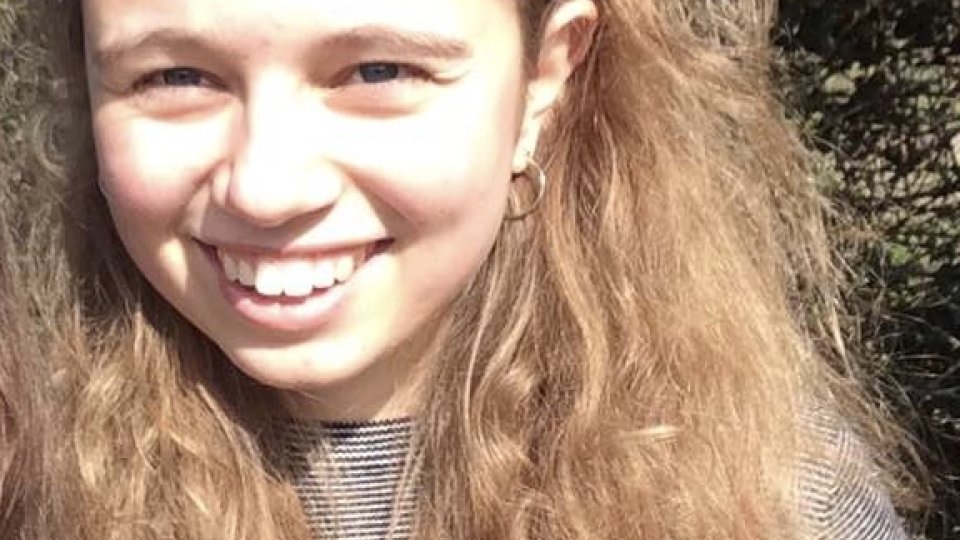
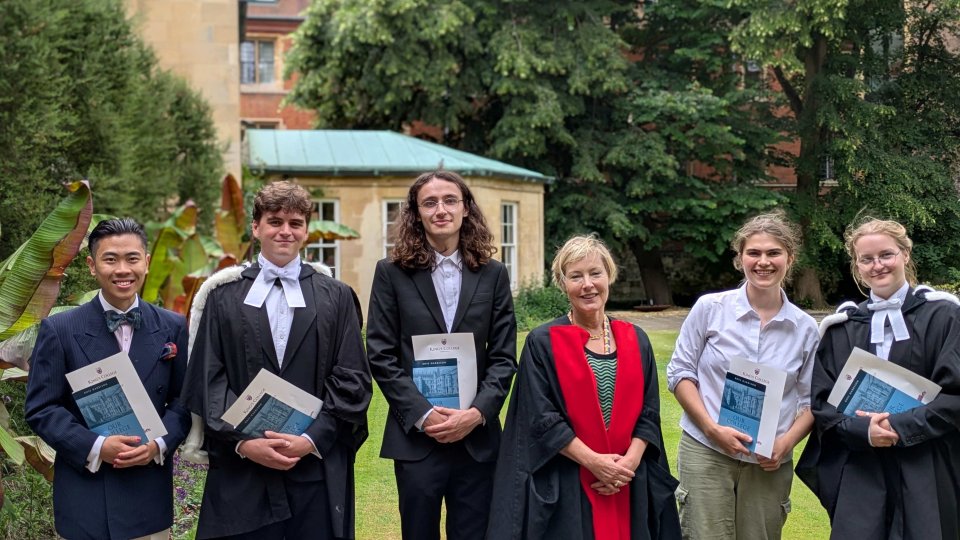
Jenny (left) has written about her experiences studying Biological Natural Sciences, while Rebecca shares photos from a field trip. On the Physical side, Jonny explains what he has enjoyed, the transition from school and how to prepare. These documents are well worth reading to get a sense of what it is really like to be a 'NatSci' at King's.
Further Information
- Course outline and options
- Natural Sciences Tripos website
- European Commission website encouraging females to go into sciences
- Applying with limited support or advice
- International Students
- Extenuating Circumstances form
- If you have any further questions, please contact King's Admissions Office at undergraduate.admissions@kings.cam.ac.uk.